• About
  • Advertise
  • Contact
Tuesday, February 3, 2026
  • Login
No Result
View All Result
NEWSLETTER
The NY Journals
  • Home
  • Business
  • Technology
  • Entertainment
  • Sports
  • Lifestyle
  • Health
  • Politics
  • Trending
  • Home
  • Business
  • Technology
  • Entertainment
  • Sports
  • Lifestyle
  • Health
  • Politics
  • Trending
No Result
View All Result
The NY Journals
No Result
View All Result
Home Health

How a reCAPTCHA test really works: Can a robot tick a box?

by Sarkiya Ranen
in Health
How a reCAPTCHA test really works: Can a robot tick a box?
0
SHARES
5
VIEWS
Share on FacebookShare on Twitter


Breadcrumb Trail Links

  1. Science
  2. News

It turns out, a reCAPTCHA isn’t just looking at your answers

Published Mar 14, 2024  •  Last updated 2 minutes ago  •  4 minute read

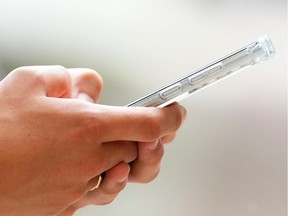
CAPTCHA stands for “Completely Automated Public Turing Test to tell Computers and Humans Apart.” The original CAPTCHA tests involved a typing test, but reCAPTCHA, a Google-owned version of the service, often uses images. Photo by Sean Kilpatrick /The Canadian Press

Article content

Have you ever had to type a series of distorted characters, identify a particular image or click the “I’m not a robot” checkbox to open a website? If so, you were granted access by a CAPTCHA, a test to block bots from spamming websites.

CAPTCHA stands for “Completely Automated Public Turing Test to tell Computers and Humans Apart.” The original CAPTCHA tests involved a typing test, but reCAPTCHA, a Google-owned version of the service, often uses images.

Advertisement 2

This advertisement has not loaded yet, but your article continues below.

National Post

THIS CONTENT IS RESERVED FOR SUBSCRIBERS

Enjoy the latest local, national and international news.

  • Exclusive articles by Conrad Black, Barbara Kay, Rex Murphy and others. Plus, special edition NP Platformed and First Reading newsletters and virtual events.
  • Unlimited online access to National Post and 15 news sites with one account.
  • National Post ePaper, an electronic replica of the print edition to view on any device, share and comment on.
  • Daily puzzles including the New York Times Crossword.
  • Support local journalism.

SUBSCRIBE FOR MORE ARTICLES

Enjoy the latest local, national and international news.

  • Exclusive articles by Conrad Black, Barbara Kay, Rex Murphy and others. Plus, special edition NP Platformed and First Reading newsletters and virtual events.
  • Unlimited online access to National Post and 15 news sites with one account.
  • National Post ePaper, an electronic replica of the print edition to view on any device, share and comment on.
  • Daily puzzles including the New York Times Crossword.
  • Support local journalism.

REGISTER / SIGN IN TO UNLOCK MORE ARTICLES

Create an account or sign in to continue with your reading experience.

  • Access articles from across Canada with one account.
  • Share your thoughts and join the conversation in the comments.
  • Enjoy additional articles per month.
  • Get email updates from your favourite authors.

Don’t have an account? Create Account

or

Article content

Article content

For example, you may be asked to identify all the squares with traffic lights or motorcycles. Another version of reCAPTCHA is famous for the “I’m not a robot” checkbox. These tests can tell whether or not the user is at risk of being a bot that can spread spam and viruses.

You’ve likely been tested by a reCAPTCHA before, but have you ever wondered how they can tell you’re human? After all, shouldn’t robots be able to tick boxes and recognize which images have crosswalks? Here’s everything you need to know about reCAPTCHA tests and how they work.

How CAPTCHAs and reCAPTCHAs really work

A reCAPTCHA isn’t just looking at your answers. The test analyzes where you came from as an internet user and how you’re interacting with the system. It uses multiple algorithms to track patterns in web browsing behaviour to decide whether or not a user is legitimate, thus controlling access to who and what can enter a website.

Justin Petitt, the director of the Cybersecurity Center of Excellence at Edgewater Federal Solutions, said there are multiple ways that the system reads user activity to determine whether or not a user is legitimate.

Posted

NP Posted

Get a dash of perspective along with the trending news of the day in a very readable format.

By signing up you consent to receive the above newsletter from Postmedia Network Inc.

Thanks for signing up!

A welcome email is on its way. If you don’t see it, please check your junk folder.

The next issue of NP Posted will soon be in your inbox.

We encountered an issue signing you up. Please try again

Article content

Advertisement 3

This advertisement has not loaded yet, but your article continues below.

Article content

“One (method) that’s usually involved in the system is tracking how you move and manipulate the mouse and keyboard on that screen,” Petitt said. “It’s looking to see if you’re moving too quickly or in an exact manner that doesn’t have any of the deviations or twitching that your hand will experience when moving a mouse or dragging your finger over a trackpad.”

Bots can move a mouse in a straight line at a steady speed. Humans are far more erratic.

“You can’t move in a straight line in the way that a computerized system would,” he said. “It’s looking for that signal to help verify that you’re a person.”

A reCAPTCHA may also require some degree of access to your Google search history while trying to differentiate you from a bot. You may have passed a reCAPTCHA without even knowing it as the latest version from Google works behind the scenes unless it already suspects you are a bot.

“Even when the average person tries to block their information, there’s still a lot of information that’s needed,” Petitt said.

Recommended from Editorial

Advertisement 4

This advertisement has not loaded yet, but your article continues below.

Article content

Why CAPTCHAs evolved

CAPTCHAs used to come in the form of randomized letters, which were stretched and deformed to make them more difficult to read. However, as bots became more sophisticated, they started passing the tests, which then had to be made more difficult. Eventually, the text was stretched and distorted until many people weren’t able to decipher it.

According to a study by the World Wide Web Consortium, these CAPTCHAs became too difficult to solve and caused users with cognitive disabilities to complain that the visual tests were denying them access.

At a 2016 Google I/O conference, one of the speakers said the most difficult versions of a CAPTCHA test were presented to both humans and bots to test their proficiency in 2014. This challenge revealed that humans could only solve the test 33 per cent of the time, whereas bots overcame the system 99.8 per cent of the time.

As a response to this, reCAPTCHA was updated with more methods to differentiate between humans and robots. Some of these tests include prompts to click on specific images and clicking the checkbox that reads “I’m not a robot.”

Advertisement 5

This advertisement has not loaded yet, but your article continues below.

Article content

Now, the test evaluates your response alongside automatic readings of your overall behaviour and browsing history to decide whether or not to grant you access.

What about privacy concerns?

While Petitt said that “there should be limited amounts of additional snooping in theory,” he also acknowledged that we don’t live in a “perfect” world and there are precautions users can take to protect their information when using reCAPTCHAs.

Some of these precautions include having good cyber hygiene, such as reading the end of a URL to verify its authenticity, avoiding any suspicious activity and having an overall sense of cyber awareness.

“Whatever it is that you as a user are doing online leaves footprints and fingerprints,” he said. “It’s really about paying attention to when and where things happen and making sure that you’re following good (online) habits.”

Article content

Share this article in your social network


Source link

Tags: BoxreCAPTCHARobotTestTickWorks
Sarkiya Ranen

Sarkiya Ranen

I am an editor for Ny Journals, focusing on business and entrepreneurship. I love uncovering emerging trends and crafting stories that inspire and inform readers about innovative ventures and industry insights.

Next Post
Suspended Congress MP Preneet Kaur, Wife Of Amarinder Singh, Joins BJP

Suspended Congress MP Preneet Kaur, Wife Of Amarinder Singh, Joins BJP

Leave a Reply Cancel reply

Your email address will not be published. Required fields are marked *

Recommended

UK proposes easing banker bonus rules to boost competitive edge

UK proposes easing banker bonus rules to boost competitive edge

1 year ago
‘I joined Arsenal from Brighton and left fans furious with what I said’

‘I joined Arsenal from Brighton and left fans furious with what I said’

1 month ago

Popular News

    Connect with us

    The NY Journals pride themselves on assembling a proficient and dedicated team comprising seasoned journalists and editors. This collective commitment drives us to provide our esteemed readership with nothing short of the most comprehensive, accurate, and captivating news coverage available.

    Transcending the bounds of New York City to encompass a broader scope, we ensure that our audience remains well-informed and engaged with the latest developments, both locally and beyond.

    NEWS

    • Business
    • Technology
    • Entertainment
    • Sports
    • Lifestyle
    • Health
    • Politics
    • Real Estate
    Instagram Youtube

    © 2025 The New York Journals. All Rights Reserved.

    • About Us
    • Advertise
    • Contact Us
    No Result
    View All Result
    • Home
    • Business
    • Technology
    • Entertainment
    • Sports
    • Lifestyle
    • Health
    • Politics
    • Trending

    Copyright © 2023 The Nyjournals

    Welcome Back!

    Login to your account below

    Forgotten Password?

    Retrieve your password

    Please enter your username or email address to reset your password.

    Log In