WHEN French luxury goods conglomerate LVMH agreed to pay about US$175 million to underwrite the organising committee for the Paris Olympics, the company, owned by France’s richest person, Bernard Arnault, asked for more than any previous sponsor had ever done. Organisers of the Games, desperate for that cash, appeared to have said yes at every turn.
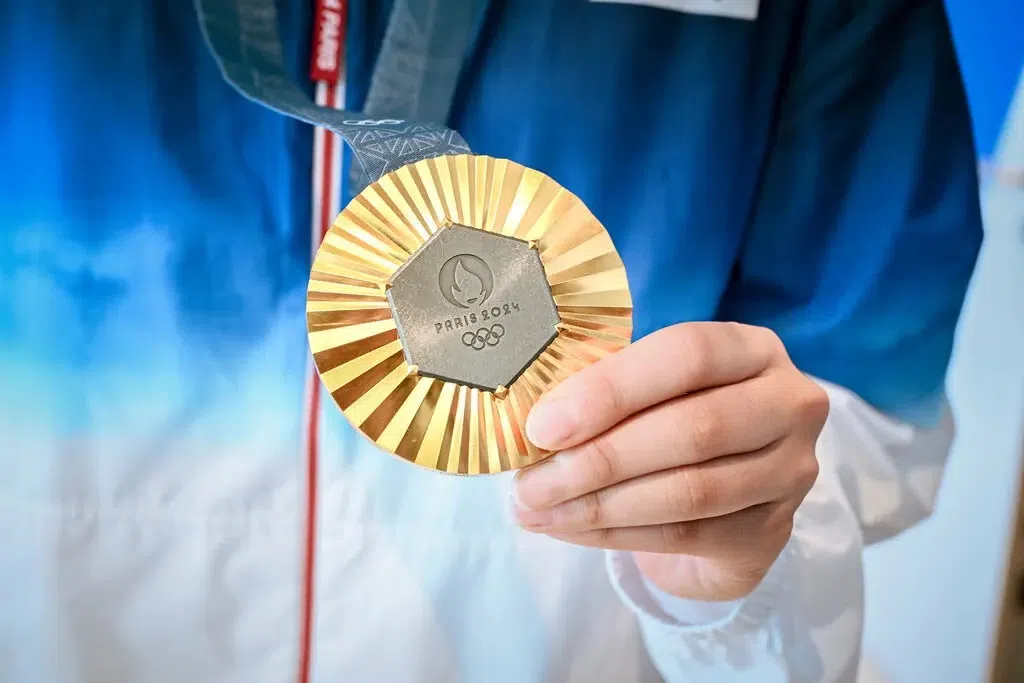
The medals? Made by LVMH-owned jeweller Chaumet. The French parade uniforms? Made by LVMH-owned label Berluti. The medal trays for every event? The unmistakable checkerboard pattern of Louis Vuitton. And on and on it went.
But there was one secret that had been held back, Antoine Arnault, who is Bernard Arnault’s son and the family’s representative to the Olympics, told a gathering of well-heeled Parisians on the eve of the Games.
Keep an eye out, he and other LVMH executives said, for “a big surprise” involving the company.
In the end, it was hard to miss. Among the parade of athletes cruising along the River Seine was one vessel carrying different cargo: suitcases and trunks encased in Louis Vuitton leather.
The Louis V was just one part of the show, an hours-long broadcast that also featured a long video segment beamed to millions of people worldwide that showed the making of the trunk and then panned to dancers in LVMH-designed clothing.
A NEWSLETTER FOR YOU
Friday, 2 pm
Lifestyle
Our picks of the latest dining, travel and leisure options to treat yourself.
The audacious segment – effectively a three-minute advertisement for LVMH during one of the most eagerly anticipated events of the Games – left some longtime Olympic executives slack-jawed.
But it also outraged several of the International Olympic Committee’s (IOC) top partners, billion-dollar companies that have been involved with the Games for far longer than LVMH.
“I was very surprised to see the level of LVMH branding in the ceremony,” said Ricardo Fort, a former executive responsible for events such as the Olympics and the World Cup at Coca-Cola, whose Olympic partnership dates to the Amsterdam Games in 1928. “This is so unusual I can’t even think about another opening ceremony where a brand had such a visible role.”
Michael Payne, who devised the IOC’s original marketing strategy of partnering with a handful of deep-pocketed and long-term global partners in each Olympic cycle, said the committee would have “some explaining to do” to its partners – if only to reassure them that there would not be a repeat in the closing ceremony on Sunday (Aug 11).
Asked if LVMH’s exposure during the opening ceremony would now be the norm for powerful sponsors, Tak Kosugi, the head of Olympic marketing at Panasonic, another longtime IOC partner, blew out his cheeks, leaned back in his chair and pushed his head backward.
“Tough question,” he said, before offering his thoughts in the most diplomatic language he could muster.
Kosugi noted that not just LVMH, but more than 20 sponsors – both global companies and French ones – had paid handsomely to be associated with the Paris Olympics, and he offered a reminder that the Games’ policy has always been different from that of any other major sporting event when it comes to sponsor visibility on the field of play.
The field of play at the Olympics, which includes the opening ceremony, is supposed to be “clean”, he said: shorn of the type of branding that is ubiquitous at huge global events such as the world cups of soccer, rugby and cricket. That principle imposes tight restrictions on what partners, however much they spend, can do.
“Once you do something like that, it might be very similar to other sporting events,” Kosugi said.
Panasonic, whose links to the Olympics date to the 1984 Los Angeles Games, had more reason than most to be frustrated by the opening ceremony: In another long scene, a DJ performed behind a mixer made by a rival company with its logo highly visible; furious, the company fired off a complaint to the IOC. Kosugi declined to comment on that. So did the IOC.
Two senior IOC officials said that had they been aware of how long and how brazen LVMH’s opening ceremony video would be, they would have insisted on cuts to the segment. The officials spoke on condition of anonymity to avoid damaging professional relationships with partners.
“We knew the content,” the IOC’s chief spokesperson, Mark Adams, said without clarifying if Olympic officials were aware of the entirety of the sequence before it was broadcast.
Anne Descamps, a spokesperson for the Paris organising committee, said highlighting LVMH allowed organisers to show the world France’s strength in the luxury sector.
But the episodes shed a light on how hard sponsors need to work to defend and promote valuable marketing rights, acquired at great expense, to the Olympic Games.
Historically, sponsors have been required to discreetly integrate their businesses into the event if they harbour any hope of being visible on the field of play. That has included large red clocks made by the Games’ timekeeping partner, Omega; bottles of Powerade, which is owned by Coca-Cola, being handed to athletes; and in-stadium screens provided by Panasonic.
But some of the subtleties of previous Games have been replaced with more obvious commercial opportunities this year.
After American gymnast Simone Biles secured victory in the all-around, one of the most popular and most-watched events of any Olympics, she stood atop the podium having been delivered her gold medal, lifted off a Louis Vuitton tray, by IOC president Thomas Bach.
Moments later, after the US national anthem boomed out of the loudspeakers in the Bercy Arena, a young woman dressed in LVMH-designed apparel crept up to the bronze medallist, Sunisa Lee of the US, and handed her a Samsung phone. Lee took hold of it and eagerly posed for a selfie on the podium with Biles and Rebeca Andrade of Brazil, the silver medallist. The scene would be repeated hundreds of times across the Games.
“For me the medal rostrum is sacred and not the place to play with sponsorship,” said Payne, who, in his two decades at the IOC, zealously guarded against the intrusion of brands into places they did not have permission to be.
That zero-tolerance policy from the IOC, he said, applied even to official sponsors – most famously, he said, during the opening ceremony of the 1996 Atlanta Games.
Made aware that a McDonald’s restaurant inside the Olympic Village had strategically placed its logo on a pole so that it could be viewed from inside the stadium during the athletes parade when lit, Payne urgently sent staff members to the restaurant to demand that it be turned off.
When the staff members reported back that the restaurant was closed, Payne told them to break in and cut the electricity supply. “By the time we got to Djibouti” – still very near the front of the procession alphabetically – “the electric was cut off and the sign was off”, he said.
In the years since, however, there has been a creeping commercialisation. More and more space has been given to partners, even in previously sacrosanct spaces such as the opening ceremony and the medal stand, and never more so than in Paris.
Interview backdrops have featured corporate logos, and companies operate in Games-adjacent spaces such as the Champions Park, a location branded by Panasonic, where medal winners come to show off their medals to adoring fans.
Anne-Sophie Voumard, the IOC’s director of television and marketing services, suggested there will be even more branded innovation in the years ahead as Olympic officials try to balance traditions with the needs of sponsors that contribute more than US$2 billion per Olympic cycle.
“We have been historically trying to work with our partners,” she said. “To have a very smooth organic integration and ways for us to be actually promoting their products in a way that helps with the delivery of the Games or with the experience. And the victory selfie is exactly that example.”
She added that the IOC “will continue to evolve in this respect and try to be smart about how we continue to integrate our partners”.
In Los Angeles, which will host the Summer Games in 2028, organisers and sponsors alike will have seen what Paris did to test the boundaries, Payne said.
“The creatives in LA will be going ‘goody, goody, goody’,” he added. “It won’t be easy to put the genie back in the bottle.” NYTIMES