[ad_1]
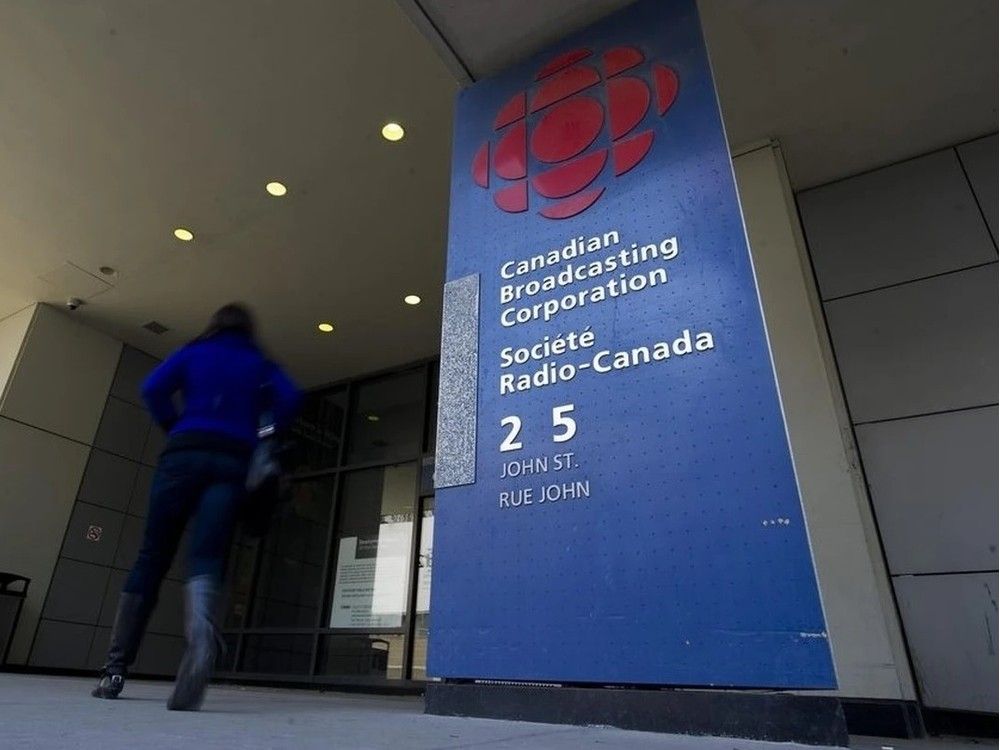
The CBC is at a watershed moment, observes longtime CBC insider David Cayley. The previous era of Canada’s publicly funded broadcaster has exhausted itself, Cayley concludes, and in the new era that’s unfolding, what the country desperately needs and deserves is a dialogue, not a monologue.
“Everything ends in time,” he observes, “and I believe that (CBC’s) properties, its idea that it would belong to the audience, that it would stake its legitimacy on the audience, has brought it to a place where it has only one preferred audience — and can’t address the rest of the country, and can’t get outside or above or beyond the assumptions it shares with that audience — so it’s become a kind of boutique.”
Between 1971 and 2012, Cayley worked as a producer, documentary-maker and program host at CBC Radio. Much of his career was spent at Ideas, a program that explained current affairs to Canadians and introduced people across the country to a range of themes and thinkers. More recently, he authored The CBC: How Canada’s Public Broadcaster Lost Its Voice (and How to Get it Back), a book published this year by publisher Kenneth Whyte’s Sutherland House. It arrives at a moment of particular resonance: The CBC’s British equivalent, the BBC, is embroiled in a bias scandal that cost it two top executives and faces the real risk of a fall from grace.
When he and I connect online to chat about his latest book, David sports a tweed jacket, and a soft wool scarf is elegantly wound around his neck. A print of Caspar David Friedrich’s painting, The Lonely Tree, hangs on the wall just over his shoulder.
“I’ll be 80 in March,” he tells me. “You know, I can’t really be cancelled. I’m so old,” he laughs, infectiously. What motivates a man in his 80th year to publish — not just a historical expose of the CBC, but a call to action? “Well,” he smiles, “T.S. Eliot said old men ought to be explorers. I like that … I have nothing to fear, really.”
“The book I’ve written is probably, to be frank with you, a bit of an iceberg,” David suggests. “I mean, most of its bulk is still … below the surface and not expressed in the book.” I agree; while it’s not an esoteric text nor is it light-reading. I’ve read the book in a slow, savouring kind of way; it provokes a lot of thinking.
The recent federal budget dropped an extra $150 million on the CBC “to strengthen its mandate to serve the public and to better reflect the needs of Canadians.” Budget 2025 also says, “the government will explore modernising CBC/Radio-Canada’s mandate to strengthen independence.”
What, exactly, can that mean? David assures me, he’s not privy to Ottawa’s thoughts about how our public broadcaster can be strengthened, modernized or made more independent. But, he suggests, with a twinkle in his eye, there are likely partisan influences: “The Conservatives want to defund the CBC, so we (the Liberals) want to re-fund the CBC.”
More seriously, David observes, when Prime Minister Mark Carney talks about the public broadcaster, he often says “the CBC exists to combat misinformation.” But what exactly does Carney mean by “misinformation,” David asks. Is it fact-checking — pointing out untrue things being said — or is it “misinformation” when someone says something another person believes to be wrong?
David’s book is full of case studies in Canada — situations that became minefields — because the CBC chose to disregard the perspectives of others who think differently and jumped to a “finished view” of an issue. “A finished view,” he asserts, “is an ideology.”
During the COVID-19 pandemic, David explains, so much unsubstantiated stuff was put into people’s heads as science, when it couldn’t possibly be science. “What the public interest demanded at the beginning of the pandemic,” David writes in his book, “was careful deliberation. What the CBC delivered was thoughtless cheerleading.”
The pandemic, he reports, provoked extensive and deep-rooted scientific disagreement, but news of this disagreement never reached the public. What the opponents of quarantines and vaccine mandates were spreading was characterized as “misinformation,” David explains, but governments were allowed to change their message, again and again.
For example, he reports, “the shot was localized in your arm; the ingredients will not spread throughout the body.” Whoops. That proved not to be true. “The virus was definitely of natural origin and only a dangerous wingnut could believe it may have been manufactured in a lab, right? Whoops! Now the CIA believes that.”
“So there was a constant change in what the story was, right?” he posits. “Well, that wasn’t misinformation, was it?”
David describes the freedom convoy that descended on Ottawa — in response to the quarantines and vaccine mandates — as an emerging public that the CBC didn’t want to hear. “I know they were noisy, rude in certain ways,” David says, “but they still arrived in Ottawa with a lot of the country going with them, and with a proposition, a conversation, I would argue, proposition to present, which is that you have gone too far.”
Another example, David cites, is NDP MP Leah Gazan’s private member’s bill proposing to outlaw residential school denialism in Canada. “We have a bill in Parliament right now,” David laments, “outlawing a perfectly reasonable view of residential schools.” And, he adds, we have a disgraceful situation in Quesnel B.C., “where the mayor was attacked by his council because his wife read and distributed a book that nobody has read, but if anybody did read it, it would simply be an alternative narrative of residential schooling.”
“I don’t think you can have history unless you are allowed to have competing views of history, and not a compulsory narrative,” David asserts. “So if our history is composed entirely of compulsory narratives, and the CBC is full of these compulsory narratives, these orthodoxies that cannot be questioned, then we have effectively no history. It’s too dangerous.”
David’s recommendation? “The CBC needs people who are sufficiently engaged — intellectually, spiritually, culturally — that they can face these questions. That don’t just turtle.”
I’m curious to learn why his book is dedicated to Harold Innis, an eminent pioneer of Canada’s political economy, not much remembered by Canadians. Few people will know Innis inspired Marshall McLuhan. I know because Innis grew up on a farm in southwestern Ontario, where he taught and mentored my paternal grandfather.
Innis, David responds, claimed there needs to be a place — withdrawn from immediate political urgencies — where we can think, because thinking is so hard to do.
The CBC could offer up that place, David dares to suggest; a public broadcaster could provide space to accommodate currently antagonistic standpoints. To do so, David implores, CBC must recognize it has become a monoculture that actively excludes competing points of view and depresses intellectual inquiry.
Our website is the place for the latest breaking news, exclusive scoops, longreads and provocative commentary. Please bookmark nationalpost.com and sign up for our newsletters here.
[ad_2]
Source link