
G7 energy ministers say they support in principle use of strategic oil reserves – business live
[ad_1]
G7 energy ministers say they support in principle use of strategic oil reserves
News just in: the G7 group of nations said today that they supported, in principle, the implementation of proactive measures to address oil supply issues and market volatility, including the use of strategic oil reserves.
Energy ministers from the group held a virtual meeting with the International Energy Agency on Tuesday to discuss the impact of the Iran war on energy markets and supply.
G7 energy ministers said in a statement emailed to Bloomberg:
Working alongside the IEA, we are vigilantly monitoring energy market trends and are coordinating within the G7 and with our international partners, IEA member countries, and beyond.
They said they “warmly welcome today’s meeting of the IEA governing board, which provides a crucial opportunity for member countries to assess the current security of supply and market conditions”.
The G7 ministers added that they support in principle the “implementation of proactive measures to address the situation, including the use of strategic reserves”.
Key events
Oil prices rise to $90 a barrel despite G7 statement
Oil prices are trading higher again, returning to $90 a barrel, as markets doubted whether the International Energy Agency’s reported plan for a record release of oil reserves could offset potential supply shocks from the Iran war.
Brent crude has risen 2.5% to $90.05 a barrel.
This is despite energy ministers from the G7 group of nations releasing a statement after a meeting with the IEA on Tuesday that they support, in principle, proactive measures to address oil supply and market volatility, including the use of strategic oil reserves.
G7 energy ministers say they support in principle use of strategic oil reserves
News just in: the G7 group of nations said today that they supported, in principle, the implementation of proactive measures to address oil supply issues and market volatility, including the use of strategic oil reserves.
Energy ministers from the group held a virtual meeting with the International Energy Agency on Tuesday to discuss the impact of the Iran war on energy markets and supply.
G7 energy ministers said in a statement emailed to Bloomberg:
Working alongside the IEA, we are vigilantly monitoring energy market trends and are coordinating within the G7 and with our international partners, IEA member countries, and beyond.
They said they “warmly welcome today’s meeting of the IEA governing board, which provides a crucial opportunity for member countries to assess the current security of supply and market conditions”.
The G7 ministers added that they support in principle the “implementation of proactive measures to address the situation, including the use of strategic reserves”.
Introduction: Oil prices retreat, Asian shares rise after report of planned IEA oil reserve release
Good morning, and welcome to our rolling coverage of business, the financial markets and the world economy.
Oil prices have pulled back and Asian shares rose after the Wall Street Journal reported that the International Energy Agency has proposed the largest release of oil reserves in its history to bring down crude prices.
Brent crude dipped 0.27% to $87.56 a barrel in early trade.
Kerstin Hottner, Vontobel Assset Management’s head of commodities, told Reuters:
Several major questions loom over the oil market’s trajectory. Chief among them is the timing of safe passage for vessels through the Strait of Hormuz, a critical chokepoint for global oil supply.
Another concern is the possibility of infrastructure damage… Even if major hostilities subside, the prospect of ongoing low-level Iranian drone attacks on energy infrastructure could prolong market instability into next year.
In Asian stock markets, Japan’s Nikkei and South Korea’s Kospi both climbed 1.4% while the Shenzhen exchange gained 0.78% and Hong Kong’s Hang Seng dipped 0.16%.
Gold edged higher as investors sought out safe-haven assets again. Spot gold rose 0.1% to $5,924 an ounce.
Nikos Kavalis, Singapore managing director of Metals Focus, told Reuters:
I think it’s very likely that we’ll see gold get to over $6,000 an ounce by the third or fourth quarter this year.
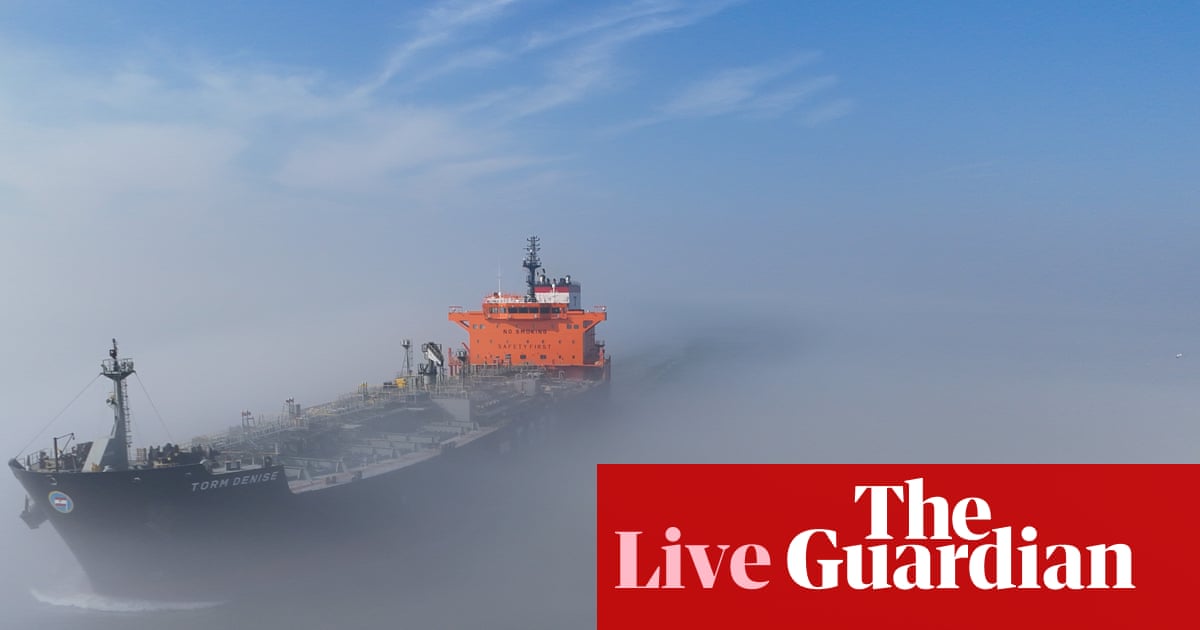
Iran has effectively shut the Strait of Hormuz, through which a fifth of world oil and seaborne gas shipments pass. Hundreds of tankers are stranded there.
The US military said it attacked and destroyed 16 Iranian mine-laying vessels near the strait of Hormuz, amid reports that Iran has begun laying explosive devices in the strategically vital waterway.
Markets are waiting for US inflation figures, which are expected to show that the headline rate stayed at 2.4% last month.
The Agenda
-
9.45am GMT: Treasury Committee to quiz Rachel Reeves about spring forecast
-
12.30pm GMT: US inflation for February (previous: 2.4%, forecast: 2.4%)
[ad_2]
Source link
