
Senate hears calls for Liberal anti-hate bill to include 'residential school denialism,' hammer and sickle
[ad_1]
OTTAWA — With senators set to begin their close study of the Liberals’ anti-hate bill, groups are calling on the Upper Chamber to expand the list of hate symbols and criminalize downplaying harms of residential schools.
Those calls, made by witnesses and briefs submitted to the Senate committee on human rights currently studying Bill C-9, have raised expectations of the amendments senators may be eyeing for the controversial bill.
“Indian residential school denialism is not an academic debate, it’s quite simply hate speech,” Terry Teegee, British Columbia regional chief for the Assembly of First Nations, which advocates for more than 600 First Nations, testified on Thursday.
“It re-traumatizes survivors, harms entire communities, disrespects children who have never returned home, denies historical facts, and undermines truth and reconciliation.”
Broadly defined, “residential school denialism” refers to the downplaying or rejection of harms attributed to the Indian residential school system that operated in Canada for decades. Thousands of Indigenous children were forced to attend the church-run government-funded institutions, where many testified to the Truth and Reconciliation of Canada that they experienced physical and sexual abuse, as well as suffered malnutrition.
That commission, which spent seven years investigating the system, released a final report in 2015 that estimated at least between 4,000 to 6,000 children died while they were attending these institutions from multiple causes, including disease and poor treatment.
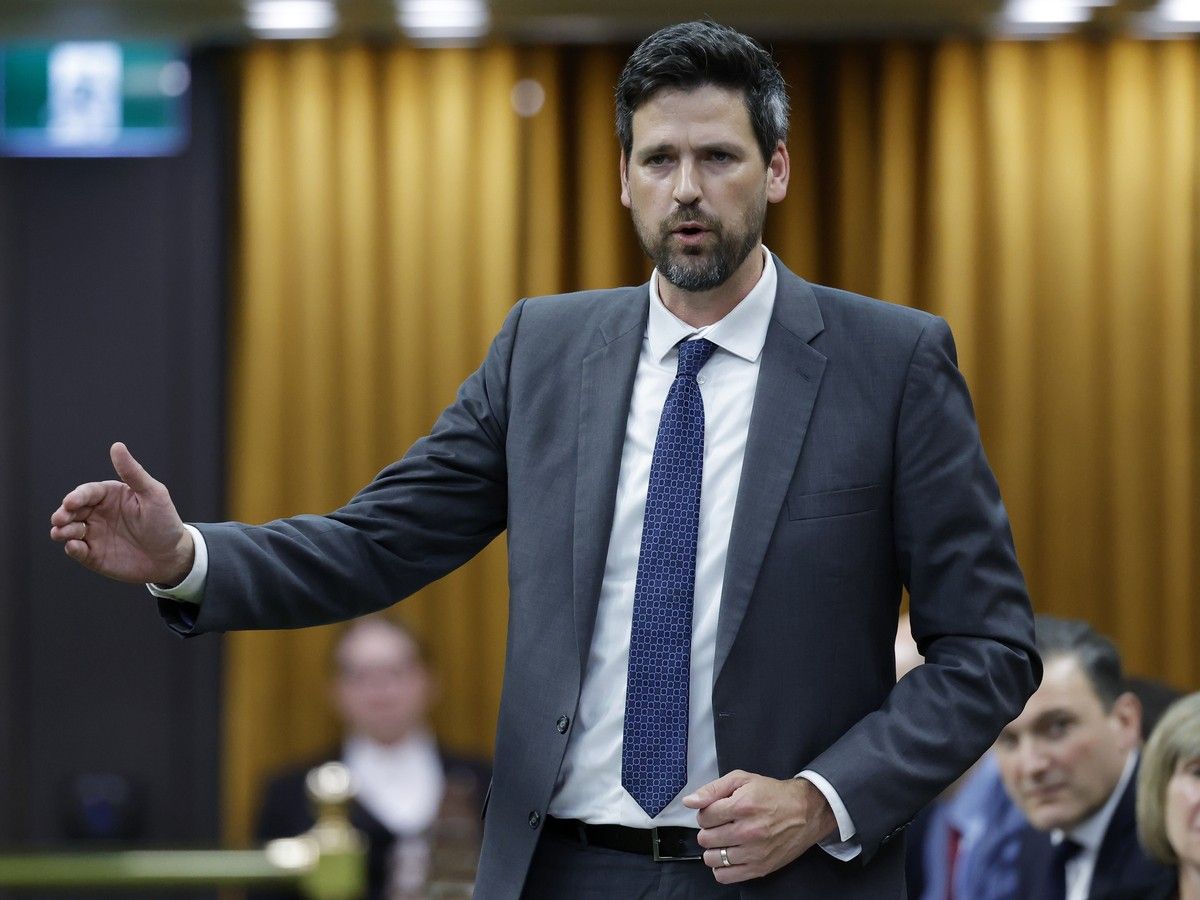
Fraser introduced the hate-speech bill in the fall, saying its measures were needed to stem the rise of hate-related incidents witnessed in recent years.
Senators studying the bill heard calls from different community advocacy groups to amend the list of symbols the legislation includes under the proposal to make it a crime to intentionally promote hate against an identifiable group “by displaying certain symbols in a public place.”
The bill currently targets symbols that have links to the list of the government-designated terrorist entities, as well as the Nazi swastika.
In a brief submitted to the Senate committee, the Ukrainian Canadian Congress said it was “disappointed” that the communist hammer and sickle was not included.
“The Communist hammer and sickle is the symbol of the hateful ideology whose proponents and adherents are responsible for the crimes of the Soviet regime, including the Holodomor Famine-Genocide in Ukraine, the Genocide of the Crimean Tatar People, the Great Terror, the Gulag labour camps, and the oppression and subjugation of dozens of nations across four continents,” it reads.
The Black Opportunity Fund and Black-Manitobans Chamber of Commerce have also called for the noose and other symbols linked to the Klu Klux Klan (KKK) to be included on the list.
“There is no legitimate counter argument, and no group or organization which we are aware that is advocating for the noose as a symbol on free speech grounds, perhaps with the exception of hate organizations like the KKK, Proud Boys, and others which exist in Canada in one form or another,” the Black Opportunity Fund wrote in its submission, saying more than 400 leaders from different Black-led groups support the change.
Teegee said on Thursday that the Liberals’ anti-hate bill fails to deal with what he sees as a rise in anti-Indigenous racism and hate, particularly when it comes to the issue of First Nations searching for and declaring the existence of potential unmarked graves at the sites of former residential schools using technologies like ground-penetrating radar.
He says Tk̓emlúps te Secwépemc, the First Nation that in 2021 announced the discovery of 215 potential unmarked graves on the grounds of the former Kamloops Indian Residential School, has established 24-hour security as it has dealt with individuals trying to trespass onto the site in an attempt to dig the alleged burial sites, adding that its chief has reported band members having received threats over the issue.
“I’ve been a chief for 17 years. I’ve never seen it this bad,” he said.
Teegee pointed to a resolution the Assembly of First Nations passed back in December calling on the federal government to amend C-9 to criminalize residential school denialism.
On Thursday, he also called for its inclusion to offer greater protections for former residential school sites and sites sacred to First Nations.
As it stands, the legislation proposes creating new obstruction and intimidation offences for anyone who impedes another person’s access to places of worship, or other buildings where a vulnerable group gathers, as well as a cemeteries.
Sen. Kristopher Wells said justice officials had previously clarified that unmarked graves at former residential school sites and other Indigenous burial sites could be considered a cemetery under the bill’s definition.
Sen. Paula Simons expressed concern that criminalizing positions about residential schools could carry unintended consequences.
“I’m worried that if we were to do as some have suggested and criminalize the diminution of residential schools, that we could actually create such a backlash that right-wing people who denied the meaning of residential schools would be empowered,” she said.
“The results would be catastrophic in a way that education would not be,” she added.
Testifying last week, Justice Minister Sean Fraser expressed he was open to seeing the list of terror symbols reviewed, but also underscored his hope that the bill passes into law by the time the House of Commons breaks for summer in mid-June.
The federal government is currently trying to pass into law a bill aimed at criminalizing the abusive and controlling behaviours often seen in domestic violence cases and the Liberals’ latest bail reform legislation, with the latter being the most advanced stages in the Senate.
National Post
Our website is the place for the latest breaking news, exclusive scoops, longreads and provocative commentary. Please bookmark nationalpost.com and sign up for our politics newsletter, First Reading, here.
[ad_2]
Source link
