
‘I’m not walking away,’ says Starmer despite defence secretary’s exit
Keir Starmer has said he knows he has to “turn things around” after a series of crises culminating in the resignation of John Healey, the defence secretary, but warned that any successor would face the same difficult decisions.
In an interview with the BBC after Healey’s departure in a row over defence spending, Starmer promised again to fight any leadership challenge from Andy Burnham or others, saying: “I’m not going to walk away.”
He also suggested said that if Burnham did replace him in No 10, there would be a near-identical set of pressures and tough decisions for him given the state of international conflict and the resulting economic impacts.
Starmer said: “I would just gently say this: that whoever is prime minister is going to face the same prevailing winds as I am facing. None of that is going to change.”
In a scathing resignation letter on Thursday, Healey accused Starmer of putting the country’s security at risk and being unable to stand up to his chancellor, Rachel Reeves, and make faster progress in the coming defence investment plan (Dip) towards spending at least 3.5% of GDP on defence by 2035.
Al Carns, the armed forces minister, also quit. Speaking to the BBC on Friday morning, Carns accused the government of not spending enough money on the military and spending on the wrong weapons.
With Burnham increasingly expected to win next Thursday’s Makerfield byelection and return to Westminster, many Labour MPs see a leadership challenge as imminent. It could also involve Wes Streeting, the former health secretary, who quit Starmer’s government last month in the wake of terrible election results for Labour.
Asked if he would lead Labour into the next general election, Starmer replied: “Well, that’s what I want to do. I recognise that, you know, I’ve got to turn things around. We had a very bad set of elections.”
Asked if he recognised he was in peril, the prime minister replied: “Look, I recognise that, given where we are, I need to turn that around and that’s what I intend to do.”
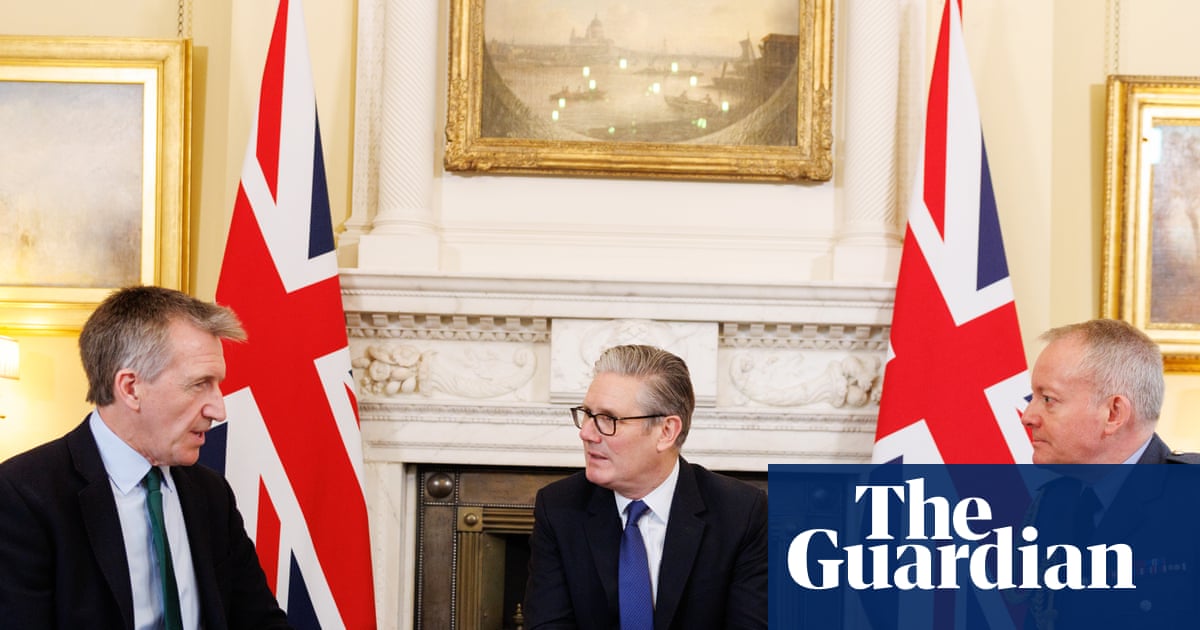
Earlier on Friday, Starmer met the new defence secretary, Dan Jarvis, and Richard Knighton, chief of the defence staff, to discuss the Dip, which was due this week but has been delayed in a wrangle over spending totals.
Asked when it would come, a No 10 spokesperson said only that work was “ongoing to finalise the Dip at pace with the new defence secretary”. They refused to say if Jarvis had any input on the actual sums committed, or had sought any guarantees before accepting the post.
Starmer told the BBC the plan would be “published before the Nato summit” in Ankara early next month. This was the final deadline for it to be released, suggesting the change of defence secretary could have caused new delays.
The prime minister said he had overseen “the biggest sustained increase in defence spending since the 1980s”, adding that every government department had submitted cuts to non-frontline spending to help finance the Dip.
He criticised the idea that balancing such decisions was simple. “Very many people, very often sitting outside of government, give the impression that there is lots of easy decisions that can be taken. There are no easy decisions.”
He added: “Decisions in government involve trade-offs, so they always have to come with that second question: ‘Well, if you’re going to do that, what is it you wouldn’t do?’”
Asked if he would fight in any leadership challenge, Starmer said: “Look, I’m not going to walk away. I don’t think we should plunge the country into the chaos of a leadership election.”
He added: “I don’t think it should happen, but if it does then I will fight. And let me just be clear with you: that’s not about personal vanity, it’s not about stubbornness. It’s out of a very deep sense of duty.”
