
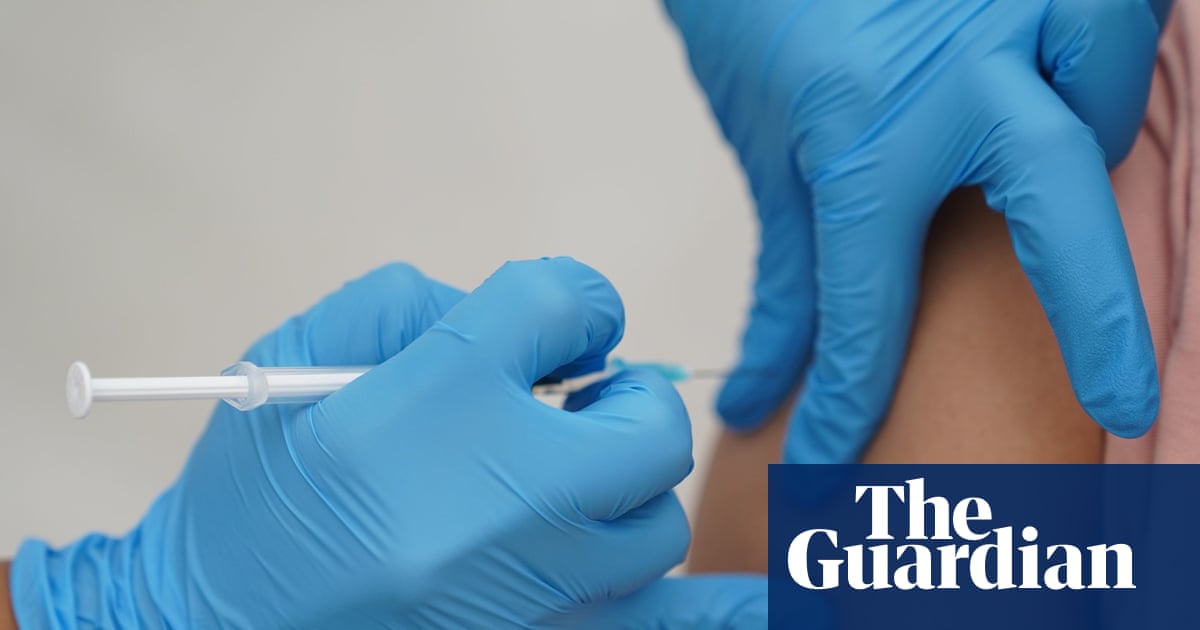
HPV jabs cut risk of dying from cervical cancer before 30 to almost zero
Women who received an HPV vaccine in early adolescence have virtually zero risk of dying from cervical cancer before the age of 30, according to a groundbreaking study, but falling vaccination rates could see a rise in avoidable deaths.
Cervical cancer is the fourth most common cancer in women, according to the World Health Organization, and high-risk human papillomaviruses (HPV) cause 99% of cases. About 3,300 women in England are diagnosed with the disease every year.
While the HPV vaccine prevents about 90% of cervical cancers, until now the impact on survival has been unknown. In new analysis, researchers from Queen Mary University of London (QMUL) used official cancer mortality and vaccination data for women aged 20 to 34 to calculate the impact of vaccination on cervical cancer survival.
While the study, funded by Cancer Research UK and published in the Lancet, saw little change in cervical cancer mortality in those who were never offered HPV vaccination, there were substantial falls in those who were offered vaccination after the HPV jab was introduced in 2008.
The impact on mortality has been so great that the authors estimate that the likelihood of girls who are inoculated when they are 12 or 13 dying from cervical cancer before the age of 30 is almost zero. For vaccinated women aged 30-34, the relative risk of death from the disease is 63% lower.
And for the first time in recorded history, no women aged 20 to 24 died from cervical cancer in England between 2020 and 2024. In all, the HPV vaccine has saved hundreds of lives, the authors conclude.
Peter Sasieni, professor of cancer epidemiology at QMUL and lead author of the study, said: “We estimate that since its introduction, HPV vaccination has prevented nearly 200 young women from dying from cervical cancer in England.”
The jab, which also protects against certain cancers of the anus, penis, vagina, vulva, mouth and throat, as well as genital warts, is given to girls and boys in year 8, with catchup vaccinations offered in some areas in years 9 and 10.
WHO’s global strategy on cervical cancer states that by 2030, all countries should vaccinate 90% of girls with the HPV vaccine by the age of 15, screen 70% of women and treat 90% of those with cervical disease.
Until the pandemic, vaccination rates were close to WHO’s target, but have fallen significantly since then.
“With close to 90% HPV vaccine uptake in women born between 1995 and 2004, we expect to see thousands of cervical cancer deaths prevented in those women over the coming years,” said Sasieni.
“HPV vaccination combined with cervical screening could reduce cervical cancer rates to the point where almost no one develops it.”
But he said deaths and cases could rise again because of fewer teenagers getting vaccinated.
“The falling HPV vaccine uptake – now just 75% nationally and 60% in London – means that without swift and concerted efforts to increase HPV vaccine uptake, we could see a reversal of these trends.
“There could be another 15-25 avoidable deaths each year in young women and eventually about 200 deaths from cervical cancer each year that could be prevented if we can increase vaccine uptake to pre-Covid levels.”
Michelle Mitchell, chief executive of Cancer Research UK, said: “It’s essential that the UK government and health systems urgently address this with targeted action to reach communities where uptake is the lowest.”
Helen Hyndman, lead nurse at gynaecological cancer charity The Eve Appeal, said cervical cancer will not be eliminated unless vaccination and screening rates improve and those who need it get timely treatment.
“We need urgent action – we are lagging behind on our plans to eliminate cervical cancer by 2024 and at our current rate it will be 2050 before this is achieved.”
Dr Alison Wright, president of the Royal College of Obstetricians and Gynaecologists, said the “exciting and powerful data” showed the vaccine’s use could see “fewer women with a cervical cancer diagnosis, and fewer lives lost to a largely preventable disease”.
While improved access to vaccines through local community pharmacies for those who missed school vaccinations was welcome, further progress now depends on encouraging vaccine uptake at all levels, raising awareness of the vaccination programme, and ensuring that everyone who is eligible can get timely, equitable access, she added.
Caroline Temmink, the NHS Director of Vaccination, said: “This hugely encouraging news shows the life-saving impact of the HPV vaccine and it’s incredibly exciting to be able to say to this whole generation, cervical cancer and some other cancers shouldn’t be a risk for you.
“Alongside cervical screening, HPV vaccination is central to the NHS ambition to eliminate cervical cancer by 2040. It’s a safe and effective vaccine and we urge everyone eligible to take up the offer when invited.”
A Department of Health and Social Care spokesperson said: “We are boosting vaccine uptake so that more young people benefit from this life-saving protection – including rolling out catchup HPV vaccination campaigns via community pharmacies, and making it easier to access cervical screening. HPV self-testing kits are now being sent to those who do not come forward for screening, to ensure we catch more cancers at their earliest, most treatable stages.”
