
'Why wouldn’t we be anti-American?' The long, sordid history of Canadians dissing our neighbour
OTTAWA — It wasn’t a political speech or a visionary manifesto that galvanized Canadian nationalism near the start of this century, just a few years after a close-call separation referendum in Quebec and during a period of endless debate about national identity.
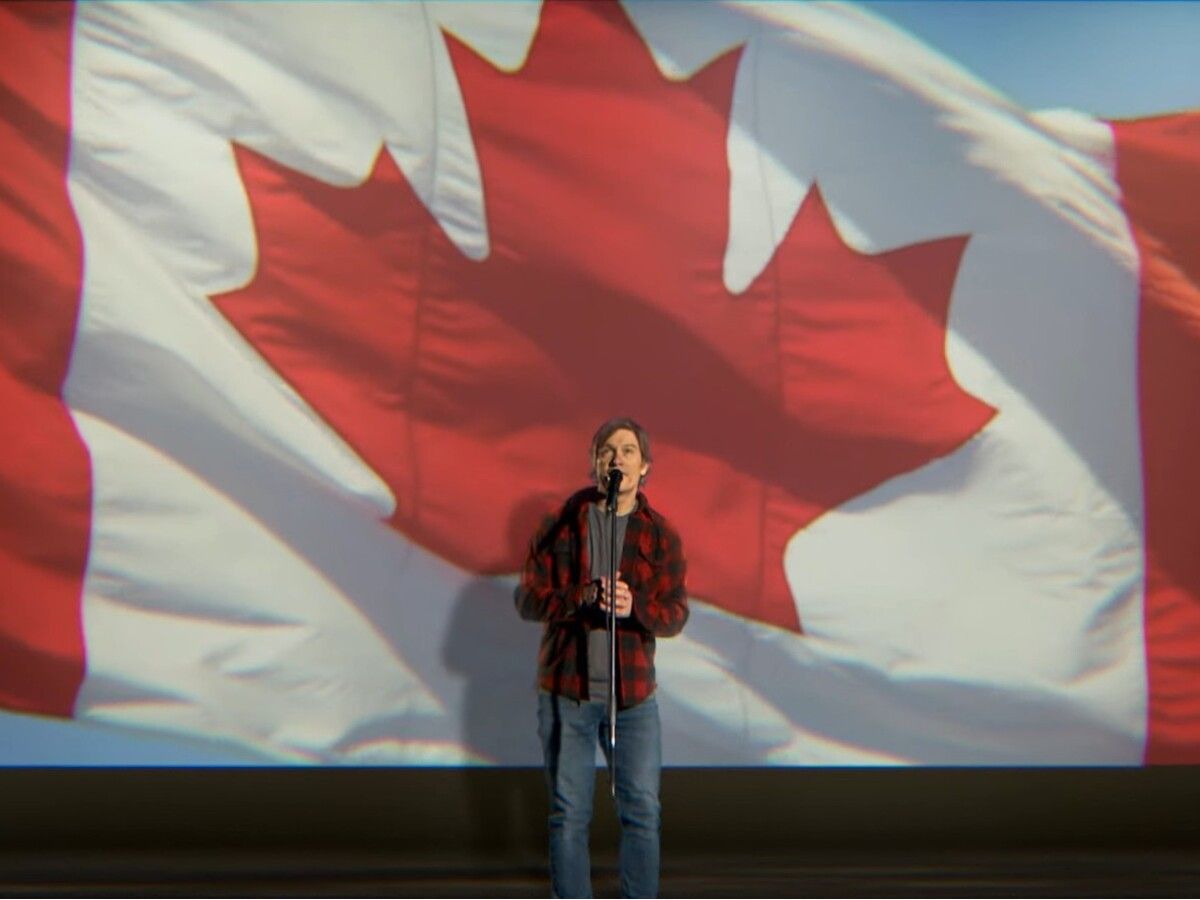
It was a 60-second television beer commercial that captured the Canadian soul , or at least the English-speaking part of it. The Molson Canadian ad, officially called “The Rant,” offered a new, updated and self-effacing version of how Canadians view themselves.
Featuring actor Jeff Douglas playing the role of Joe, the average, flannel-wearing Canadian guy, the commercial tipped a hat — or perhaps a tuque — to bilingualism, diversity, peacekeeping, the beaver, hockey and other Canuck touch points, before closing with the triumphant tag line “I am Canadian!” that twinned patriotism with Molson’s signature lager.
The spot, widely known as the “Joe Canadian” ad, was widely seen as a fresh take on who we are. But it also used scalpel-like precision to expose the complexity and nuance of Canadians’ relationship with the country’s immensely powerful and sole neighbour to offer a clear take on who we aren’t. “A tuque is a hat, a chesterfield is a couch, and it is pronounced zed — not zee — zed!”
It was wildly popular and sold tons of beer.
“That beer ad spoke to a lot of myths, grounded in some truths,” said Asa McKercher, a Canada-U.S. relations specialist at St. Francis Xavier University in Antigonish, N.S.
Fast forward a generation or so to today, with U.S. President Donald Trump returning to one of his go-to moves of threatening Canadian sovereignty, blocking the opening of a new cross-border bridge paid for by Canada, and his administration refusing to renew a free-trade deal the president signed just eight years ago.
Perhaps not coincidentally, a recent Leger-Postmedia poll finds Liberal support nationally continues to hover around the 50 per cent mark . That is rarefied air, especially with the economy sluggish and inflation up.
In fact, the last time a political party had the support of at least half of the country? More than 20 years ago, in 2003, after then prime minister Jean Chrétien famously turned down an American request to join the U.S.-led invasion of Iraq, a war now widely seen as both misguided and based on faulty intelligence.
Former prime minister Justin Trudeau was criticized for defining Canada in opposition to the States. “One of the ways we define ourself most easily is, well, we’re not American,” he said last year. It’s true, at least, that we don’t see ourselves as very similar: A new Leger-Postmedia poll finds 51 per cent of Canadians say we’re either not very or not at all similar. Sixty-four per cent of us think Canadians are nicer than Americans. And 54 per cent think we’re more cultured.
Sixty-six per cent of Canadians, meanwhile, say they think it’s the Americans who are more “arrogant.”
Like the beer commercial, analysts say the data points are windows that expose part of the national psyche, particularly how we attitudinize relative our world-dominating neighbour.
Is there a permanent element of anti-Americanism in the Canadian psyche, or at least in the national political culture — or is it just the Trump factor and normal expressions of patriotism?
Or maybe Canadians, no matter what they say, have a secret dislike or grudge against Americans.
If so, that runs counter to the common narrative about the world’s longest undefended border, the many common cross-border traits, and how the two countries are such close friends that we’re like family.
Maybe frenemies is more like it.
Are Canadians anti-American — just a little?
Madelaine Drohan, a Canadian author whose recent book He Did Not Conquer documents Benjamin Franklin’s many failures to annex Canada, said the narrative of bosom buddies isn’t an accurate reflection of the reality.
“What gets in the way is this idea that we’re friends,” she said.
Canadian political culture, Drohan said, has included an element of anti-Americanism for centuries, and for good reason. Americans invaded what is now Canada twice — The Invasion of Quebec 1775-76 and The War of 1812 — and prominent Americans, such as Franklin, long believed that the U.S. should expand north.
“Why wouldn’t we be anti-American?” Drohan said. “It’s self-preservation.”
People on both sides of the border don’t realize that the residents of what became the United States and Canada had largely hostile relations for many years, until the tension mostly dissipated during the period after the Second World War, said Drohan, also a former Canadian correspondent for The Economist.
Prior to that war, Drohan said, both countries maintained invasion plans, although the Canadian version was more of a defensive strategy .
The romantic notion of Canada and the U.S. being the best of friends isn’t without merit, she said, but that recent alliance was largely based on having common interests internationally during and after the Cold War, and usually being able to work out bilateral matters cordially. But there’s nothing new about Canada, like most countries, feeling the need to keep its guard up, Drohan said.
“Every country sticks up for its own interests,” she said.
One thing is clear in trying to dissect Canadians’ relationship with their American neighbours: it’s complicated.
Analysts say it’s important to make a distinction between political events and tension between the two countries and the countless, friendly daily encounters and relationships between Canadians and Americans.
But they also emphasize that there are also important psychological elements to Canadians’ “un-American” sentiments too.
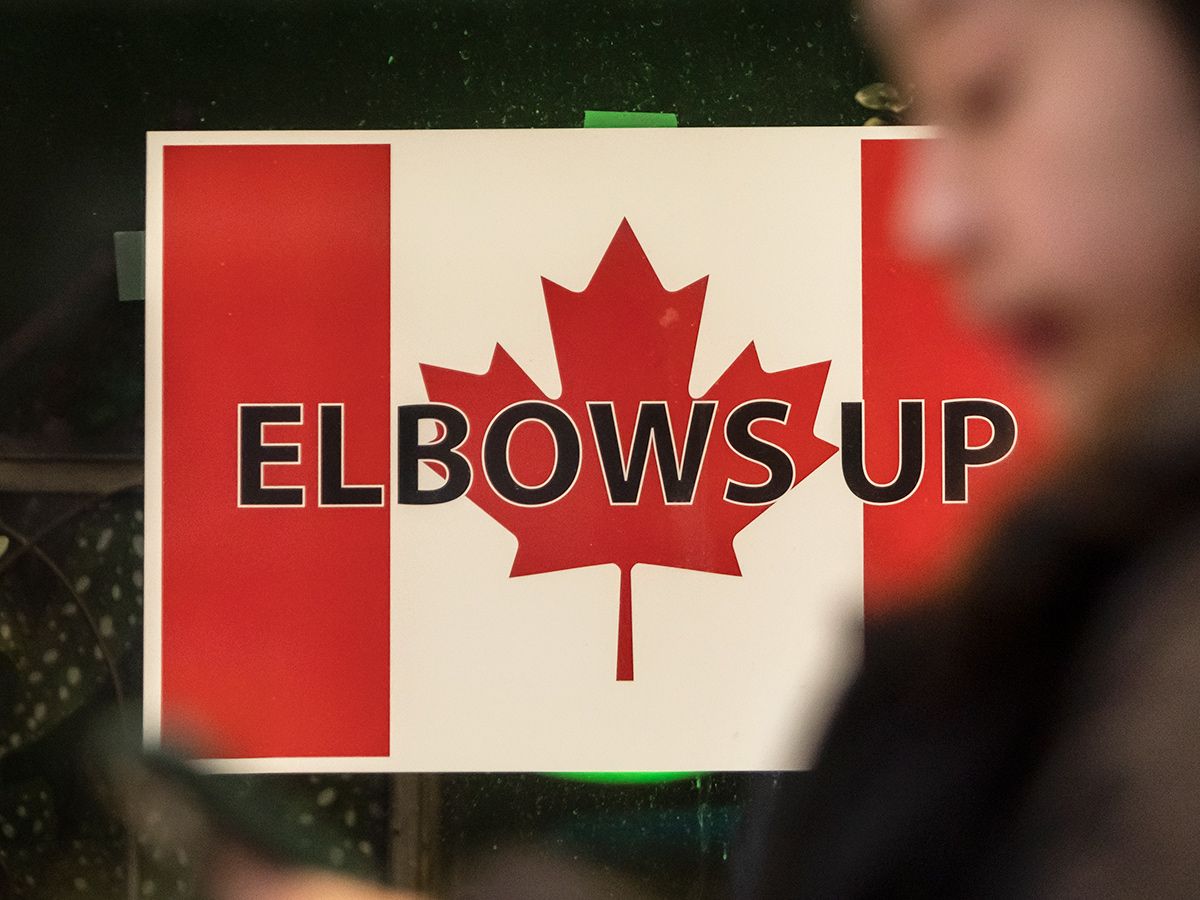
McKercher said Canadians aren’t intrinsically anti-American; it’s more that they like to emphasize their “un-American” characteristics and habits — such as those identified in the beer commercial — that make them feel different from their more famous neighbours.
Drohan said some Canadians harbour resentment that Americans don’t know more about Canada, while others have difficulty “living in their shadow.” The U.S. is a global superpower with its military, culture, technology, sports and more, which its citizens aren’t shy about pointing out.
Some Canadians have a “chip on their shoulder” when it comes to the U.S., which was reflected in the reaction to the famous “Joe Canadian” beer commercial, said David Haglund, a politics professor specializing in U.S.-Canada relations at Queen’s University.
Canadians like to compare themselves favourably to Americans, he said, an ontological exercise that can make some people feel better about themselves. In this regard, he said, Trump has been a gift to Canadians. Especially incumbent politicians.
Trump makes it too easy
Canadians’ anti- or un-American sentiments about the U.S. have clearly been higher than usual since the start of Trump’s second term in January 2025 and his barrage of insults, tariffs and references to Canada becoming the 51st state. Trips from Canada to the U.S. are down considerably (although it’s still the No. 1 destination), American booze is off shelves in most provinces (though not Saskatchewan and Alberta), and Canadians’ attitudes toward their southern neighbour have chilled.
According to a February Nanos poll, about three-quarters of Canadian respondents rejected the idea that the U.S. should be considered a trustworthy ally , which the polling firm describes as “a stark reversal of decades of continental confidence.” About two-thirds of respondents, meanwhile, said they were concerned that Canada’s security is threatened by the U.S. under Trump, while almost one in five Canadians say they believe an American invasion is likely.
While Trump may infuriate millions of Canadians, he’s been a political windfall for some Canadian politicians who have been given the chance to wrap themselves in the flag and to stand up to his rhetoric.
Haglund said Prime Minister Mark Carney, for example, likely wouldn’t even be in power if not for Trump and his various threats. Carney campaigned for his first election last year largely on the idea that the country’s sovereignty was under threat from the U.S. Reviving a Liberal party that under his predecessor had become intolerable to most Canadians, Carney seemed to get a boost in the polls every time Trump mentioned Canada in an insulting way. (By contrast, some analysts said Conservative Leader Pierre Poilievre lost some votes in the last election because his side didn’t gauge the public’s view of Trump well enough, and wasn’t seen by some as staunch enough in standing up for Canadian interests. Poilievre’s opposition to most things Trump has since become much more vocal.)
Despite the fact that Carney campaigned on being able to manage Trump , he’s discovered that the more hostile things get, the more Canadians lap it up. People like to cheer for the underdog — especially if it’s us.
What about the other way?
But what are Americans thinking about Canadians?
If you listen to the current president or his ambassador to Canada, there seems to be some animus.
Beyond the threats to Canadian sovereignty and the tariffs that have hurt key industries, many Canadians feel betrayed by the disrespect from Washington. As recently as last month, Trump reposted disappointing news about the Canadian economy with a comment about the “51st state.”
U.S. Ambassador Pete Hoekstra has echoed Trump’s tone and made comments that suggest he can’t understand why Canadians are so agitated . He said he does, however, understand why Trump sees Canada’s response, with tactics like boycotts, as “nasty and mean.”
But that doesn’t mean that those feelings are widely held.
Polls show that the American public doesn’t know nearly as much about Canada as the quantity of information that flows the other way. That’s to be expected. The U.S. has a population more than eight times as large as Canada’s; it’s the cultural colossus of the English-speaking world, and an estimated 90 per cent of Canadians live within 160 kilometres of the U.S. border.
Canada is also much more economically dependent on the U.S., with more than three-quarters of its exports heading across the border. About 15 per cent of American exports head north, which makes Canada either the first or second most important market for American goods and services, depending on the year and methodology.

Although Americans may not think about their neighbours to the north nearly as much as the other way around, most of the thoughts they have are still positive. Polls show that Americans rank Canadians in their first tier of international friends and allies, citing shared values, a good, peaceful neighbour and cultural and economic ties. Even when there’s a trade or economic dispute, Americans don’t tend to direct any ill will towards Canadians.
A recent Gallup poll found that a strong majority of Americans (80 per cent) still hold positive views of Canada , although that number has dropped about nine per cent over the last year and now represents the lowest mark since the company started asking Americans about their feelings about Canada and other countries more than 40 years ago.
Gallup found that Republicans accounted for much of that drop, with 62 per cent of that party’s supporters, down 23 points, saying they have a positive view of their neighbour to the north. There was little change among Democrats and independents.
Julie Ray, Gallup’s lead on its global polling, said the drop in Americans’ views of Canada is in line with the change in their views of other NATO countries, with some countries now posting favourability ratings as low as 15 per cent. The poll results on Canada reflected a similar drop in respondents’ views of another longtime close ally, the United Kingdom, Ray said, down eight per cent to 88 per cent over the last year.
But there are a lot of incentives for Canadian politicians and the Trump administration to keep tensions simmering. And they seem bound to: On Wednesday, the U.S. confirmed it would not renew its free-trade deal with Canada and Mexico, meaning there will be annual reviews for the next decade — or until at some point all three countries agree to renew it. That could mean years more yet of uncertainty, confrontation, boycotts, insults and threats.
Last year, Douglas made a sequel to “The Rant” ad for YouTube, featuring the same actor, Douglas, as Joe Canadian.
“It’s in our nature to cut a guy some slack,” ranted Douglas. But these days the Americans “make a lot of mistakes,” he said. “They mistake our modesty for meekness, our kindness for consent, our nation for another star on their flag.”
“They think they can bully us, threaten us. and push us around, but they do not know us. That ‘artificially drawn line’ they keep talking about? Not artificial. And it’s not on a map. It’s right here,” he says in the ad, pointing to his heart, before launching into a celebration of not just cultural touchstones, but bench-clearing brawls and Chrétien’s famous “Shawinigan handshake,” in which the former prime minister violently manhandled a protester.
Maybe this antagonistic version of Joe Canadian won’t outlast Trump.
Or maybe we’ll discover we’re enjoying it too much to quit.
National Post
SIDEBAR: Best of friends? Not always
1773: Changes to British governance of their North American colonies trigger the Boston Tea Party. But it was also the so-called “Intolerable Acts,” including the Quebec Act of 1774, which was designed to allow expansion of Canadian territories and protection for Catholic and French-language rights, that instigated American colonists to revolt.
1775-76: Americans invade what is now Quebec in an effort to get French-speaking residents to join forces in the American Revolution against the British. The invaders captured Montreal but failed to take Quebec City and later went home.
1782: Benjamin Franklin, lead American negotiator at the 1782 peace negotiations with Britain in Paris and an advocate for America’s northward expansion, is forced to abandon his efforts to annex Canada because of poor health and a change in America’s post-independence priorities.
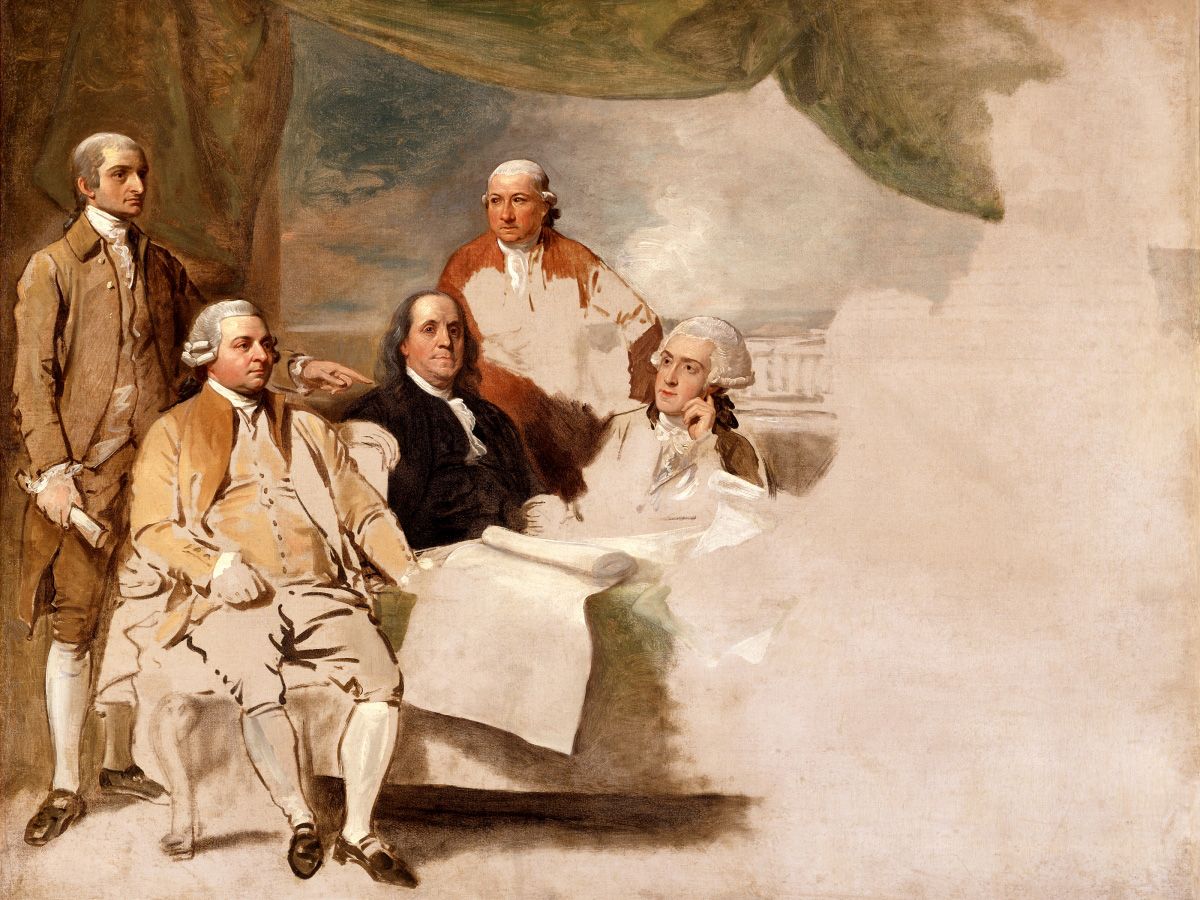
1783: The Americans and British sign the Treaty of Paris, which ends the American Revolution and establishes a border between the newly created United States of America and the British colonies that would later become Canada.
1812-15: The War of 1812 includes as many as 10 American invasions or incursions into Upper and Lower Canada as the American government considered annexing its northern neighbour a priority.
1837-38: The Patriot War, a series of raids along the Canada-U.S. border, cements British control over what is now Ontario and Quebec.
1949: Canada and the U.S. become founding members of the North Atlantic Treaty Organization (NATO), a key plank in the two countries’ close relationship throughout much of the Cold War era.
1989: Canada-U.S. Free Trade Agreement kicks off period of closer economic integration and growth.
1994: North American Free Trade Agreement adds Mexico.
2018: After campaigning against NAFTA, U.S. President Donald Trump declares his plan to exit the pact in his first term and negotiates a revised Canada-U.S.-Mexico (CUSMA) trade deal.
2025: Trump begins a second term and quickly begins threats to Canadian sovereignty and implements a wide range of tariffs, including against key Canadian industries not covered by CUSMA.
July 1, 2026: The Trump administration refuses to renew CUSMA, setting off annual reviews of the deal for the next decade.
Our website is the place for the latest breaking news, exclusive scoops, longreads and provocative commentary. Please bookmark nationalpost.com and sign up for our daily newsletter, Posted, here.
