
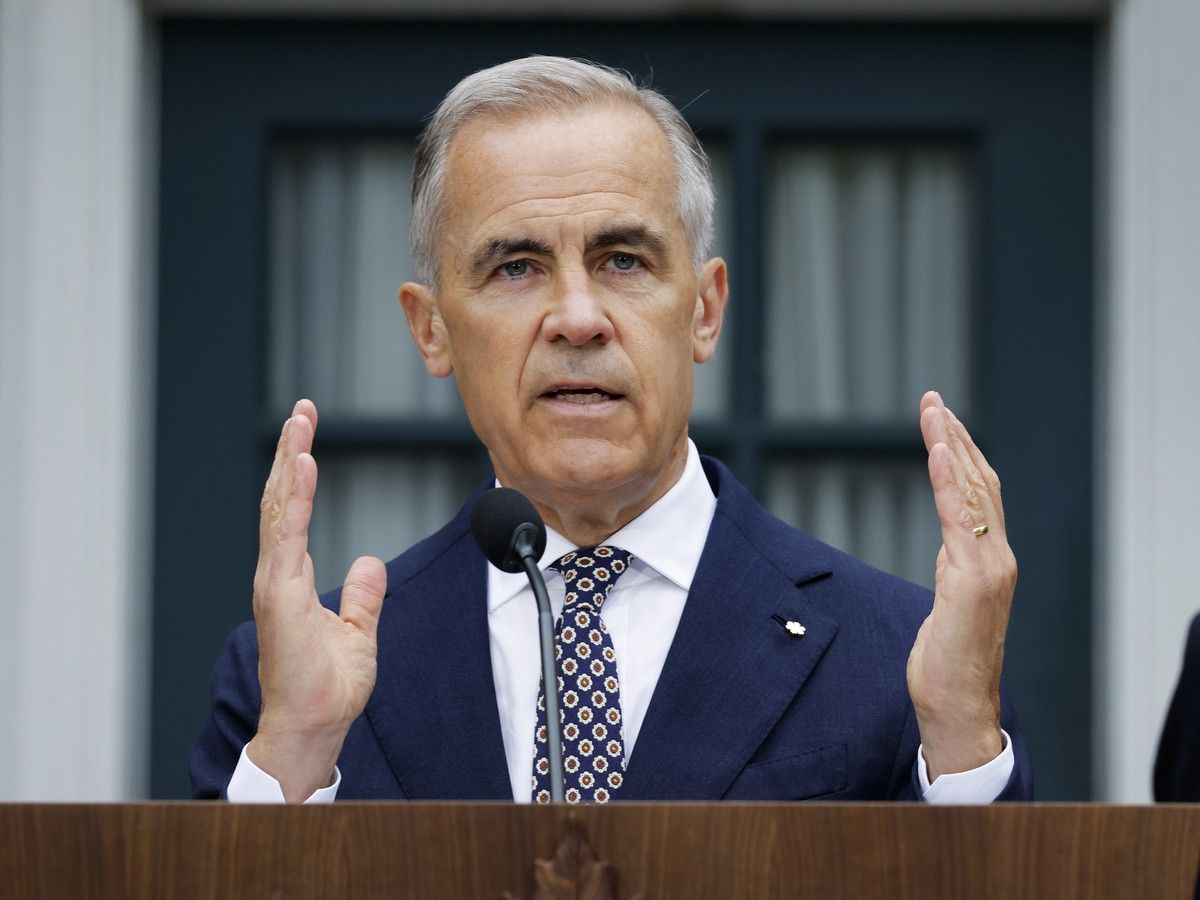
Carney may name more Conservative senators to beef up ranks, says Liberal Senate representative
OTTAWA — Prime Minister Mark Carney has no intention of reviving a Liberal caucus in the Senate but is prepared to beef up Conservative ranks in the upper chamber, said the government’s representative in the Senate, Pierre Moreau.
In an interview with National Post, Moreau said that he has been in discussions with Carney’s office for some time about the new Senate appointments process unveiled last week. Those changes include “removing the non-partisanship criterion” and recruiting candidates with “expertise in key Canadian strategic industries.”
“Never has the idea of returning to a Liberal caucus been part of our discussions,” said Moreau, regarding rumours in recent months that Carney was prepared to reverse his predecessor’s 2014 decision to kick Liberal senators out of the party’s caucus, leaving them to sit as purported Independents.
Carney announced last Wednesday a new independent advisory board to inform future Senate appointments, but his representative in the upper chamber said the prime minister retains his “constitutional prerogative” to proceed with partisan nominations, such as last week’s appointment of Carney’s former principal secretary, Thomas Pitfield, and then-Conservative MP Richard Martel. Former prime minister Justin Trudeau had said he would end partisan appointments, using an independent board to recommend senators, although he was later accused of reverting to appointing people with strong ties to the Liberal party.
“So, we have a hybrid method which, in my view, will serve the Senate well,” Moreau said. “It does not put into question the independence of the Senate.”
Moreau also hinted the choice to nominate Martel to the Senate may have been the first step of a larger plan to swell the ranks of the official Opposition in the upper chamber, where Conservatives have been losing ground over the last 11 years from over 50 senators in the Conservative caucus in 2014 to just 12 today. Martel will enter the Senate as an Independent, but he could decide to rejoin the Conservative caucus.
“The Senate is the reflection of the House of Commons, meaning that there are representatives of the government and the official Opposition,” Moreau said.
He added that Conservatives received over 41 per cent of votes in the last federal election and that, in that context, the government cannot allow the voice of the official Opposition to wither away.
“I absolutely share the prime minister’s view that there should be special attention reserved to the official Opposition when we want a healthy democracy,” he said.
Martel’s appointment, however, also had the effect of forcing the Conservatives to fight a by-election to keep his Chicoutimi—Le Fjord seat in Quebec, which is not traditionally Conservative.
Carney’s Senate changes are so far receiving mixed reviews from current senators. Those with political backgrounds say they are glad to see the government won’t exclude people like them from appointments, while the ones appointed under the Trudeau process fear that the new way of doing things will cloud the independence of their chamber.
Leo Housakos, leader of the Opposition in the Senate, said in his view Carney has opted for a “balanced” approach in opening up partisan appointments.
“I do welcome the fact that they are encouraging senators to be themselves and express themselves politically if they choose, and less politically if they choose, and completely independent if they choose,” he said.
“That has always been the tradition of the Senate.”
But Rosa Galvez, one of the first senators to be appointed in the Trudeau era, said there was a reason why the prior Liberal government made those changes in the first place. She pointed to public frustration about the Senate being too partisan and prone to scandal.
“I don’t know if our memory is short, but we should remember why this reform was in place from the beginning,” she said.
Galvez said she was not happy to see Carney announce his reform without consulting the public first.
“People must have an idea of what they want in the Senate. But I am completely sure that what they don’t want is to have an extension of the other House,” she said.
“The competition, the partisanship, the politics — we have already a chamber that does that.”
Paula Simons, an Independent senator from Alberta appointed under the Trudeau model, said she was “a little perplexed” by the government’s framing that the Senate did not have enough people with political backgrounds.
“There was never a ban on people with partisan affiliations being appointed to the Senate,” she said.
Indeed, many senators appointed under Trudeau had a partisan past. That includes Moreau, who said he was briefly involved with the Progressive Conservatives in the 1980s but subsequently made his political career in the Liberal Party of Quebec. Rodger Cuzner, now a senator for Nova Scotia, served as a Liberal MP for nearly two decades; and senator from Alberta, Daryl Fridhandler, was a longtime federal Liberal fundraiser.
Cuzner said he is comforted by the fact that the government will not disqualify candidates because they might have a history with the Liberal Party of Canada, while at the same time Carney is not “just going to go out and fill (the Senate) with former Liberals.”
Housakos said he is “pleased” that the government is respecting the role of the official Opposition and the large percentage of Canadians who did not vote for the Liberals.
Simons said that when she first joined the Senate in 2018, the Conservatives were still the largest group in the chamber and “they did not make it easy” on the new senators.
“If you had told me in 2018 that one day a Liberal prime minister would start appointing more Conservatives, I would have been shocked, because we were having a really hard time being outnumbered by Conservative senators,” she said.
Simons said it is “a move that shows a lot of confidence by the government” to be able to nominate senators who could eventually oppose their legislation.
“You don’t do that unless you’re feeling pretty certain of yourself,” she said. “So, I guess it’s a gesture of noblesse oblige.”
It remains to be seen how long the graciousness will last, she added.
“I mean, one day a future Liberal prime minister may look back and say, ‘You did what!?’”
National Post
calevesque@postmedia.com
Our website is the place for the latest breaking news, exclusive scoops, longreads and provocative commentary. Please bookmark nationalpost.com and sign up for our politics newsletter, First Reading, here.
