
‘Netflix has to evolve’: can the upstart survive the end of the binge-watch era?
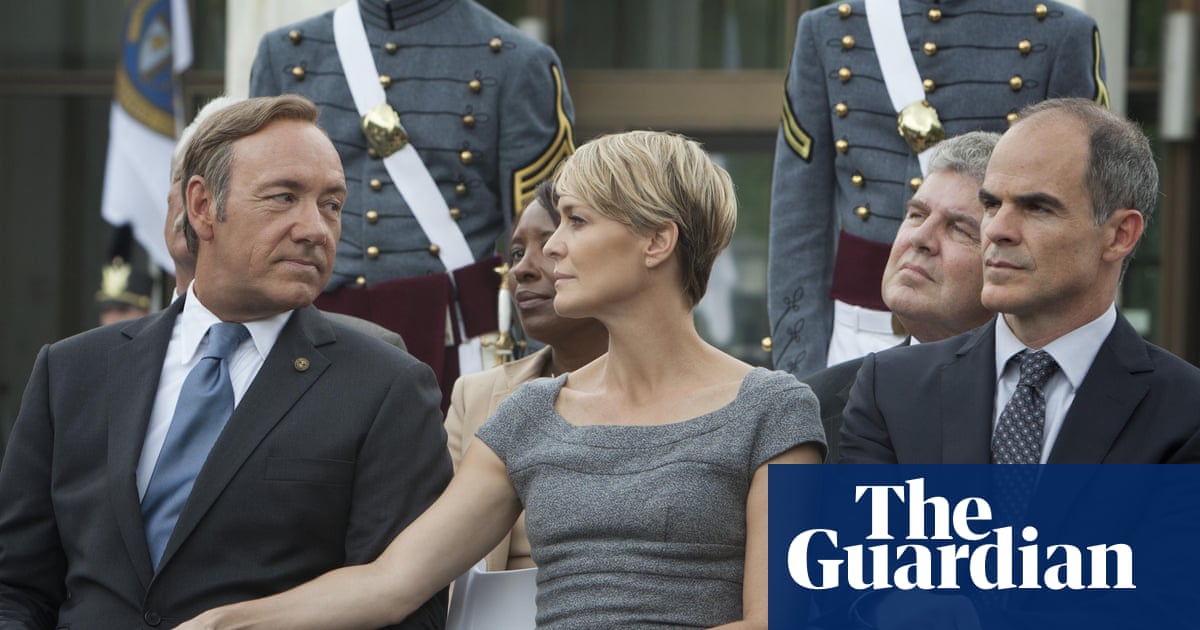
When Netflix offered viewers the chance to binge on an entire season of House of Cards it revolutionised the TV industry and started on a path to becoming the world’s most popular streaming service.
Almost 15 years on, however, the upstart’s strategy of pumping its service with an avalanche of content and an almost-as-rapid penchant for mercilessly cancelling shows has viewers reaching for the remote.
A recent analysis of a number of Netflix’s top shows, such as One Piece, Beef, The Night Agent and Avatar: The Last Airbender, revealed audience declines of 30% to 70% in their second seasons and further declines in their third.
Last week, Netflix said it would scale back the viewership data it releases to once a year, following the scrapping of the quarterly reporting of subscriber growth last year, further fuelling fears that its years of juggernaut-like engagement growth may have passed its peak.
“We’ve been saying to TV producers to be careful, it might be tempting to take the big money being offered to make a show for Netflix, but the saying goes that it’s often the case of ‘one and done’ – you’re cancelled,” says one senior TV industry executive. “What is happening with binge model audiences has been clear for years now. Fifteen years ago it was a means to an end, creating a market leader, but look how different the world is today. Netflix is looking out of date.”
While there is a popular perception that Netflix is quicker to cancel shows than its competitors, research from Ampere shows that it is a facet of the streaming model. A look at cancellations of scripted programmes made last year shows that across all the big streamers this usually occurred after series two or three.
Netflix has announced the fate of about 180 unscripted and scripted shows annually over the last three years, with a cancellation rate averaging about 22%, with a similar ratio seen across the other global streaming players.
The reason streaming cancellation rates seem so high is largely because they are, but only compared to traditional broadcasters. For example, an analysis of the rate of cancellations last year at the BBC shows that a scripted show was typically cancelled after its fifth or sixth season, a lifespan typical across major traditional broadcasters.
“I remember always having to defend the weekly broadcast model by saying there is value in deferred pleasure,” says Peter Fincham, a former senior executive at the BBC and ITV who is a co-chief executive of the production company Expectation. “Linear broadcasting is biased towards recommissioning, because you have a schedule. And there are plenty of examples of a series that has shown some promise, but maybe not done quite as well as hoped, building over time. In the world of streamers, which is much more data driven, it is much less sentimental.”
Netflix does dabble with how it releases some content, such as its flagship franchise Stranger Things, which has been released in multi-episode tranches, and Love is Blind as a weekly drop.
However, competitors such as Disney+, HBO Max and Apple TV have had huge success using the traditional TV-style, slower-burn drip-feed for hits such as Rivals, The Pitt and Widows Bay respectively.
Investors started showing concern about Netflix’s hit content pipeline when it stunned the market by making an $83bn (£62bn) bid to buy Warner Bros Discovery’s (WBD) studios and streaming business.
While it was positioned by bosses as a rare chance to pick up a trove of assets – including the Hollywood studio behind franchises including Harry Potter, Superman and Batman, as well as HBO, home to shows including Game of Thrones, The White Lotus and Succession – that bid marked the first time Netflix had hoped to bolster its content firepower through an acquisition.
With the mega-franchise Stranger Things and Squid Game coming to an end, and the new hit Wednesday not scheduled to return to screens until next year, investors worry the move was instigated in recognition of a need to shore up a patchy content slate to keep viewing in growth mode.
The company’s share price has tumbled 40% over the last year.
Emarketer forecasts that time spent on the streamer in the US, by far and away Netflix’s largest market, will grow just two minutes this year to 36 minutes, and just one minute in each of 2027 and 2028.
But again, while investors have reacted to a perceived engagement problem at Netflix, that appears to be a factor at rivals too. Emarketer forecasts that the amount of time spent by viewers on Disney+ will only increase by 1 minute this year, half that of Netflix.
Profits at Disney’s streaming operations nearly doubled year on year in its most recent quarterly results, reporting its first double-digit streaming margin. Nevertheless, an analyst at Wells Fargo recently suggested Disney should get out of streaming and focus on producing and licensing to boost a share price down almost a quarter over the past year.
Almost a decade ago, the founder of Netflix, Reed Hastings, quipped that the market opportunity was so vast that his biggest competitor wasn’t rivals but sleep, as viewers flocked to binge-watch its hosepipe of content. However, while Netflix has enjoyed golden years as a first-choice streamer it faces newer competitors in the battle for consumers’ attention.
And when it comes to screen time, YouTube has become a force to be reckoned with. Last year, average daily viewing on YouTube passed Netflix for the first time, according to a report by Digital-i. The 20 market report found that while YouTube viewing rose from 87.2 minutes to 99.1 minutes per day on average, Netflix fell from 100.5 to 93.4 minutes per account.
Figures from eMarketer also put TikTok in the attention competition mix, with average daily viewing per user in the US at 57 minutes. However, it is YouTube’s drive into the living room that marks it out as the biggest threat to the existing streaming hegemony.
Last year, YouTube said TV screens officially overtook mobile phones and desktop computers as the primary device for viewing the platform’s content in the US, a milestone that was also reached in the UK as four- to 15-year-olds joined older demographics that had already made the jump to television formost of their viewing on the video platform.
UK data from the audience body Barb showed that TV sets became the first-choice device for YouTube viewing for over-55s in October 2023, for those between 35 and 54 in April 2024, and for 16- to 34-year-olds in December 2024.
YouTube’s combined share of UK television and streaming viewing is now second only to the BBC – 18.3% to 20.55% – according to Barb’s most recent figures for June.
And in terms of content, viewers have moved beyond videos of cats on skateboards and gamers’ videos of themselves playing Minecraft. Digital-i estimates that the share of viewing to long-form content on YouTube, that is videos more than 20 minutes long, is about 68%.
Netflix itself acknowledged the YouTube threat when it was bidding to take over WBD, as is Sky and ITV in their argument to gain takeover clearance.
Paramount, rival and ultimate victor for WBD, claimed that a Netflix deal would give it too much dominance over the streaming market in the US. Netflix countered by saying that as a video-platform YouTube should be included as a competitor in the market.
“The problem is Netflix isn’t distinctive any more, it is now just part of the firmament,” said the senior TV executive. “It is not head and shoulders above everyone else any more, and is no longer the first choice destination for discovery, and I think that is massive. Everyone else has changed and evolved, why hasn’t Netflix?”
