
‘The eww holds power’: why disgust shapes how we see nature, queerness and each other
It was the summer of 2021 and I was standing in Hyde Park, London, trying to persuade passing tourists to come bug hunting with me. I was working on a campaign to increase public appreciation of invertebrates and, while I adore bugs, this job was teaching me how differently other people see them.
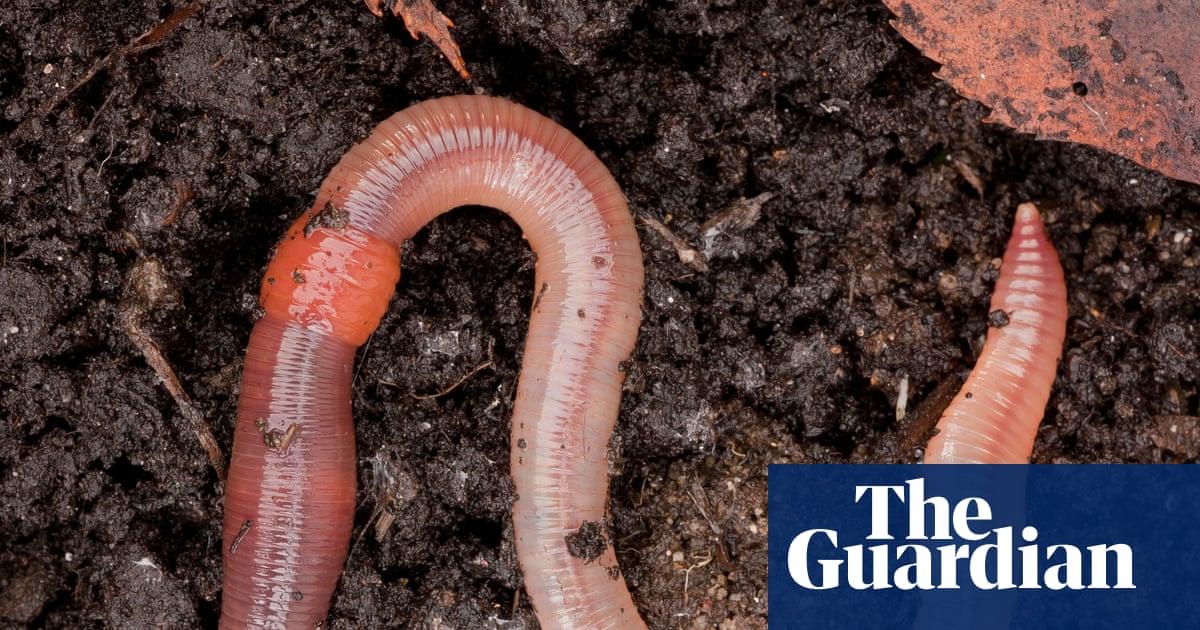
A woman and her young daughter stopped to chat. Grateful for a few minutes of respite, the woman turned to her phone while the child followed me to a nearby log. We lifted it to reveal one of the largest earthworms I’ve ever seen.
I asked the girl if she would like to look at it properly, and her face lit up as she nodded. But just as I placed the worm into her palm and began explaining which end was the head, her mother looked up and screamed. The child picked up instantly on her mother’s cue, shrieked, dropped the worm and recoiled. In that moment, I saw fear and revulsion towards bugs being cemented in that young girl’s mind.
We talk about disgust as though it is instinctive: a bodily truth that tells us what is dirty, dangerous or wrong. Part of it is protective. Disgust helps us avoid spoiled food and pathogens. But what provokes disgust is also shaped powerfully by culture, experience and other people. Children learn what deserves a wrinkled nose.
And this “eww” holds power. The creatures we describe as disgusting are those we understand least. Once something is deemed as a “pest”, we stop asking what it needs, or whether it has value; we turn it into the frightening “other”.
Throughout history, groups of people have been likened to swarms, vermin, parasites and infestations. Disgust creates distance. It turns a being into a contaminant and makes avoidance, exclusion or eradication feel justifiable.
I describe myself as a purveyor of disgust: I work with insects and I am queer, two identities that have received more than their fair share of revulsion. Queerness has long been framed through the language of contamination: something that spreads or corrupts an imagined “natural” order. We can see similar language in debates around the Aids crisis, same-sex marriage and, more recently, trans-inclusive school education.
Yet there is no “other” in nature. Worms, parasites, pollinators and humans are all part of the same living systems. Animals reproduce, form relationships and move through the world in countless ways, with same-sex pairing and sexual fluidity consistently popping up across most branches of the tree of life. Difference is not outside nature; it is what nature is made of. The boundary between “normal” and “other” is one we create.
I’m not saying we should force everyone to hold a worm. You are allowed to dislike things. But there is a difference between discomfort and condemnation; between saying “that’s not for me” and deciding “that should not exist”. The girl in Hyde Park did not arrive afraid of the worm. She held it with fascination. Then she learned to recoil from it.
The hopeful part is that disgust can be unlearned. Until I was 14 I was revolted by worms. Then, on a fishing trip, a friend dropped a handful of them into my palm as we walked to our fishing spot. Too embarrassed to admit my disgust, I pushed through. Within minutes, I realised they were not as bad as I had imagined.
after newsletter promotion
Familiarity matters. The more opportunities we have to encounter people and worms without being told to fear or reject them, the less threatening they can become. Prejudice is sustained by distance, while understanding grows through contact, curiosity and conversation.
We can lift the log again. We can look more closely. We can ask who taught us that a creature, a body or a way of living was repulsive – and who benefits when we believe them.
