
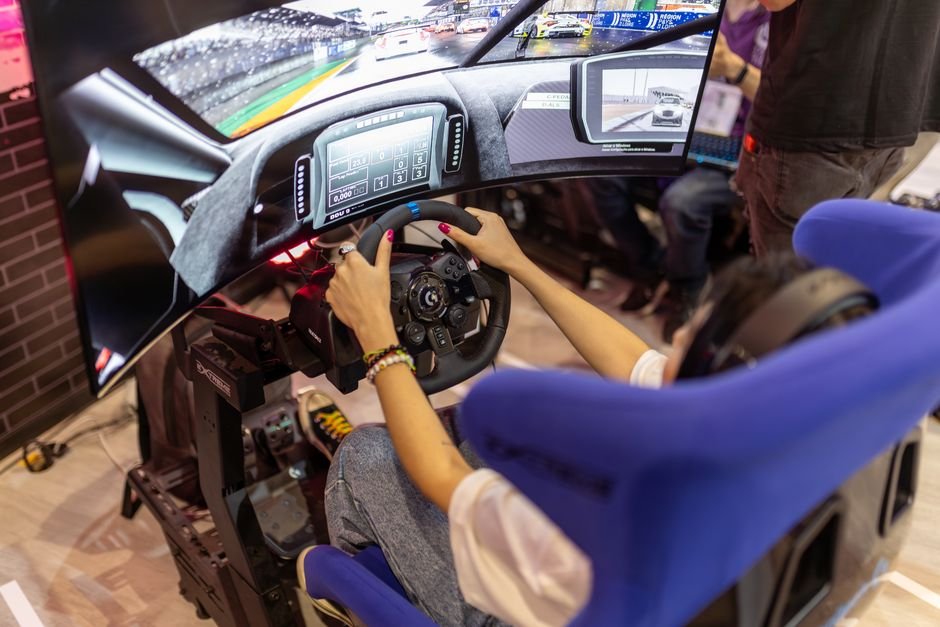
California Launches Free Simulator To Teach Teens Safe Driving
The California Office of Traffic Safety (OTS) and the California Department of Transportation (Caltrans) have launched a free, web-based driving simulation game designed to help teenagers and new drivers practice safe habits before they get behind the wheel. The program, called “The Road Ahead,” uses immersive, first-person storytelling to place young players in realistic driving scenarios involving distraction, speeding, impaired driving and work zone hazards.
State officials said the tool responds to a persistent public safety problem: traffic crashes remain the leading cause of death for American teenagers. In California, drivers between the ages of 16 and 19 post the highest crash and traffic violation rates per 100 drivers of any age group. According to state data cited by the agencies, 451 California drivers between the ages of 15 and 20 were involved in fatal traffic crashes in 2024. Nationally, 3,208 people died in distraction-affected crashes that same year, including 186 teenagers aged 15 to 19.
Federal data referenced in the announcement shows that young drivers, defined by the National Highway Traffic Safety Administration as those aged 15 to 20, made up 8.9 percent of all drivers involved in fatal crashes in 2023, despite representing only 5.1 percent of all licensed drivers nationwide. Officials attributed the disproportionate risk to inexperience, immaturity, inaccurate assessment of danger, overconfidence in driving ability and a tendency toward risk-taking behavior behind the wheel.
“The Road Ahead” offers three separate gameplay scenarios built around common pressures teens face while driving. One, titled “One Look Away,” simulates the pull to check a phone after receiving multiple texts while driving. A second, “Caught Up in It,” recreates peer pressure to speed while running late. A third, “One More Drive,” puts players in the position of deciding whether to drive home impaired after a night out, testing the overconfidence that often precedes that choice. Each scenario ends with safety tips, additional resources and public service video announcements, two of which were produced by California teenagers through a youth traffic-safety arts competition.
OTS Director Stephanie Dougherty said the simulator gives young drivers a chance to make consequential choices in a controlled setting and see the outcomes immediately, reinforcing safer habits early. Caltrans Director Dina El-Tawansy said the tool is meant to remind new drivers that responsible choices protect not only themselves but road crews and other travelers across the state’s highway system.
The rollout comes alongside broader state investment in teen driver education. Over the past year, OTS provided nearly $3.5 million in funding to the California Highway Patrol to expand impaired- and distracted-driving education statewide, supporting programs such as Every 15 Minutes and Impact Teen Drivers. That funding also underwrites the Start Smart Program, which offers free, officer-led classes for newly licensed teens and their parents at CHP offices around the state.
The initiative fits into a broader national push by transportation agencies to reach younger audiences through digital and gaming platforms rather than traditional classroom instruction alone. Public health researchers have increasingly pointed to interactive simulation as a way to build risk-recognition skills without exposing new drivers to real-world danger, a method already used in pilot training, emergency-response education and other high-stakes fields.
Traffic safety advocates note that teen driver programs nationwide have struggled to keep pace with rising distraction-related fatalities tied to smartphone use, even as vehicle safety technology has improved. Combining behavioral education with gaming mechanics, officials say, may help close that gap by engaging teens on platforms they already use regularly, rather than relying solely on lecture-based instruction or written materials.
CHP Commissioner Sean Duryee said sound judgment behind the wheel develops through repeated practice and early exposure to realistic hazards, while Impact Teen Drivers Executive Director Dr. Kelly Browning said the simulator allows teens to rehearse difficult decisions safely before confronting similar pressures on actual roads.
This report is based on information provided in a press release, available via PR Newswire.
