Canada Keeps Ebola Immigration Measures to 27 November as US Air Passenger Declaration Starts 3 November
Canada's Ebola immigration measures for DRC, Uganda and South Sudan run to 27 November. A separate US attestation for all inbound air passengers takes effect on 3 November.
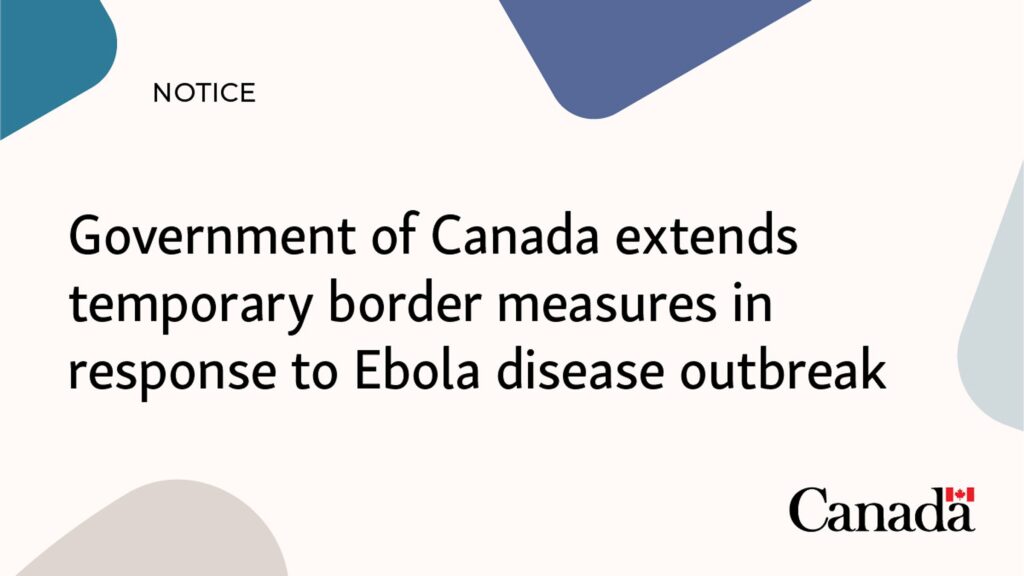
The Government of Canada has extended its temporary Ebola-related immigration measures by 60 days, to 27 November 2026. Immigration, Refugees and Citizenship Canada announced the extension on 28 September. It covers residents of the Democratic Republic of the Congo, Uganda and South Sudan.
The US Centers for Disease Control and Prevention (CDC) will begin a separate requirement at 11:59 p.m. EST on 3 November. Every person boarding an international flight to the United States must attest to not having been in the DRC during the previous 21 days. The CDC issued its order on 22 October and amended it on 28 October.
What Canada’s measures cover
Canada’s notice says immigration documents remain suspended for residents of countries with a high or very high risk of an Ebola outbreak. It names the DRC, Uganda and South Sudan. People whose last country of residence at the time of application was one of the three are also covered.
The suspension reaches visas, electronic travel authorizations, work and study permits and temporary resident permits, according to the Canada Gazette. The notice says affected people cannot currently travel to Canada even if they hold an approved document. Applications continue to be processed but are not finalized while the measures stand.
The amended immigration order took effect at 22:00 Eastern Daylight Time on 28 September. It ends at 23:59:59 Eastern Standard Time on 27 November. Aeronautics Act Interim Order No. 3 ceases to have effect at the same moment.
Key dates
Canada’s amended Ebola immigration order took effect 28 September 2026 and ends at 23:59:59 EST on 27 November. The CDC attestation applies to flights departing at or after 11:59 p.m. EST on 3 November 2026.
Quarantine, boarding limits and exemptions
The Gazette also describes measures under the Quarantine Act. Travellers who have been in the DRC, South Sudan, Uganda or another country rated high or very high risk by the Minister of Health in the past 21 days must complete a mandatory health assessment. Those without symptoms must quarantine for 21 days. Those with symptoms must isolate.
Foreign nationals who have been in the DRC in the past 21 days are barred from entry. The aviation order bars foreign nationals and air carriers from boarding flights to Canada for anyone who has been in the DRC within the 21 days before seeking entry. Maximum penalties for contraventions are $150,000 for individuals and $1,500,000 for corporations.
The immigration order does not apply to Canadian citizens, permanent residents, people registered under the Indian Act, U.S. citizens and lawful permanent residents, or accredited foreign representatives and their families. The Minister can grant case-by-case exemptions. The Gazette says an exemption under one order does not automatically carry over to another.
The US attestation and how it differs
The CDC order applies to everyone boarding an international flight into or connecting through the United States, including U.S. citizens and lawful permanent residents. The amended order of 28 October clarifies that it also covers crew on passenger- and cargo-carrying aircraft.
Each person needs an attestation record. One authorized representative, such as a parent, guardian or travel companion, may attest for others in the party. The attestation confirms the traveller has not been physically present in the DRC in the 21 days before boarding. Transit through a DRC airport counts. The CDC warns that willfully false or misleading information may lead to criminal fines and imprisonment under 18 U.S.C. § 1001.
Airlines must confirm an attestation exists at or shortly before boarding and deny boarding to anyone without one, unless exempt. The CDC order refers to records that can be kept for 42 days after the flight departs. Electronic, digital and verbal methods are allowed; verbal attestations must be recorded in a unique electronic record.
The structures differ. Canada’s rules turn on country of residence and recent travel, and they suspend documents for residents of three countries. The US rule is a declaration that every inbound air passenger completes, tied to presence in the DRC alone. Separate US restrictions apply to certain foreign nationals who have recently been in Uganda or South Sudan, Outlook India reported.
Canada’s rules turn on country of residence and recent travel, while the US rule is a declaration that every inbound air passenger completes.
What travellers can expect at airports
For Canada, the Gazette describes enhanced questions on Primary Inspection Kiosks for travellers who have been in the DRC, Uganda or South Sudan within 21 days. Ebola symptom signage and handouts are to be deployed at Montréal, Toronto Pearson, Vancouver, Calgary, Edmonton and Ottawa airports.
For the United States, the check happens before departure. Airlines handle the forms, and the CDC says passengers who do not complete one can be denied boarding. The CDC says third parties may collect attestations but the airline stays solely responsible. The U.S. Department of Transportation has said it will not act against airlines that strictly follow the directive for travellers unable to present an attestation.
Outlook India reported that the CDC assesses the risk to the American public and travellers as low and that there are no confirmed U.S. cases linked to the outbreak, which involves the Bundibugyo strain of Ebola virus.
What happens next
Canada’s immigration and aviation orders end at 23:59:59 EST on 27 November. The extension was announced on 28 September, the same day the amended order took effect.
The US attestation applies to flights departing a foreign country at or after 11:59 p.m. EST on 3 November. Travellers can read the full attestation text in Attachment A to the CDC order.