Andersson ends bid to lead Sweden; Speaker expected to turn to Kristersson
Magdalena Andersson said on 28 September 2026 she could not form a government after the Left Party backed a centre-right speaker candidate, Reuters reported.
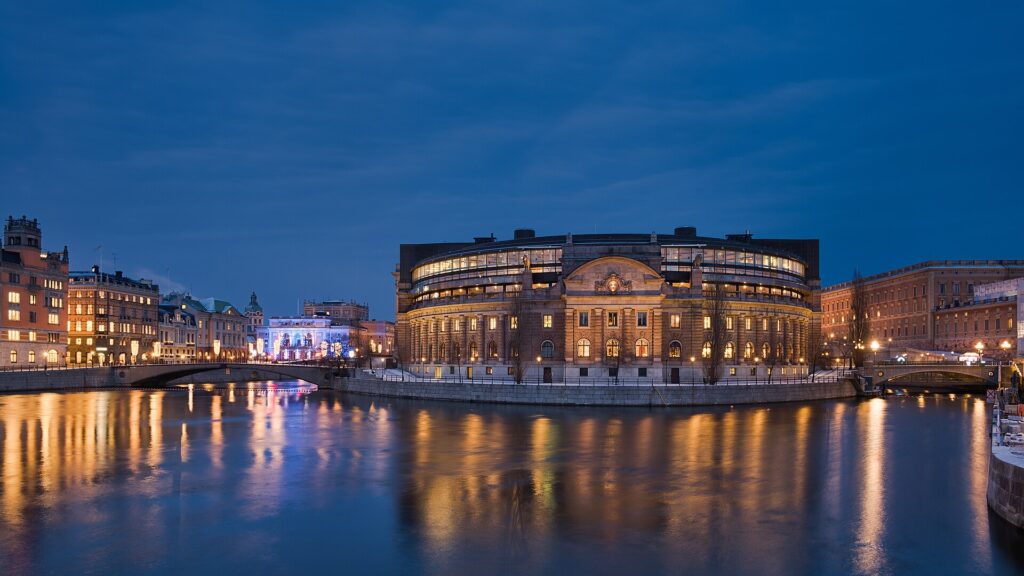
On 28 September 2026, Social Democrat leader Magdalena Andersson told a press conference that she could not form a government, Reuters reported. She said she had lost the support of the Left Party, which had said it would back a centre-right candidate for parliament speaker. Speaker Andreas Norlén is expected to ask Prime Minister Ulf Kristersson to try next.
Norlén had given Andersson the first mandate on 18 September, after Kristersson resigned as prime minister on 17 September. The centre-left bloc won 176 of the 349 seats in the 13 September election, against 173 for the centre-right. The sources reviewed contain no later step than 28 September.
How the prime minister vote works
After a prime minister resigns, the Speaker prepares a proposal for a new prime minister, and the Riksdag votes on it, according to the Riksdag’s description of the process. The Speaker can first give a party leader the task of exploring whether a government is possible. Norlén did this on 18 September, when Andersson was given the task.
The vote is compulsory. The Riksdag says a 2011 amendment to the Instrument of Government made it so, and that the vote shows whether a government has enough support in a newly elected parliament. The Riksdag’s page on the 2018 process says more than half of members voted against Stefan Löfven, after which he resigned.
Reuters reported that the Speaker can put up to four candidates to parliament. If all four are rejected, Sweden holds a new election. Reuters also noted that Löfven took 134 days to form a government in 2018.
Seat count
The centre-left bloc won 176 of 349 seats in the 13 September 2026 election, against 173 for the centre-right, according to Reuters and Al Jazeera.
Why the Centre Party’s objection complicates the Left Party’s role
The Centre Party’s position is one of the obstacles the sources describe. On 18 September, its leader, Elisabeth Thand Ringqvist, called a meeting with the Left Party pointless, because the Centre believes it cannot sit in government with the Left, The Local reported. She said the Centre could govern with the Liberals, Christian Democrats and Moderates.
The Left Party has pressed the opposite demand. Its leader, Nooshi Dadgostar, preferred a four-party government with its own majority. She said the party would keep its demand for ministerial posts even if that forced a new election, according to The Local. Al Jazeera reported that the Centre will not support a government of the kind Andersson was pursuing.
Irish Times reported that the Left had earlier said it would support only Andersson as prime minister. Reuters reported that Andersson gave up after the Left Party said it would support a centre-right candidate for speaker. Andersson’s effort ended after the Left Party backed a centre-right candidate for speaker.
Where the talks stand after 28 September
Reuters reported that Norlén would meet each party leader one-on-one on Wednesday, 30 September, and then announce who receives the next attempt. Kristersson, whose Moderates are the second-largest party after the Social Democrats, is a likely candidate. Andersson would probably get another chance if a centre-right attempt fails.
The sources reviewed do not report the outcome of the Wednesday meetings. Reuters also reported that police said on 25 September they had started preliminary investigations into five election-fraud complaints around Stockholm. A separate fraud investigation in Borlänge could affect 11 seats if the Election Review Board orders a re-run there. The sources do not say whether either matter has been resolved.
Andersson’s effort ended after the Left Party backed a centre-right candidate for speaker.
What the reporting says on EU, NATO and migration
The sources reviewed do not report any party’s position on EU, NATO or migration policy in these talks, so this article does not project one. Reuters described the 13 September election as widely seen as a referendum on Kristersson’s promise to bring the far-right Sweden Democrats into a ruling coalition. It reported that the Sweden Democrats lost support.
Wikipedia records that Kristersson resigned on 17 September 2026 and that his government remains in office as a caretaker until a new government is formed. The conditions the parties have stated in the sources concern cabinet posts and cooperation, not individual policy areas.
Photo: Julian Herzog ( Website ) · CC BY 4.0 · via Wikimedia Commons