Formula 1’s 2026 Cost Cap Rises $80 Million to $215 Million, With Fines or Lost Points for Breaches
The 2026 cap is $215 million and covers spending that directly affects performance. Breaches are minor or material, with penalties from fines to lost points.
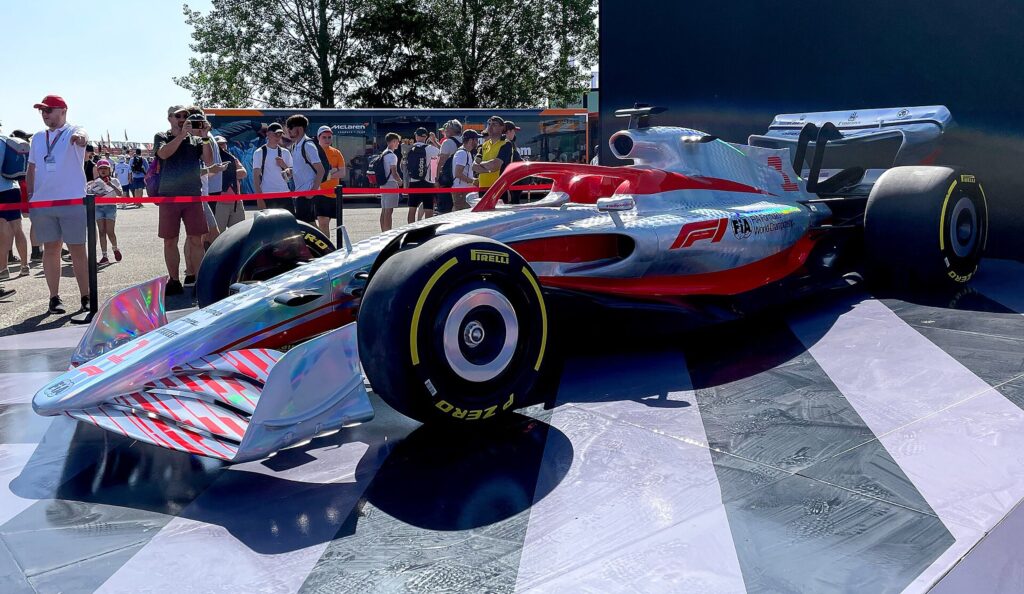
Formula 1 teams work to an annual spending limit set in the FIA’s Financial Regulations. Formula 1 gives the 2026 cap as $215 million, an increase of $80 million on the 2025 base of $135 million, before inflation is added. The limit covers spending that directly affects performance, and the FIA reviews the financial documentation teams submit.
The cap has changed since it was introduced. PlanetF1 reports it was set at $145 million for the first season in 2021 and fell to $135 million by 2023. Formula 1 gives $140 million for 2022. The rules also set out which costs count, which are excluded, how audits work and what penalties apply. The sections below cover each part and use the FIA’s 2021 and 2024 review results as examples.
The 2026 Figure and What Changed
Formula 1 gives the 2026 cap as $215 million. Motorsport.com, reporting the FIA’s confirmation in October 2024, says the figure is not a large net increase in spending, because it now includes several items that were previously exempted. It also takes inflation adjustments and changes to the US dollar exchange rate into account.
The cap was introduced ahead of 2021 to make the championship more competitive and to protect the long-term finances of all teams. Before it, richer teams could outspend rivals on people, technology and facilities. Formula 1 reports that stakeholders judged the cap a success but agreed to tighten and clarify the rules after seeing how they worked.
Formula 1 describes the net effect of the changes as roughly neutral. The separate power unit cap, which applies to engine makers, is $190 million for 2026, after a separate capital expenditure cap was removed. Teams may also roll forward up to $2 million of unspent cap.
The power unit cap began in 2023 at $95 million plus inflation a year for 2023 to 2025, according to Formula 1. The 2026 limit was first planned at $130 million plus inflation before it was set at $190 million.
The 2024 Review in Brief
The FIA’s review of 2024 spending, announced on 28 October 2025, found no team above the cap level. It recorded one procedural breach, by Aston Martin, and no financial penalty was levied.
What Spending Counts Toward the Cap
The cap covers spending that directly affects performance. Formula 1 cites research and development, and the manufacture of new aerodynamic parts, as examples. Annual depreciation is now counted in the cap, replacing a separate capital expenditure cap of $36 million over a rolling four-year period, which has been scrapped.
Two rules widen the count. Teams previously split staff time between F1 and other work. Now, if any of a person’s time is spent on F1, all of that cost is counted at 100 percent, Formula 1 reports, which raises the total.
Motorsport.com also reports that a $300,000 allowance per sprint race sits within the base figure. It adds that the season can now run to 24 Grands Prix, with a $1.8 million allowance for races beyond the 21st.
What Sits Outside the Cap
Several categories are excluded. Formula 1 lists legal, HR, finance, marketing and sustainability initiative costs, along with driver salaries and retainers. The salaries of the three highest-paid staff, usually including the team principal and chief technical officer, are also excluded, as are heritage car programmes and race travel.
Health and safety costs and catering at factories and races were added as exclusions, Formula 1 reports. Motorsport.com adds that teams can no longer write off certain R&D costs made under the UK research and development expenditure credit scheme.
A salary offset also applies to teams based in countries with higher salary levels than the UK or Italy. The adjustment uses factors based on OECD wage data. Motorsport.com quotes Nikolas Tombazis of the FIA saying that, based on data from teams, the OECD data is very consistent with the salary differences within F1.
The offset benefits Sauber, which becomes the works Audi team in 2026. Its Hinwil base in Switzerland has much higher wages and living costs than the UK and Italy, where rival teams are based. Citing OECD figures, Motorsport.com gives an average Swiss wage of $80,000 in 2022, against $54,000 in the UK.
How the FIA Audits Team Returns
Each team’s cost returns are reviewed by the Cost Cap Administration. For the 2024 season, it reviewed all 10 teams and all five power unit manufacturers over seven months. Formula 1 reports that the findings were announced on 28 October 2025.
All teams and manufacturers submitted 2024 financial documentation, Formula 1 reports. The review found no team or manufacturer above the cap level, and nine teams and all five manufacturers were compliant.
Aston Martin had a procedural breach, which the FIA described as very minor and linked to circumstances outside the team’s control. Aston Martin entered an Accepted Breach Agreement on 29 September 2025, and no financial penalty was levied. The FIA attributed that decision to the circumstances. Formula 1 also reports that the Cost Cap Administration found no accusation or evidence that Aston Martin had sought or obtained an undue advantage from the breach.
Minor overspends and procedural breaches can be settled by agreement, while serious cases go to a panel.
Minor and Material Breaches, and Their Penalties
A minor breach covers an overspend below 5 percent of the cap, which The Race puts at about $7.25 million at the 2021 level. PlanetF1 places the minor limit at 5 percent or less, while the FIA’s 2021 announcement, as published by Formula 1, describes a minor overspend as less than 5 percent. PlanetF1 places material overspends at 5 percent or more. Minor breaches can bring a financial penalty, minor sporting penalties or both.
Minor sporting penalties include a public reprimand, deductions of constructors’ and drivers’ championship points within the breach’s reporting period, suspension from stages other than the race, limits on aerodynamic or other testing, or a cost cap reduction in the following year, PlanetF1 reports.
Procedural breaches include late submissions, missing interim documents, failing to cooperate with the Cost Cap Administration, failing to comply with an agreement, and inaccurate or misleading paperwork. Minor overspends and procedural breaches can be settled by agreement, while serious cases go to a panel.
Material breaches can carry a constructors’ points deduction, a financial penalty and material sporting penalties. These can extend to suspension from an entire competition, including the race, and exclusion from the championship.
Cases beyond the Accepted Breach Agreement route go to the Cost Cap Adjudication Panel, whose judges are elected by the FIA General Assembly. The panel holds hearings and can order enhanced monitoring of a team found guilty of a breach. Its decisions can be appealed to the International Court of Appeal.
In October 2022, the FIA announced 2021 results for three teams on Monday 10 October, the Monday after the Japanese Grand Prix. Aston Martin had a procedural breach. Red Bull Racing had a procedural breach and a minor overspend. Williams had a procedural breach, found in May 2022, which the team then rectified. PlanetF1 reports Williams was under an Accepted Breach Agreement and was fined $25,000 for late paperwork.
Red Bull said its 2021 submission was below the cap. At the announcement, the Cost Cap Administration was still deciding what action to take against Aston Martin and Red Bull. Formula 1 reports that 2021 was the first year of the Financial Regulations, in which the FIA only reviewed submissions and launched no full formal investigations.
Why the Cap Matters to Teams
Formula 1 reports that the cap was judged a success, and that the 2026 changes aim to make the rules easier to understand, apply and regulate. Formula 1 also reports that some tweaks have been made, including counting annual depreciation in the cap.
Before the 2021 results were published, The Race reported that the paddock believed Red Bull and Aston Martin were the two teams involved. Mattia Binotto said $5 million equals about half a second of lap time, and that gains made by an overspend in one season could carry over into another.
Lewis Hamilton said an extra $300,000 spent on a new floor or an adapted wing would have changed the championship outcome, The Race reports. The Race also reports that the FIA chose not to set exact penalties for each offence, relying on the threat of severe outcomes, because it was concerned teams might judge a performance gain worth the penalty. Ferrari and Mercedes said the term ‘minor’ is misleading.
Nikolas Tombazis, of the FIA, said at the United States Grand Prix in Austin that a team in a high labour-cost country like Switzerland could have roughly 30 to 40 percent fewer people working on the car. He said such a team might have to close and move to another country. Motorsport.com describes the Sauber situation as fundamentally unfair.