
Iran says it will show ‘zero restraint’ if energy infrastructure is targeted again
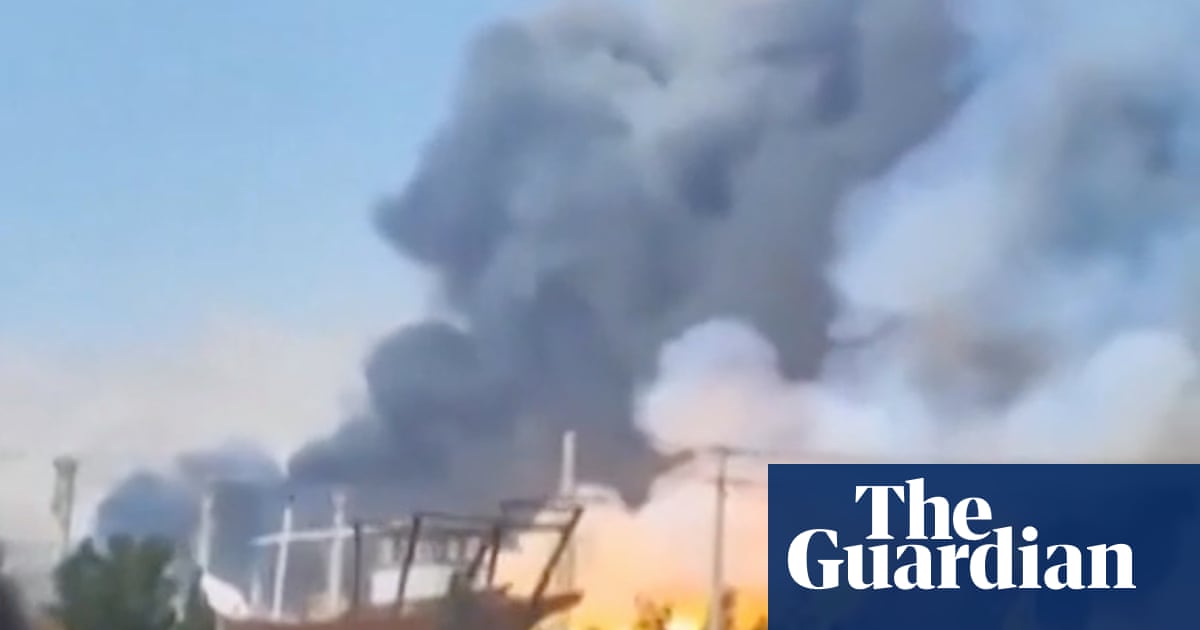
Iran said on Thursday it would show “zero restraint” if its energy infrastructure was targeted again, as Qatar revealed that almost one-fifth of its liquefied natural gas export capacity had been knocked out in an Iranian strike, in an attack likely to have a years-long impact.
The warning, delivered by the Iranian foreign minister, Abbas Araghchi, follow Israel’s attack on the Iran’s massive South Pars gasfield – which it shares with Qatar – which triggered Iranian retaliatory strikes on Qatar’s Ras Laffan gas complex and other Gulf neighbours, sending stock markets tumbling globally and triggering sharp increases in gas prices.
Ras Laffan supplies about 20% of the world’s natural gas. Israel also confirmed on Thursday that the Bazan Group refinery in Haifa had been hit and damaged in a claimed Iranian strike.
“Our response to Israel’s attack on our infrastructure employed FRACTION of our power. The ONLY reason for restraint was respect for requested de-escalation,” said Araghchi in a post on X. “ZERO restraint if our infrastructures are struck again.”
Amid warnings of an unprecedented energy crisis, and a growing sense of panic in global capitals, Israeli officials dismissed the claim of the US president, Donald Trump, that their attack on the gasfield had not been coordinated with Washington, as he asked Congress for an additional $200bn to pay for his war.
On Thursday Trump recast his denial, saying he had told Netanyahu not to attack Iranian gasfields again, but appeared unable to explain the logic of how the junior partner in a wartime military alliance had felt able to act unilaterally with such internationally damaging consequences.
“I told [Netanyahu], don’t do that, and he won’t do that,” Trump told reporters as he met Japan’s prime minister. “We get along great. It’s coordinated, but on occasion, he’ll do something” that the US opposed, Trump added.
He also suggested that he would not send ground troops to Iran, despite the deployment of 2,000 Marines to the region.
The comments followed reporting by Reuters that he was considering deploying thousands of US troops to reinforce its operation in the Middle East, as the US military prepares for possible next steps in its campaign against Iran.
Those options include securing safe passage for oil tankers through the strait of Hormuz, a mission that would be accomplished primarily through air and naval forces, the sources said. But securing the strait could also mean deploying US troops to Iran’s shoreline.
Underlying the growing anxiety, the UK, France, Germany, Italy, the Netherlands and Japan issued a joint statement expressing “deep concern” about the escalating conflict and calling “on Iran to cease immediately its threats, laying of mines, drone and missile attacks and other attempts to block the strait to commercial shipping”, and to comply with UN security council resolution 2817.
They added they were ready “to contribute to appropriate efforts to ensure safe passage through the strait [of Hormuz]”, warning: “The effects of Iran’s actions will be felt by people in all parts of the world, especially the most vulnerable.”
Brent crude, the global oil benchmark, rose as much as 10% to $119 a barrel at one point, before slipping back to $110 a barrel, a gain of 3.3%. Crude prices have soared by 60% since the US-Israeli war on Iran started on 28 February.
European and UK gas prices also jumped, climbing as much as 24% before easing back. They have more than doubled since before the war.
Stock markets reeled under a heavy sell-off, with steep falls on Japanese, South Korean and Hong Kong markets bleeding into Europe. The UK’s FTSE 100 closed down 2.35% at 10,063 points, with similar falls on Germany’s Dax and France’s CAC.
Airlines said the rise in fuel prices would drive up fares, and urged passengers to book early. Long-haul airlines such as Air France-KLM and Lufthansa said they would be adding more flights via Asia, as Gulf carriers’ hubs are either shut or operating at a reduced level.
With the war at risk of spiralling wildly out of control, Trump and his officials continued to deliver chaotic messaging, even as unnamed Israeli officials were quoted by Reuters as suggesting the gasfield attack was not likely to be repeated.
Iranian strikes also hit Saudi Arabia’s Red Sea refinery – located at the end of a pipeline that bypasses the strait of Hormuz – and two Kuwaiti oil refineries.
The chief executive of QatarEnergy, Saad Sherida Al-Kaabi, said about $20bn in damage had been done to its facilities and that repairs would sideline 12.8m tons per year of gas for three to five years, threatening supplies to some European countries.
“I never in my wildest dreams would have thought that Qatar would be – Qatar and the region – in such an attack, especially from a brotherly Muslim country in the month of Ramadan, attacking us in this way,” Kaabi said.
Saudi Arabia’s foreign minister said his country had not ruled out military action in response to the attacks. However, most analysts said there was still a widespread reluctance among Gulf countries, even Saudi Arabia, to entangle themselves in Trump’s conflict.
“I hope everybody returns to reason,” the French president, Emmanuel Macron, said in Brussels, noting the infrastructure attacks’ potential long-term impact on global markets and calling for a moratorium on such strikes, as well as those on civilians.
Macron’s comments reflected a growing alarm over the US-Israeli war, that has seen Iran choke off traffic through the strait of Hormuz, and a widening scope of attacks on key energy infrastructure across the region.
The insistence by Israeli officials that Trump had been informed of the South Pars attack came amid contradictory messaging from Washington that suggested Trump was seeking a way to distance himself from the latest dangerous Israeli escalation even as he threatened to bomb the field himself.
The scramble to find a coherent message extended to key Trump officials, who offered starkly contradictory messages, with the US treasury secretary suggesting on Fox that the US lift oil sanctions on some Iranian cargoes already at sea. The defence secretary, Pete Hegseth, delivered his own warning to Iran in bellicose language.
“Our objectives, given directly from our America-first president, remain exactly what they were on day one,” Hegseth told reporters. “These are not the media’s objectives, not Iran’s objectives, not new objectives. Our objectives: unchanged, on target and on plan,” Hegseth added.
“The world, the Middle East, our ungrateful allies in Europe, even segments of our own press should be saying one thing to President Trump – thank you,” Hegseth said. “Thank you for the courage to stop this terror state from holding the world hostage with missiles while building or attempting to build a nuclear bomb. Thank you for doing the work of the free world.”
He accused the press of trying to convince the American public that it was “spinning toward an endless abyss, or a forever war, or a quagmire”.
“Nothing could be further from the truth,” he said.
Additional reporting by Graeme Wearden
