
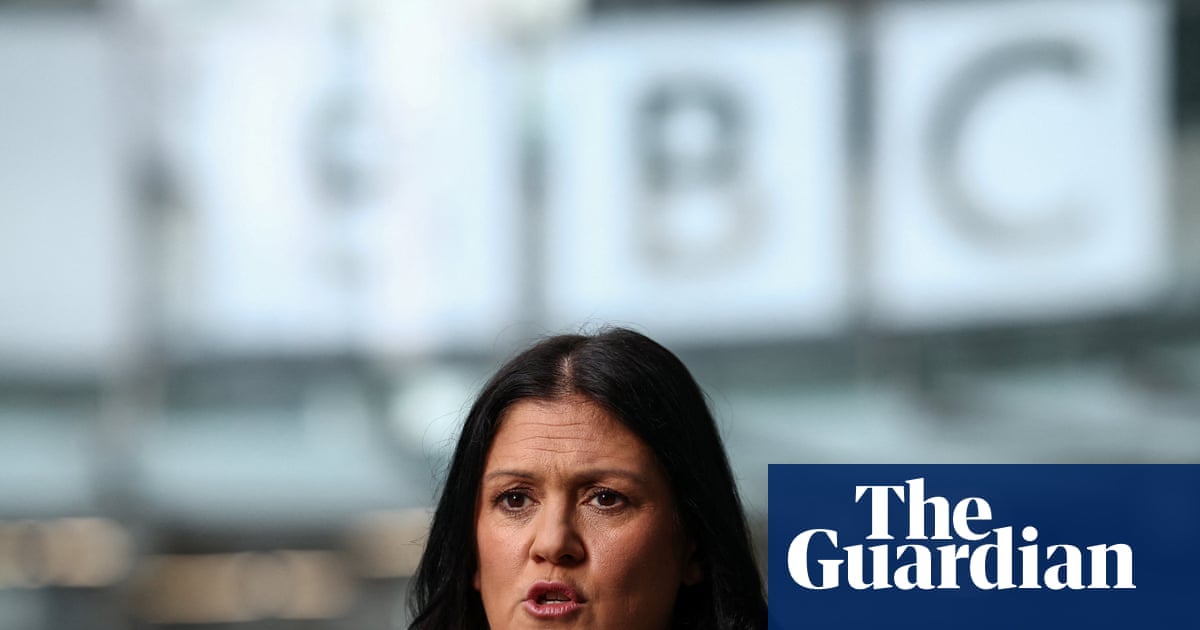
Lisa Nandy vows to give BBC permanent charter to prevent political interference
The government is to put the BBC’s charter on a permanent footing for the first time, after the corporation said the change was needed to protect it from political interference.
In a significant change to the governance of the BBC, the culture secretary, Lisa Nandy, said she wanted to grant the corporation’s demand for a permanent charter. She said she wanted to protect it from repeated “culture war” attacks.
BBC executives had argued that the current system in which the broadcaster’s charter had to be renewed every 10 years created a rolling existential threat. That threat has become more acute with the rise of Reform UK, an arch critic of the BBC that has vowed to end the licence fee.
Speaking at the Society of Editors conference in London, Nandy said the BBC was “one of the two most important institutions in our country”, alongside the NHS.
“While the terms, the structures and the funding for the BBC will continue to be negotiated every several years, we should seek to end the bizarre situation where if the charter isn’t agreed in time, the BBC ceases to exist,” Nandy said. “The truth is we would not accept this for the NHS and we should not accept it for the BBC. This is about protecting the BBC – and everything that it represents – for the long term for all of us.
“We will act to future-proof this vital institution in these stormy times when public debate feels more toxic and polarised than ever and too often the BBC becomes a lightning rod for the ongoing, exhausting culture wars.”
It marks a significant win for the BBC and the outgoing director general, Tim Davie, who had been arguing for the change.
The BBC called for a permanent charter as part of its first official response to the government talks on the renewal of its current charter, which expires at the end of 2027. The BBC also demanded the end of political appointments to its board, which Nandy did not comment on.
Nandy also said she wanted the BBC to face greater accountability, both from licence fee payers and its own staff, though she did not set out how this would work.
“We intend to strengthen the accountability of the leadership of the BBC – not to politicians, but to the people it serves in every nation and region,” she said. “This will include commissioning power, not just programming, moving much closer to people, stronger and more streamlined internal accountability, so that staff can hold their leadership to account.”
The idea of a permanent charter was raised last year by the former BBC News chief James Harding. He said protecting the BBC was crucial with the prospect of Nigel Farage entering government at the next election.
He used a keynote speech last year to say it would be “recklessly complacent” to believe that Reform would not pursue attempts to defund publicly backed media, as Donald Trump has done in the US.
BBC insiders say the current 10-year charter creates a “recurring threat to the BBC’s existence, uncertainty and the potential for political interference”. They point to other institutions, such as the Bank of England, that have a permanent charter.
