Why TSMC Makes 90 Percent of the World’s Most Advanced Chips
TSMC controls about 72 percent of the market for foundry services and makes 90 percent of the world's most advanced chips. That concentration gives Taiwan outsized influence over global technology.
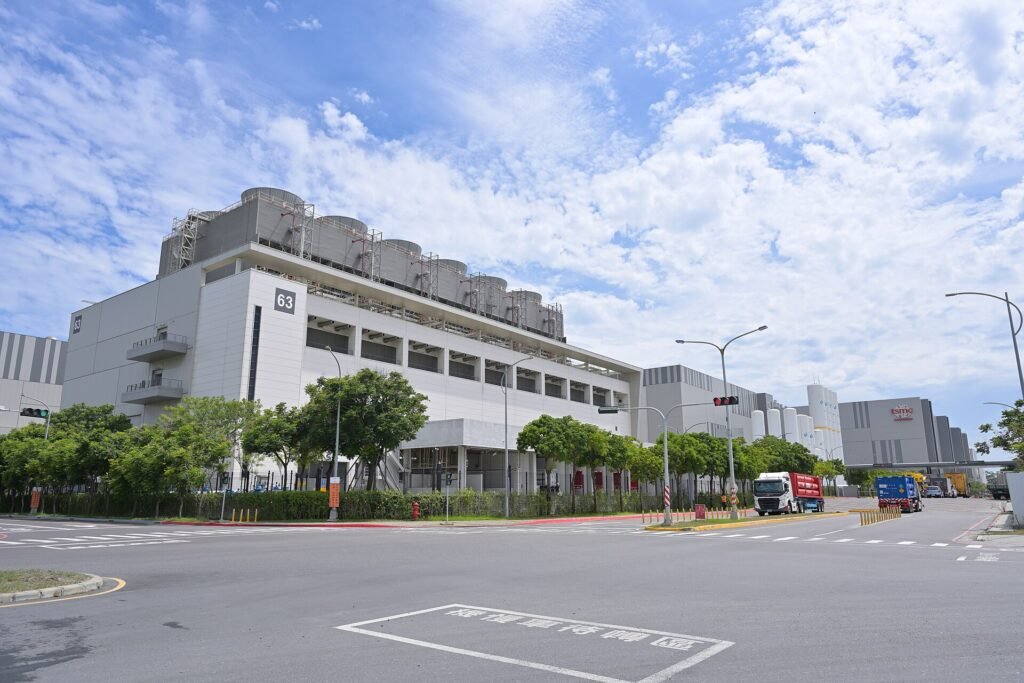
When companies like Nvidia, Apple and Broadcom design their most advanced chips, they do not manufacture them. They send the designs to Taiwan, where one company—Taiwan Semiconductor Manufacturing Company, or TSMC—builds nearly all of them. TSMC operates about 72 percent of the global foundry market for contract chip manufacturing, according to mid-2026 figures. The company manufactures roughly 90 percent of the world’s most sophisticated semiconductors and 99 percent of the chips used to train advanced computing models. Taiwan itself produces about 92 percent of the world’s most advanced logic chips—those measuring 5 nanometers and smaller.
That concentration creates both opportunity and fragility. TSMC’s dominance underpins the global technology boom that has followed advances in computing power. But it has also made the entire world’s computing infrastructure dependent on a single company in a geopolitically contested island that faces regular threats from earthquakes, typhoons and military tension.
How Taiwan became the hub
Taiwan’s semiconductor dominance did not happen by accident. The island received a foundational technology transfer in 1976 through what became known as the RCA Project, when semiconductor knowledge moved from the United States to Taiwan’s state-backed Industrial Technology Research Institute. That project trained a generation of Taiwanese engineers and established a precision-focused industrial culture that persists today.
The real turning point came when Morris Chang, recruited by the Taiwanese government in the mid-1980s, founded TSMC in 1987 with a novel business model. Instead of designing and manufacturing chips like Intel or Texas Instruments, TSMC would only manufacture. This pure-play foundry approach let designers like Nvidia and Apple pursue cutting-edge designs without spending billions to build factories. Competitors in South Korea and the United States eventually adopted similar foundry divisions, but TSMC had a crucial head start and has never been overtaken.
TSMC’s market reach
TSMC controls about 72 percent of the global foundry market and manufactures roughly 90 percent of the world’s most advanced semiconductors, according to 2026 data. Taiwan itself produces about 92 percent of the world’s most advanced logic chips measuring 5 nanometers and smaller.
Advanced nodes command the revenue
TSMC’s financial performance reflects its grip on the most valuable chips. In the first quarter of 2026, the company reported consolidated revenue of $35.9 billion, with a gross margin of 66.2 percent. The company’s advanced nodes—measured in nanometers, where smaller numbers represent denser, more powerful chips—generated 74 percent of its total wafer revenue. The 3-nanometer process accounted for 25 percent of revenue, the 5-nanometer process for 36 percent, and the 7-nanometer process for 13 percent.
Demand for AI chips has kept TSMC’s advanced nodes running at full tilt. The company plans to raise capital spending to between $50 billion and $55 billion in 2026, with much of that going toward advanced packaging capacity, which is set to nearly double to 1.275 million wafers to meet surging customer demand.
The equipment that cannot be duplicated
One reason competitors cannot catch TSMC lies in a single Dutch company: ASML. ASML is the only manufacturer of extreme ultraviolet lithography machines, the equipment required to create chips at 5 nanometers or smaller. TSMC has a special partnership with ASML that helps keep its technical advantages ahead of competitors. South Korea’s Samsung operates its own foundry business but has struggled with production problems; its foundry leaders admitted in late 2025 that their technology “falls behind other big manufacturers.”
TSMC is currently manufacturing chips using a 2-nanometer process with gate-all-around transistors, a design that improves performance by 10 to 15 percent or reduces power consumption by up to 30 percent compared to older methods. The company’s CoWoS, an advanced packaging technology, moves data between processors and memory at high speeds. This combination of leading-edge processes and specialized packaging has made CoWoS a bottleneck in the global supply chain—so much demand for these chips exists that even advanced packaging cannot keep pace.
TSMC has a special partnership with ASML that helps keep its technical advantages ahead of competitors.
A supply chain locked in place
Taiwan’s grip on advanced chip manufacturing extends beyond TSMC itself. The island hosts a dense ecosystem of specialty gas suppliers, wafer producers, and testing firms positioned within hours of major fabrication plants. That geographic and industrial concentration lowers costs and speeds production, but it also means the entire system depends on a handful of facilities in a region prone to earthquakes and typhoons and threatened by military tensions with China.
A sustained disruption to Taiwan’s semiconductor supply would carry economic consequences far beyond the chip industry. TSMC manufactures chips that power most modern computing—from smartphones and electric vehicles to data center servers. Eyck Freymann, a Hoover fellow at Stanford University, said the economic shock from a serious Taiwan disruption would “dwarf anything we’ve seen in the postwar period.” The 2020 pandemic-era chip shortage led to empty car lots and delayed appliances. A longer interruption would affect nearly every sector that depends on computing power.
The geopolitical leverage
China’s government has not attacked TSMC’s facilities, but Beijing possesses other tools. Rather than a military strike, China could impose a sea blockade or economic “quarantine” of Taiwan using coast guard vessels, effectively controlling chip distribution without direct conflict. Such a move would constrict global supply without the immediate military consequences of invasion.
The United States has responded by attempting to reduce its dependence on Taiwan, passing the CHIPS Act to help subsidize TSMC’s expansion. TSMC is spending $65 billion to build three factories in Arizona, though the most advanced technology will remain one generation behind Taiwan’s. But these onshoring efforts will take years to mature, and the most advanced nodes remain concentrated in Taiwan. For the foreseeable future, the world’s computing infrastructure will remain dependent on TSMC’s ability to keep its plants running and chips flowing.
Photo: 4300streetcar · CC BY 4.0 · via Wikimedia Commons