Schengen border checks now record fingerprints and faces, but ETIAS has no start date
The Entry/Exit System now records non-EU travellers' fingerprints and facial images at Schengen borders, while the start date for the ETIAS travel authorisation remains unfixed.
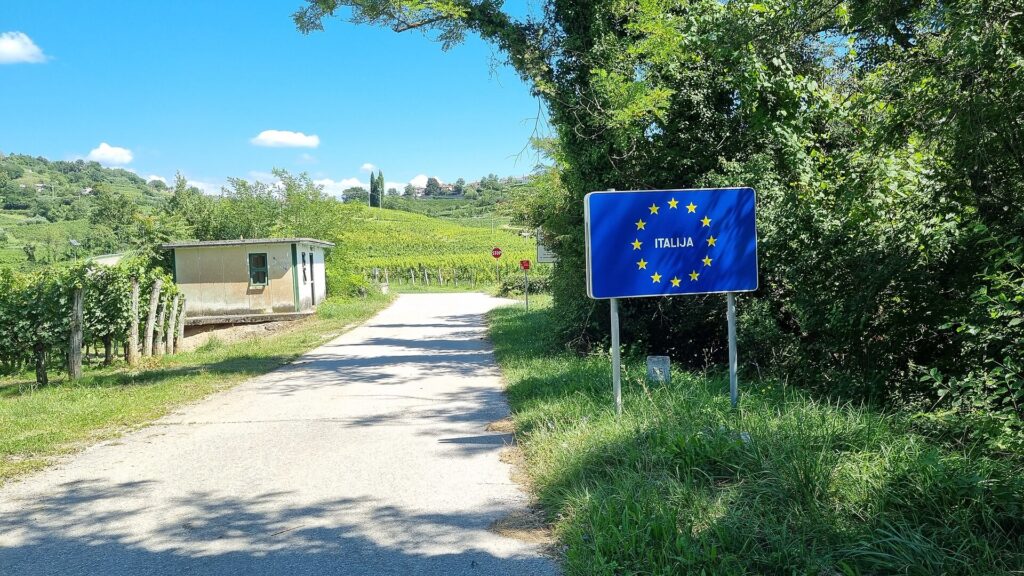
Non-EU travellers who make short visits to the Schengen Area no longer receive passport stamps at external borders. Since 10 April 2026, the Entry/Exit System, or EES, has recorded entries and exits digitally, according to the European Commission. A second system, the European Travel Information and Authorisation System, or ETIAS, is planned to add a pre-travel authorisation for visa-exempt visitors, but its start date has not been fixed.
This explainer sets out what official EU sources and secondary sources say about the biometric checks, who must register, how the ETIAS fee works and what travellers should plan for now. Where the sources disagree, the article says so.
How the Entry/Exit System replaced passport stamping
The Commission presented the EES proposal on 6 April 2016. Co-legislators reached agreement in July 2017, and the EES Regulation and an amendment to the Schengen Border Code were adopted on 20 November 2017. The Commission proposed a progressive start of operations on 4 December 2024.
Regulation (EU) 2025/1534 was adopted on 18 July 2025 and entered into force on 26 July 2025. The Commission set 12 October 2025 as the launch date for the progressive start. The Commission’s EES page states that the system became fully operational on 10 April 2026. From that date, it replaces passport stamping and allows overstayers to be detected automatically.
Early EES figures
A Commission press release dated 30 March 2026 reported more than 45 million border crossings recorded since the EES launched, and more than 24,000 people refused entry, as cited by eucrim.
Who is registered and what the biometric checks involve
The EES applies to non-EU nationals travelling for a short stay. Each time such a traveller crosses an external border of a participating country, the entry or exit is recorded. The Commission’s page lists the stored data as name, travel document data, biometric data, and the date and place of entry and exit. Refusals of entry are also recorded.
The biometric data consists of fingerprints and a captured facial image. The eucrim article on the system’s full operation lists the same elements, along with personal data taken from the travel document. The system is run by eu-LISA, the EU agency responsible for large-scale IT systems in the area of freedom, security and justice.
The Commission page does not give data retention periods or a list of exemptions, and the eucrim article does not cover them either. This article therefore does not state how long records are kept.
What early figures from the Commission show
A Commission press release dated 30 March 2026, as cited by eucrim, reported that more than 45 million border crossings had been recorded since the system’s launch. The same release reported that more than 24,000 people had been refused entry for various reasons. The article does not break the refusals down by date or by reason.
eucrim also describes a case in which a traveller tried to enter under two identities and had been refused entry several times before. eucrim describes the aims of the system as strengthening control at external borders, detecting overstays systematically, and combating document and identity fraud.
How ETIAS fits in: who must apply and what it costs
The European External Action Service describes ETIAS as an entry requirement for visa-exempt nationals. It is not a visa and covers only short stays in the participating countries. Applications are to be made through the official ETIAS website or mobile app once the system is live. Travellers may also authorise third-party intermediaries to apply for them, and the EEAS page advises checking those services’ quality, extra charges and data protection.
In a news item dated 17 July 2025, the Commission announced an ETIAS fee of EUR 20, up from EUR 7. The increase must undergo a two-month review by the Council and the European Parliament, which the Commission says is renewable once. The new fee takes effect once ETIAS is operational. Certain groups, including travellers under 18 and over 70, will be exempt from paying it.
According to the EEAS page, an approved authorisation is valid for three years or until the passport expires, whichever comes first. Navan, a travel company’s blog, adds that the authorisation is tied to the passport used to apply, so a new passport requires a new authorisation.
Passport stamping gave way to a digital record on 10 April 2026, when the system became fully operational.
When ETIAS is expected, and where the sources disagree
The EEAS page and the Commission’s 2025 news item both place the launch in the last quarter of 2026. The Commission’s news item says the system will start operations at the end of 2026. The EEAS page says the exact start date will be announced at least six months before the system enters into operation.
Navan reports a different picture. It says the official ETIAS portal dropped the last-quarter target in July 2026 and now states that no applications are being collected. It also cites Financial Times reporting that 2027 is the earliest realistic window. Navan is not a primary source, and this article could not confirm those claims on an official EU page.
Navan also describes a phased enforcement plan. Under that description, entry without an authorisation would be allowed for six months for travellers with valid documents, followed by a six-month grace period in which only first-time arrivals could enter without one. Full enforcement would follow about a year after launch. This plan is also reported only by Navan.
What travellers should check before a trip to Europe
On the sources read for this article, ETIAS is not yet in operation, and no exact start date has been announced. The EEAS page says the date will be announced at least six months in advance, so the official EU portal is the place to confirm the current status before a trip is booked.
For the EES, the Commission and eucrim describe each crossing as involving fingerprints and a facial image, with no passport stamp added. Since an ETIAS authorisation ends when the passport expires, a passport close to expiry would limit the length of any authorisation issued against it.
The sources read here do not set out separate rules for holidaymakers and business travellers. The EEAS page names the official website and app as the application channels, and it notes that intermediaries may apply on a traveller’s behalf.
Photo: Gugganij · CC BY-SA 4.0 · via Wikimedia Commons