Why Final Polls Leave Both Israeli Blocs Short of 61 Seats Before the 27 October Vote
Israel votes on 27 October for its 120-seat Knesset, and final polls show neither Netanyahu's bloc nor the opposition reaching the 61 seats needed for a majority.
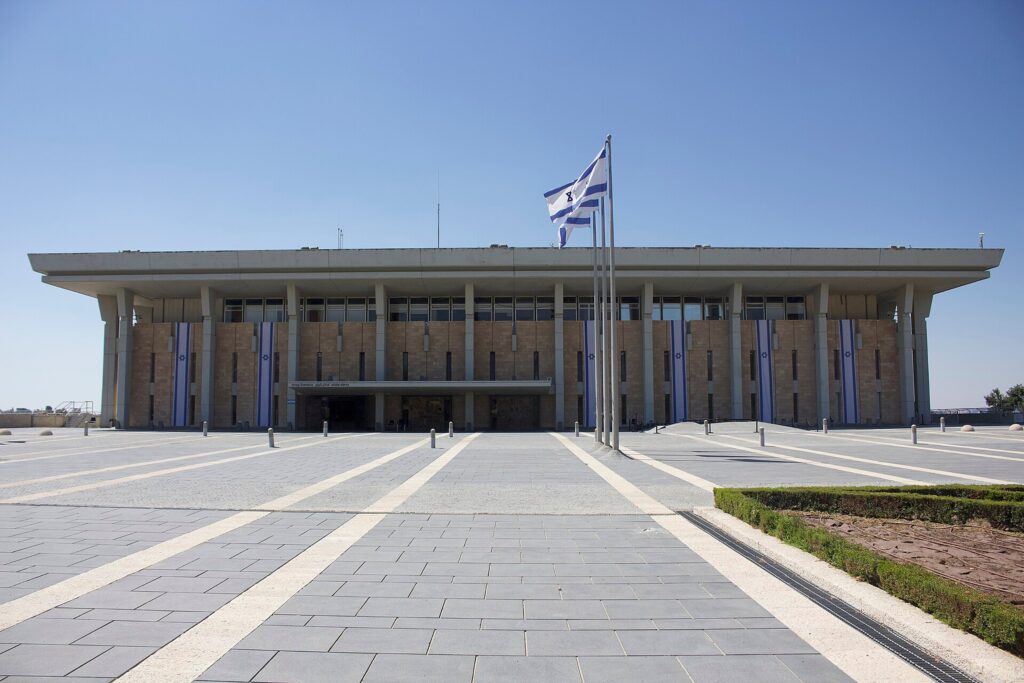
Israeli voters will elect the 26th Knesset on 27 October 2026. Al Jazeera describes it as the sixth national vote since 2019, and the 120-seat Knesset is the parliament at stake. Netanyahu’s far-right coalition, led by Likud, faces a Jewish-led opposition bloc, and Netanyahu is standing trial on corruption charges, which he denies.
Final polls published before the vote show neither Netanyahu’s bloc nor the opposition reaching the 61 seats needed for a majority. Under Israel’s rules, the president then asks the politician best placed to form a government to assemble a coalition, and that process has a 28-day deadline, extendable by up to 14 days.
How Israel’s Proportional System Turns Votes Into Seats
Israel uses nationwide proportional representation. The whole country is a single electoral district, and voters choose a party list rather than an individual candidate. Each party’s seats follow its share of the national vote, out of 120 in the Knesset.
Because the seats are set by the national share, a party’s result depends on its total across the country rather than on any single area.
A party must win at least 3.25 percent of the national vote to enter parliament, and votes for parties below that line are discarded. Several parties in the polls sit close to the line, so whether they clear it changes the seat totals.
Al Jazeera notes that because votes for parties below the line are discarded, small parties often merge before elections.
The 3.25 Percent Threshold
A party must win at least 3.25 percent of the national vote to enter the Knesset, and votes for parties below that line are discarded, according to Al Jazeera.
What the Polls Show for the Two Blocs
Israel National News reports final polls released on 23 October for Kan, Channel 12 and Channel 13. Yashar (Eisenkot) comes first on all three, with 22, 23 and 22 seats. Likud is second on each, with 20, 21 and 19 seats.
Grouped as blocs, the Eisenkot bloc is projected at 52 seats on Kan, 56 on Channel 12 and 54 on Channel 13. Netanyahu’s bloc is projected at 50 on all three channels.
Kan’s tally also leaves 4 seats for the Reservists and Economic Party unassigned between the two blocs, and gives the Arab parties 14. The narrowest gap between the blocs is on Kan, at 52 seats to 50.
Haaretz reports polls published on Wednesday evening with different totals. It gives the Eisenkot bloc 55 seats on Channel 12 and 52 on Channel 13, and Netanyahu’s bloc 51 and 49. The Israel National News figures for the final polls differ on both channels, at 56 and 54 for the Eisenkot bloc.
Haaretz’s Channel 13 poll gives Yashar 20 seats, against 22 in the Israel National News tally. Its Channel 12 poll gives Yashar 23 and Likud 19, where Israel National News gives Likud 21.
Israel National News also reports prime ministerial preferences on Kan and Channel 12. Eisenkot leads Netanyahu 44 percent to 38 percent in both polls, and Netanyahu and Naftali Bennett are tied at 38 percent each on Kan and 39 percent each on Channel 12.
The Party Seats Behind Each Total
Al Jazeera describes the race as Likud and its far-right coalition against a Jewish-led opposition bloc, with neither side on track to win an outright majority.
In Israel National News’s tallies, Together, the list tied to Bennett, is projected at 14 seats on Kan, 15 on Channel 12 and 14 on Channel 13. The Democrats are at 8, 10 and 10, and Yisrael Beiteinu at 8 on all three.
Shas is projected at 7, 8 and 7 seats, and United Torah Judaism at 8, 7 and 8. Otzma Yehudit is at 8 on each channel, and Religious Zionism-Zehut at 7, 6 and 8. The Joint List is at 9 on each, and Ra’am at 5, 5 and 7.
Haaretz’s Channel 12 figures put Together at 15 seats, Likud at 19 and the Democrats at 9, where Israel National News gives the Democrats 10. On Channel 13, Haaretz gives the United Arab List 6 seats, against 7 for Ra’am in Israel National News.
Why Neither Bloc Reaches 61 in Any Tally Cited
No total cited here gives either side 61 seats. The highest figure for the Eisenkot bloc is 56, on Channel 12 in the Israel National News tally. The highest for Netanyahu’s bloc is 51, in Haaretz’s Channel 12 figures.
The Joint List and Ra’am are projected at 14 seats on Kan and Channel 12, and at 16 on Channel 13, according to Israel National News. Haaretz reports that the Eisenkot bloc’s refusal to cooperate with the Arab parties leaves it short of 61, even where the bloc leads.
Several smaller parties sit near the threshold, and the sources differ on them. Israel National News puts Amcha Yisrael at 3.1 percent on Channel 13 and says it also misses the line on Channel 12. Haaretz puts it at 3.2 percent on Channel 13, where it also misses, and says it crosses on Channel 12.
On the Reservists and Economic Party, Israel National News has it below the line on both channels, at 3 percent on Channel 13. Haaretz has it crossing on Channel 13 and below on Channel 12, at 2.8 percent.
Al Jazeera reports that the Central Elections Committee voted to bar Ra’am and the Joint List. It says the Supreme Court unanimously overturned those bans on 2 October.
No total cited here gives either side 61 seats.
How Coalition Building Works After the Count
A governing majority needs 61 of the 120 seats. Parties have 28 days to build a coalition of at least 61 seats, and that period can be extended by up to 14 days. If no coalition forms, the country holds another election.
Finishing first does not guarantee power, according to Al Jazeera. Netanyahu would remain caretaker prime minister until a new government is sworn in.
Al Jazeera’s July explainer adds that, because no party has ever won an outright majority, coalition-building is central.
Al Jazeera reports that the leaders of the Jewish-led opposition signed a declaration not to attack each other before the vote and to join forces to form a government afterward. It also says Arab-led parties could hold the balance of power, but most Jewish opposition leaders have ruled out working with them.
Al Jazeera names Together (Naftali Bennett and Yair Lapid), Yisrael Beiteinu (Avigdor Liberman) and the Democrats (Yair Golan) as alliance members. It describes Gadi Eisenkot, a former army chief with his new Yashar party, as the opposition’s most likely prime ministerial candidate.
Who Can Vote, and How the Date Was Set
The Knesset dissolved in July 2026, ahead of the vote. Al Jazeera reports that this marks the first time since 1988 that the body has completed its full term. At dissolution, the government coalition held 60 seats and the opposition 59, with one member unaffiliated.
Ynet reports that Noam Sohlberg, a Supreme Court justice who chairs the Central Elections Committee, announced that the 26th Knesset election would be held on 27 October.
Ynet also reports that Attorney General Gali Baharav-Miara said in March that the elections should not take place in 2027. Ynet notes that the 2026 date falls less than four years after the elections for the 25th Knesset.
Al Jazeera reports that about 7.3 million citizens aged 18 and over are eligible to vote. Most polling stations open from 7am to 10pm, and election day is a national holiday.
Roughly three million adult Palestinians in Gaza, the occupied West Bank and occupied East Jerusalem cannot vote in Knesset elections. About 1.2 million Palestinian citizens of Israel can vote, as can Jewish Israelis and adult settlers among the 750,000-plus Israelis in the occupied West Bank and East Jerusalem.
Most Palestinians in East Jerusalem have Israeli residency rather than citizenship, and they can vote in Jerusalem city council elections but not in Knesset elections. Most Israeli citizens abroad cannot vote, because Israel has no general absentee ballot. Diplomats and state emissaries vote at Israeli missions, with voting on 20 October.