Two Circuits Sided With States and One With Kalshi as the CFTC Sorts Sports Contracts
The CFTC's June proposal would bar some sports contracts and allow others, while the Third, Ninth and Sixth Circuits have ruled differently on state gambling law.
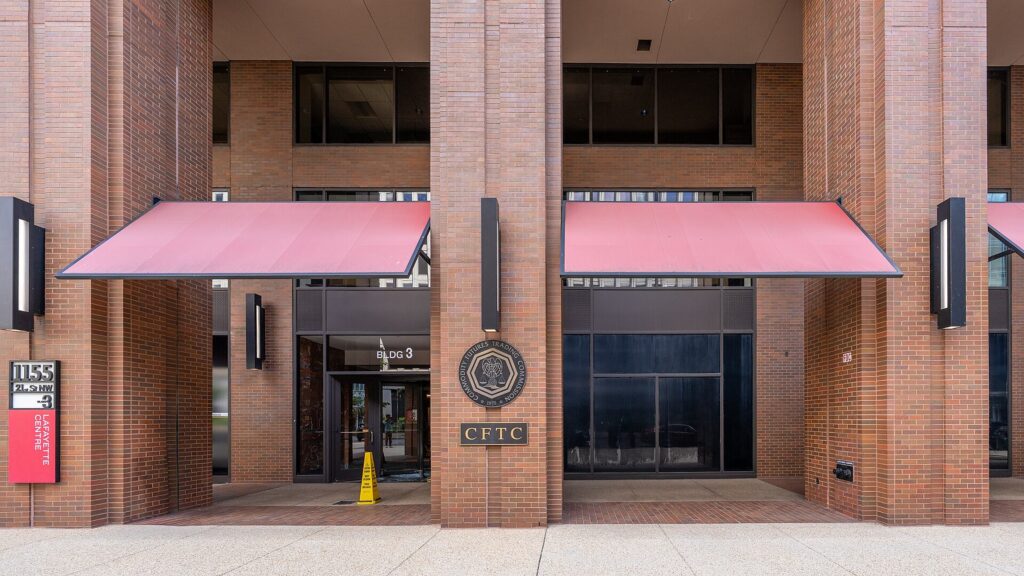
Sports event contracts are bets on the outcomes of games and competitions, offered through prediction markets. Whether they fall under federal derivatives rules or state gambling law is now being decided in two places: a rulemaking at the Commodity Futures Trading Commission (CFTC) and a series of federal appeals cases.
The CFTC issued a proposal on June 10, 2026 that sorts sports contracts by type. Federal appeals courts in three circuits have ruled on the underlying jurisdiction question, and the rulings differ. Two have sided with states, and one has sided with the platform. The Third Circuit ruled in April, before the proposal, while the Ninth Circuit ruled by August 31 and the Sixth Circuit on September 25.
What the CFTC Proposal Is Built On
The CFTC issued the proposal on June 10, 2026, as a notice of proposed rulemaking titled Prediction Markets; Public Interest Determinations. The Federal Register published it on June 12, 2026, at 91 Federal Register pages 35806 to 35871. Comments were due July 27, 2026.
The proposal rests on a special rule added to the Commodity Exchange Act by the Dodd-Frank Act, found in section 5c(c)(5)(C). That rule allows the Commission to determine that event contracts involving enumerated activities, including gaming, are contrary to the public interest. When it makes that determination, the Commission can bar those contracts from being listed or cleared.
The proposal would amend Regulation 40.11 to add factors for those determinations, define gaming, and clarify when a contract involves an enumerated activity. According to the Federal Register text, the amendments add public interest factors and delegate authority to the Director of the Division of Market Oversight.
Proposal Dates
The CFTC issued its prediction markets proposal on June 10, 2026. The Federal Register published it on June 12, with comments due July 27, 2026.
Which Sports Contracts the Proposal Would Bar
According to a Greenberg Traurig summary of the proposal, five groups of sports contracts are likely contrary to the public interest: player injuries, officiating decisions, discrete in-game actions, physical altercations, and pre-collegiate sports. The summary says injury contracts create perverse financial incentives, raise medical confidentiality concerns, and lack objective settlement criteria.
Officiating contracts carry a risk of inappropriate contact with officials and threaten game integrity, the summary says. Discrete-action contracts are subject to manipulation by individual participants. Physical altercation contracts could incentivize misconduct, and pre-collegiate contracts lack established integrity infrastructure and raise concerns about minors.
Combat sports such as MMA and boxing are excluded from the physical altercation group, because physical contact is part of those sports. The summary lists categories it says are likely not contrary to the public interest: final scores, point differentials, win-loss results, tournament advancement, season-long statistics, and contracts settled on objective, league-verified data.
The summary also lists contracts from markets that coordinate with governing bodies among the categories likely not contrary to the public interest, naming professional leagues and the NCAA as examples. The Federal Register text describes the framework as applying public interest factors on a contract-specific basis, rather than through a categorical prohibition based on the identity of the underlying event.
The proposal also cites a comment from former Senator Blanche Lincoln, who pointed to the Super Bowl’s effect on advertising, apparel sales and hospitality. The Commission preliminarily shares the concern behind that comment. It says the Special Rule should keep prediction markets from serving as venues for event contracts with neither commercial utility nor informational value.
The Swap Question at the Center of the Cases
The circuit rulings turn on whether a sports event contract is a swap. The Block reports that the Commodity Exchange Act grants the CFTC exclusive jurisdiction over swaps. PYMNTS reports that the Third and Ninth Circuits agree federal law preempts state regulation of actual swaps, but disagree on whether sports-outcome contracts are swaps at all. PYMNTS describes that disagreement as a circuit split that may lead to Supreme Court review.
PYMNTS reports that the Sixth Circuit read the swap definition as requiring an event intrinsically tied to a financial consequence, such as a change in interest rates. Sports results can have downstream economic effects, the court found, but those effects are indirect, so they do not qualify.
The Sixth Circuit also held that, even if the contracts were swaps, the Commodity Exchange Act would not preempt state gambling laws. Ohio and Tennessee’s laws apply, the court held, because Kalshi offered contracts that are virtually indistinguishable from sports bets.
The Third Circuit Sided With Kalshi
On April 6, 2026, the Third Circuit ruled 2-1 in a case between Kalshi and New Jersey. PYMNTS reports that the majority held New Jersey could not regulate Kalshi’s sports contracts, and that Kalshi operates a CFTC-regulated designated contract market. The Block reports that the court found Congress gave the CFTC exclusive jurisdiction over trades on designated contract markets. PYMNTS reports that the majority found the contracts fall within the statutory definition of swaps.
The court rejected New Jersey’s argument that the Act’s savings clause preserves state authority over these contracts. It said both carve-outs follow from the CFTC’s grant of exclusive jurisdiction over swaps.
The dissent argued that because Kalshi facilitates gambling, it can be subjected to state regulation. The dissent described “performative sleight meant to obscure the reality that Kalshi’s products are sports gambling.”
The Block reports that the CFTC sued Arizona, Illinois and Connecticut the week before the ruling, accusing those states of trying to shut down federally regulated designated contract markets. TD Cowen analyst Jaret Seiberg called the decision a temporary win for Kalshi. He said it is up to the Supreme Court to decide who has jurisdiction over sporting events, and that it could take another year before the question is fully before the justices. He also said states hold the edge because they have historically regulated gambling.
Two federal appeals courts have sided with the states, and one has sided with the platform.
The Ninth and Sixth Circuits Sided With the States
By August 31, 2026, the Ninth Circuit unanimously held that Nevada may apply its gambling laws to Kalshi’s sports-event contracts. Judge Ryan Nelson wrote for the court that the contracts have the defining characteristics of sports bets. He wrote that calling a sports bet a swap does not make it one, and that the CFTC is not a national gambling regulator.
The court upheld a November 2025 district court decision that dissolved an injunction. That injunction had allowed Kalshi to offer the contracts in Nevada without a gaming license. The Ninth Circuit also rejected requests for injunctive relief from Crypto.com and Robinhood.
Nelson concluded that Congress was unlikely to have displaced states’ long-standing gambling authority through broad language added to financial-reform legislation, PYMNTS reports. PYMNTS says the ruling conflicts with the Third Circuit’s April decision.
The case was sent back to the district court to consider Kalshi’s election contracts, which Nevada law also prohibits. PYMNTS says those contracts make up a smaller part of Kalshi’s business. Robinhood plans to appeal, PYMNTS reports.
On September 25, 2026, the Sixth Circuit ruled unanimously in favor of Ohio and Tennessee. Judge Julia Smith Gibbons wrote that Kalshi had not shown that its sports-event contracts satisfy the statutory definition of a swap. Under that reasoning, the contracts fall outside the CFTC’s exclusive jurisdiction.
What Remains Open
A Fourth Circuit appeal involving Maryland is still pending, according to PYMNTS. New Jersey has asked the Supreme Court to resolve the circuit split, and PYMNTS says the dispute appears headed there.
Commentators cited in the reporting expect the disagreement among the circuits to reach the Supreme Court.
Its comment period closed on July 27, 2026. Until a final rule or a high court decision issues, courts in different circuits have reached different results on the same question.