
Algeria World Cup 2026 team guide
This article is part of the Guardian’s 2026 World Cup Experts’ Network, a cooperation between some of the best media organisations from the 48 countries who qualified. theguardian.com is running previews from three countries each day in the run-up to the tournament kicking off on 11 June.
The plan
Algeria are one of this World Cup’s great unknowns. On paper, this team has an impressive recent record: a friendly victory over the Netherlands made it 21 wins, four draws and three defeats from 28 matches under Vladimir Petkovic, with 67 goals scored. The problem is that it has been achieved against generally poor-quality opposition. Algeria’s qualifying campaign was a breeze, with Guinea and Mozambique – both considered Pot C sides on the continent – being their sternest tests.
The most reliable gauge of their true level was the 2025 Africa Cup of Nations, where they produced some of the tournament’s most compelling football. The Fennecs toyed with various formations, playing a classic flat four, reinforcing defence with five and even using a 4-3-3 with two full-backs, Rayan Aït-Nouri and Jaouen Hadjam, on the left flank. They pressed intensely, dominated possession, patiently built from goal kicks, and fluidly progressed the ball through defensive lines.
Then came Nigeria in the quarter-finals and everything unravelled. Petkovic’s starting lineup was off, his adjustments arrived far too late and inconsistent officiating added another layer of misfortune to an evening where nearly every Algerian player underperformed. The lingering question is whether that collapse was an outlier or a warning sign of how this side responds when the stakes are higher against top opposition. That we don’t have an answer is the main reason why Algeria arrive at the World Cup as an unproven commodity.
Quick Guide
Algeria: Group J fixtures
Show
16 June v Argentina, Kansas City (8pm local, 17 June 2am BST, 17 June 11am AEST)
22 June v Jordan, San Francisco (8pm local, 23 June 4am BST, 23 June 1pm BST)
27 June v Austria, Kansas City (9pm local, 28 June 3am BST, 28 June noon AEST)
We can be pretty sure Petkovic will lean on his players’ technical quality, play attractive football, but leave gaps in behind the defence. What we don’t know is which players will be called upon for half the starting positions.
The coach
After Algeria suffered a humiliating group stage exit at the 2023 Africa Cup of Nations, Djamel Belmadi, the endearing hothead who had guided them to continental glory in 2019, was unceremoniously shown the door and replaced by Vladimir Petkovic, provoking a noxious split in the fanbase. Little was known about Belmadi’s successor beyond his large salary but Petkovic, who was born in Sarajevo and emigrated to Switzerland in his 20s, wisely surfed through the toxicity with his calm temperament proving to be precisely what the situation demanded. He spent the first few months in the job smiling, shaking hands and offering platitudes. That was more than two years ago and while it was acceptable during a transition period his lack of charisma has become irritating to some. The one unanimous bright spot among his players and the broader Algerian community is his staff appointments. Both assistant coach Davide Morandi and physio Paolo Rongoni enjoy widespread popularity and have impressed in their two years on the bench.
Star player
At the age of 35, Riyad Mahrez remains Algeria’s main man. The 2016 PFA Player of the Year will captain the Fennecs but no longer has the legs to play 90 minutes. During the 2025 Cup of Nations, Mahrez was usually substituted after the hour mark for the Feyenoord winger Anis Hadj Moussa, more than a decade his junior. Nonetheless, he remains capable of conjuring moments of magic, particularly early in the match. His younger teammates look up to him, understanding they are playing alongside one of Algeria’s greatest.
One to watch
Ibrahim Maza is the quintessential modern attacking midfielder. At 20, he drifts into pockets of space, receives on the half-turn and progresses the ball with a maturity that belies his age. His low centre of gravity and powerful lower body allow him to ride challenges with ease, and his end product, both in terms of passing and dribbling, is already at a high level. Comparisons to Florian Wirtz have followed him to Leverkusen, though Maza has arguably translated his talent to the international stage faster than Wirtz settled at Liverpool. He was one of the standout players in the 2025 Cup of Nations group stages and the World Cup presents the perfect stage for him to introduce himself to a global audience.
Unsung hero
Hicham Boudaoui is not Algeria’s best player, but he could be their most important. If Mahrez, Maza or Aït-Nouri pick up niggles, the sky would not fall in as there are ready-made replacements that could slot in seamlessly. Boudaoui, however, offers something that no other Algeria midfielder has: running. The Nice man plays the box-to-box role immaculately, breaking up play before making lung-busting runs into the opposition box. He usually averages between 11km and 12km per match and will be a key player in midfield.
Probable starting XI
What to expect from fans at games?
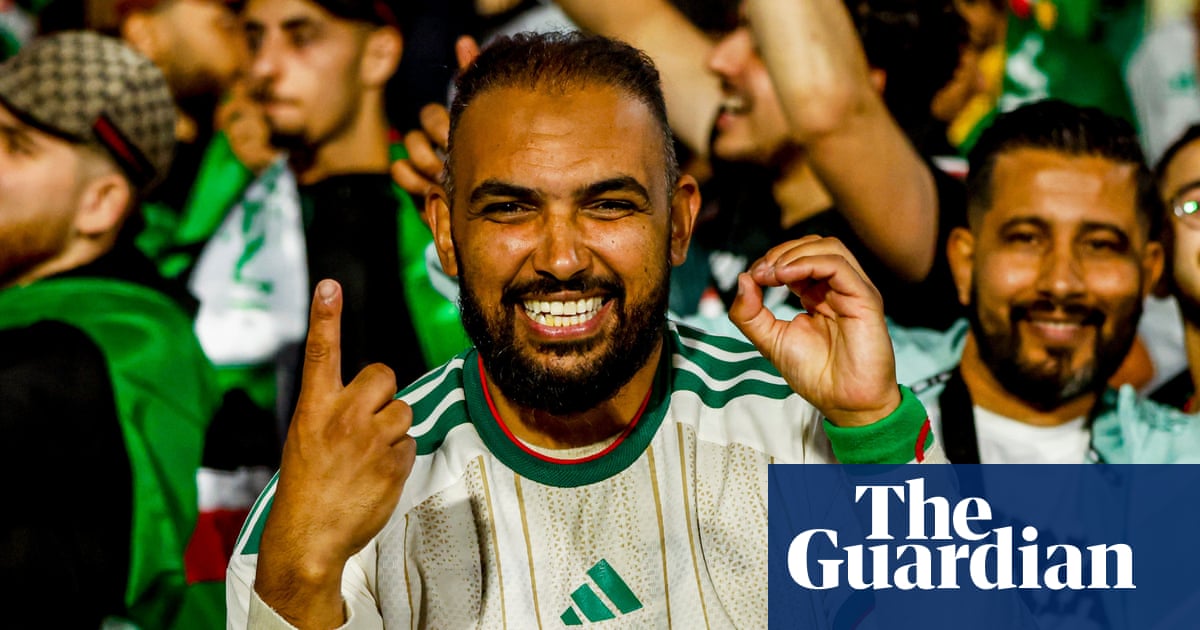
Most Algerian fans at the World Cup will be from the North American or European diaspora. They will be equipped with darbukas [goblet drum] and trumpets, so you can expect them to make a healthy amount of noise, especially as they sing their “1,2,3, viva l’Algérie” chant. Older fans will be particularly looking forward to the final group stage game against Austria and a chance to avenge the Disgrace of Gijón, when West Germany and Austria colluded to eliminate Algeria from the 1982 World Cup.
Relationship with the US/Trump?
Algeria was a pillar of the non-aligned movement after independence, opting to maintain relations with both east and west during the Cold War. Recently the bilateral relationship has blown hot and cold. While the United States and Algeria have expanded cooperation on energy and agriculture, there is still no American ambassador in Algeria as the Trump administration attempts topressure Algeria and the Polisario Front to accept the Moroccan autonomy plan in Western Sahara. Algerians – like many other Africans – were subject to the visa bond program which stipulates they pay up to $15,000 as a deposit to secure a US tourist visa. That was waived in May for those with a match ticket. According to the local embassy, very few Algerians have completed the application process to travel to the World Cup.
Written by Maher Mezahi for DZfoot.
