Beyond Headlines: Serena Elise Trivelloni on Journalism, Culture, and Human Connection
From reporting on conflict and political affairs to championing culture on the international stage, Serena Elise Trivelloni has built a career defined by integrity, curiosity, and the pursuit of meaningful stories. A…

From reporting on conflict and political affairs to championing culture on the international stage, Serena Elise Trivelloni has built a career defined by integrity, curiosity, and the pursuit of meaningful stories. A journalist, publicist, film critic, and communications specialist, she has worked at the intersection of media, politics, and cinema, fostering dialogue between artists, institutions, and audiences across borders.
In this exclusive interview with New York Journal, Trivelloni reflects on the lessons that shaped her journey, the enduring power of storytelling, the role of culture in an increasingly divided world, and her vision for the future of journalism in an age of rapid technological change.
Q1. Your career began in a place many journalists never experience firsthand: reporting from conflict zones after an early period of political activism. When you think back to those years, what did they teach you about the purpose of journalism and about yourself?
Serena:
Those years taught me what it means to earn every step forward and never take anything for granted. I spent ten demanding years working alongside senior government officials and political leaders during their missions. I learned to breathe when there was no time to breathe, to find a rhythm inside the chaos, and to live at full speed.
Yet none of that ever diminished my ability to listen, remain open, or connect with the world around me. I met people from every walk of life. I witnessed the human cost of conflict firsthand, while also gaining a deep understanding of how power operates and how decisions are made.
Looking back, I see a young woman who wanted to serve her community, challenge the rules, and devote her life to an ideal. For many years, I was always in service of something greater, sometimes to the point of forgetting myself.
That may be the most important lesson politics taught me: how to be there for others without losing yourself. And above all, how to remain true to your principles without compromise.
Q2. After covering some of the world’s most difficult realities, you found your way back to cinema, a passion that had always been with you. What drew you back to film, and why do you believe storytelling through culture can be just as powerful as reporting the news?
Serena:
Cinema is not something I returned to. It never really left me.
Film has always been a form of healing. It stayed with me through the hardest moments of my life and through the most beautiful ones. I came home to cinema because it is where I can express myself most completely, through writing, developing films and creative projects, and sharing a genuine human and artistic connection with the people I am fortunate enough to meet and interview.
I don’t know whether you’ve seen The Postman, Michael Radford’s Academy Award-winning 1994 film. Its protagonist, Massimo Troisi, is someone with whom I feel a profound connection. At a certain point in my professional life, his work seemed to invite me to finally listen to myself and ask the questions that truly mattered: What makes you happy? Why sacrifice yourself for someone who does not deserve it?
Through his art, his humanity, and his quiet but unbreakable strength, Massimo taught me something essential: never compromise who you are, and never be ashamed of what you feel. I am poetic and sensitive, but I am also fiercely determined. That is a part of myself I protect in everything I do, including cinema.
As for culture, I believe it may be even more essential today than traditional news reporting. In an age of fake news and infodemics, art in all its forms still helps us make sense of being alive. It allows us to see the world differently and to feel it with a different kind of heart.
These are difficult times for people who feel deeply. But culture must be used to create meaning, and to communicate something that matters. Otherwise, it risks becoming little more than an exercise in narcissism and marketing.

Q3. Much of your work has focused on creating a dialogue between the cultural world and public institutions, bringing artists, filmmakers, and policymakers into the same conversation. In an increasingly polarised society, what role can culture play in fostering understanding?
Serena:
As I mentioned earlier, culture has a responsibility to be present, to speak, and to refuse to be silenced.
That is not easy in a world where censorship often seems more widely practised than freedom of expression, and where funding for culture is frequently so limited that it becomes almost symbolic. This is why networks of social activism, community initiatives, and a continued dialogue with public institutions are so important.
In my own way, I have always tried to build those bridges and close the distance between parts of society that often seem completely disconnected. I have fought, debated, and insisted that prominent artists take part in the events and conferences I organised at the Italian Chamber of Deputies and the Senate. At the same time, I pushed political leaders not to remain indifferent and to listen to voices too often left at the margins.
I have done this both to promote Italian talent and cultural heritage and to support major international campaigns.
I will never forget bringing Mark Ruffalo, Robert Bilott, Gary Douglas, and Katrina McGowan to the Italian Parliament to discuss their documentary How to Poison a Planet, which examines the devastating PFAS scandal. Many people had already seen Dark Waters, in which Mark portrays attorney Robert Bilott. Still, far fewer understood how these so-called forever chemicals continue to affect entire communities around the world.
That is the power of culture. It can take something distant, invisible, or difficult to understand and make it deeply personal. Once people truly see it, they can no longer look away.
That is what keeps you going.
Q4. More recently, your work has taken you to the United States, opening new opportunities and perspectives. How has engaging with the American cultural and media landscape challenged, or reaffirmed, your vision of journalism and international collaboration?
Serena:
My connection with the United States has grown stronger in recent years through several collaborations, from the Hollywood Walk of Fame to the Oscars and finally the Tribeca Film Festival, which allowed me to experience American culture fully and firsthand.
Above all, it was an extraordinary human experience. It then became an equally meaningful professional opportunity.
Thanks to Julian Schnabel, Louise Kugelberg, and Oscar Isaac, who brought a complex and immersive film like In the Hand of Dante to the screen, I recently found myself travelling from Venice to New York and moving between two realities that may appear very different on the surface but are deeply connected beneath the surface.
Italy and the United States share a strong cultural and historical affinity. In both personal relationships and professional collaborations, there is a common thread that often allows us to understand one another almost instinctively.
Relationships can move quickly in America, but speed should not be mistaken for depth. Real connection takes time to build. Even so, Americans often have an immediate instinct for sensing who you are and whether you genuinely have something to say. That is what happened to me.
In Italy, unfortunately, talent, dedication, and commitment are sometimes taken for granted. In America, your light has a chance to emerge, at least in the eyes of those who know how to see it.
Journalism still matters, especially when you practice it on your own terms and refuse to follow the crowd. Social media may be essential, but substance is what truly lasts. And in America, when you have something real to offer, people notice. That is when doors begin to open, and someone is there to guide you through them.
I will never be able to fully express my gratitude to Julian, Louise, Oscar, and Mark for crossing my path and becoming, in different ways, part of my journey.

Q5. Journalism today is often described as a profession under pressure, navigating misinformation, shrinking attention spans, and rapidly changing technologies. What has allowed you to remain committed to this profession despite its growing challenges, and what continues to inspire your work?
Serena:
Everything you said is true. We are constantly being challenged by technology, by a world that moves faster every day, and by new systems of communication. There are no guarantees in this profession. The work is demanding, and the struggle is real.
But as I said at the beginning of this interview, struggle can also be a sign that you are moving closer to the life you envision rather than settling for less.
It is also extremely challenging to secure fair contracts, stable positions, and the professional recognition journalists deserve. Unfortunately, that is a reality we have to face.
Still, I believe that when you remain committed to your passions and continue pursuing what you genuinely feel called to do, step by step, doors begin to open. Your energy eventually reaches someone who can unlock the right door and let you walk through it.
Then there is the desire for truth, and the love of truth. A real journalist is always moving stubbornly against the current. When you are truly devoted to this profession, that instinct becomes impossible to surrender.
I have never cared much for labels, but I wear the word “journalist” like something stitched into my skin. I defend it with everything I have because there are still people who practice this profession with rigour, integrity, and genuine curiosity, without outsourcing their thinking to AI or reducing journalism to social media content and advertising.

Oscar Isaac at Tribeca Film Festival Premiere In the Hand Of Dante e Q&A with Julian Schnabel, Broadway, Tribeca @Miranda Manganaro
Q6. Looking ahead, what kind of stories do you still feel compelled to tell? And when people look back on your career years from now, what do you hope they will say about the impact of your journalism?
Serena:
I am currently working on several projects that I hope will take me far, both physically and intellectually.
They all involve promoting culture internationally, exploring the relationship between artificial intelligence and art, and supporting emerging creative talent. Recently, I have also been involved with several film scripts that I hope to help bring to the screen.
Among the projects closest to my heart are those involving director Stefano Veneruso, Massimo Troisi’s nephew, and producer Barbara Di Mattia of 30 Miles Film.
To me, they are the true outsiders of Italian independent cinema. I would love to help bring them back, in some sense, to another place they once called home: Hollywood, where they worked for many years.
One of the projects I am developing with them is based on the extraordinary true story of the Ovitz family, sometimes known as the “Seven Dwarfs at Auschwitz,” whose story actor Warwick Davis has also explored in a documentary.
This is not simply another story about the Holocaust. It is a story about art surviving time, destruction, and annihilation.
The seven members of the family continued to make music and art the reason for their existence, even after being deported to a concentration camp and subjected to Josef Mengele’s cruelty.
When you think about it, that image remains painfully relevant today. We still see young people singing or playing an out-of-tune guitar amid the ruins of Gaza or Odesa. In the face of devastation, art becomes an act of survival.
The story also presents Mengele as an emblem of the collapse of Western morality, a moral order so rigid, emotionally barren, and rotten at its core that its failures still echo in the cruelty we are forced to witness today. No victim should ever be treated as less worthy than another. There are only human beings, and every human life deserves protection, wherever it may be.
I hope to bring this project to the United States and to make it alongside people I deeply respect and love.
As for my work, I simply hope people will recognise the seriousness, honesty, and authenticity I have always brought to it.
After all: “It’s not who I am underneath, but what I do that defines me.”

Oscar Isaac at Tribeca Film Festival Premiere In the Hand Of Dante e Q&A with Julian Schnabel, Broadway, Tribeca @Miranda Manganaro
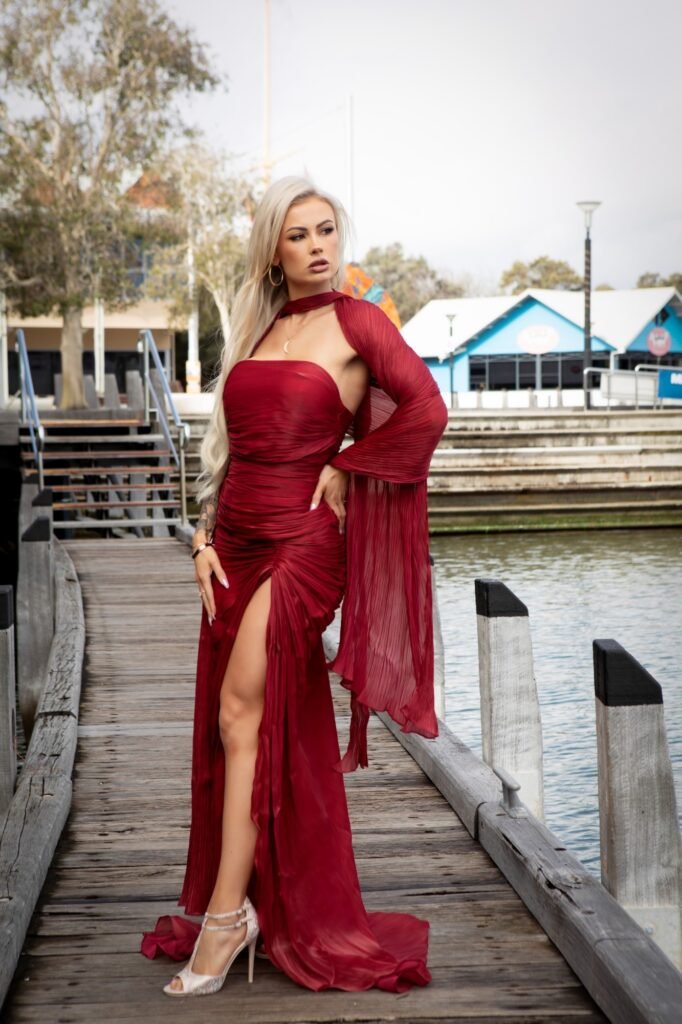
On the Cover: Serena Elise Trivelloni @laserenigna
PR: Alessio Filippelli @ale_ssiofilippelli
Photography: Manuel Perugini @manuel_perugini