
Celtic leaders doubt Burnham’s devolution drive will go beyond England’s borders
Andy Burnham’s devolution promises are yet to impress sceptical Celtic administrations hoping for a reset with Westminster, sources in Cardiff and Edinburgh have said.
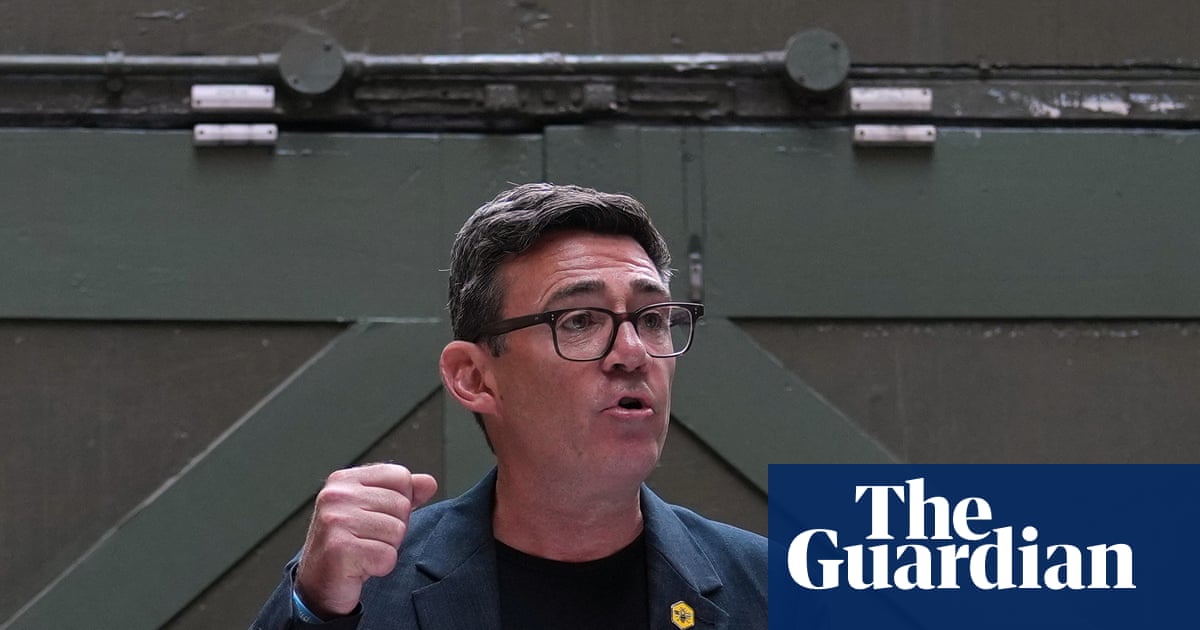
Burnham, who is expected to take over from Keir Starmer as prime minister on 20 July, has made much of his support for the devolution of power and resources in England, pledging in an agenda-setting speech last week to make a new “No 10 North” the “nerve centre of a rewired Britain”.
But the would-be leader of the UK has already made several missteps with the pro-independence parties in government in Northern Ireland, Scotland and Wales.
“If Burnham thinks Manchester is the north, I’ve got a map to show him,” a senior Scottish government source said. “To us, it sounded like the first-ever speech by a first minister of England.”
The only reference the former mayor of Manchester and newly elected Labour MP for Makerfield has made about devolution in the other nations of the UK is that powers must go “deeper down”. This has left the Scottish National party (SNP), Plaid Cymru and power-sharing members of the Northern Ireland executive wondering what such changes could look like.
Plaid Cymru MP Liz Saville Roberts said: “The muscular unionism that we saw from Keir Starmer and his government is what brought Labour’s 100-year dominance in Wales to and end. If Andy Burnham truly wants to deliver for Wales, he cannot keep heading in the same direction.”
Burnham’s assertion in his speech that “the people of Dundee and Bangor feel just as distant from Holyrood and the Senedd as they do from Westminster” did not go down well – not least because they are SNP and Plaid strongholds respectively.
And a pitch by Burnham to Scottish voters published in the Scotsman last week contained several basic errors, suggesting a shaky grasp of which powers are already devolved.
In Belfast and Cardiff, there has also been disappointment that Burnham has seemingly U-turned on a pledge to scrap or reform the much-maligned Barnett formula, which determines Treasury allocations for the Celtic nations to the greater benefit of Edinburgh.
In a 2024 book, Head North: A Rallying Cry for a More Equal Britain, Burnham argued in favour of a new system in which funding is “allocated based on social factors and levels of need”. He warned: “If we don’t do something like this, the North-South divide will only widen in the decades ahead.”
But last month, the would-be prime minister appeared to rule out changes to the formula.
Michelle O’Neill, the Sinn Féin first minister of Northern Ireland, said of Burnham’s probable appointment: “The face might change, but the policy never does.”
Speaking last week, during crisis budget talks for the devolved Stormont parliament, she added: “I think [the] budget discussion is very much scene-setting for Burnham … There’s a choice to be made.
“Do more of the same and throw a few pounds at a problem, hopefully it goes away, and then revert back to this conversation again next year. Or actually fix the fundamentals and fix the faultline and invest properly.”
Richard Wyn Jones, the director of Cardiff University’s Wales Governance centre, said there were two camps within the Labour party battling to define Burnham’s Scotland and Wales policies.
“In one ear, Burnham has Scottish and Welsh MPs who don’t want to give Holyrood and the Senedd more powers, and want him to work directly with local authorities instead,” he said. “That’s actually an anti-devolution move in the context of those countries … and the brutal truth is they don’t care about Belfast at all.
“The other argument is more in harmony with what people in Scotland and Wales understand devolution to be. In Wales, it would mean taking care of unfinished business like devolution of justice, the crown estate and rail infrastructure.”
Jones added that it was “noteworthy” that the former Welsh Labour first minister Mark Drakeford went to campaign for Burnham in Makerfield. “Burnham was the mayor of Manchester,” he said. “He is broadly sympathetic to the idea of devolution, so that wing of the Labour party doesn’t want to miss this chance.”
