
Country diary: Nesting mallard, owl and woodcock – this is the ‘human shield’ effect | Susie White
A big moon is cresting the Scots pine as I sit at an upstairs window looking down on to the garden. Awaiting the dusk emergence of a female tawny owl has become an evening ritual. After a day spent in the confines of a nest box in our sycamore tree, her departure shifts back by a few minutes every night. Completely silent, she drops towards the woodland border and skims the plants, each time on the same trajectory, a grey shadow in the gloaming.
Another movement on the path below catches my eye: a woodcock slinking along, using the box hedge to disguise her passage. If I hadn’t been watching for the owl I would never have known that she too is nesting somewhere in the garden’s thick leafiness. In July 2023, I wrote about a woodcock nesting in a flower border a few metres from the house, four chicks successfully hatching from four eggs. Last year, another attempt was disturbed by a cat captured on trailcam. This may be the same bird returned for a third time. Woodcocks are extremely secretive birds, their close proximity to a house very unusual.
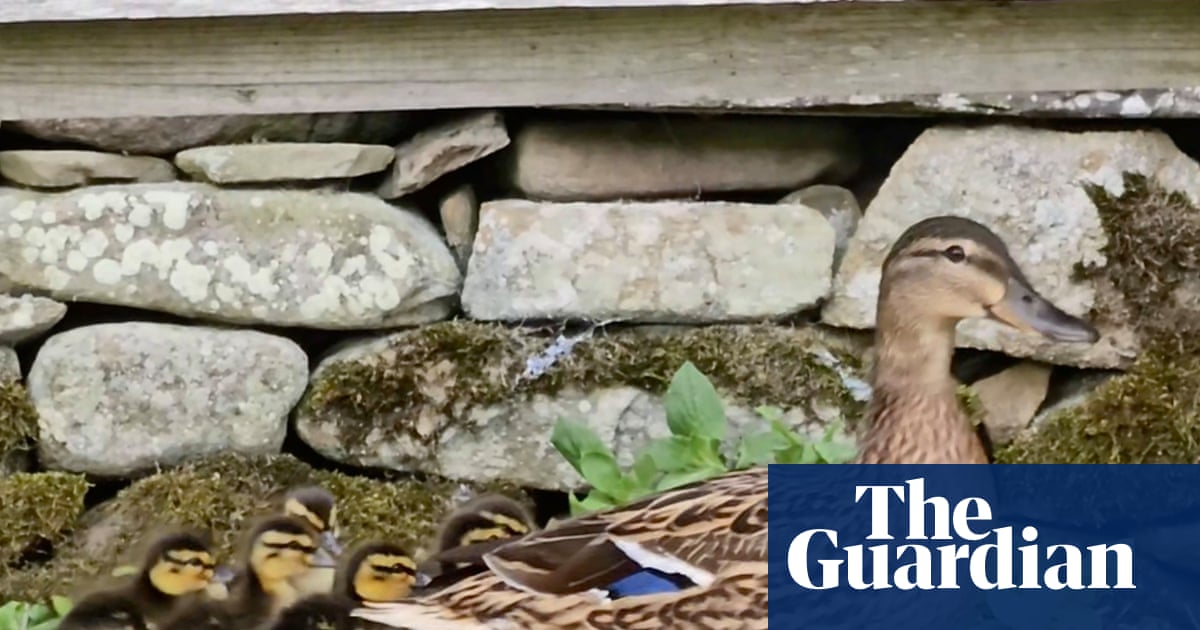
A third nest this year is that of a mallard, hidden beneath foliage just inches from a path. I talked to her as I walked by so she was familiar with my voice, since I knew I’d have to help her get the ducklings over the boundary wall. When they hatched, I was ready with a bucket. She was unflustered as I approached her (I did the same last year) and scooped all 10 ducklings into the bucket. Then I held it, squeaking and piping, over the wall. The mallard flew over, rejoined them and led them to the river.
The “human shield effect” changes the behaviour of animals, making them less vigilant for predators when they know that humans are around. Unwittingly through our presence, combined with the undisturbed density of this wildlife garden, we have made birds feel safer here, and maybe they have learned this from successful previous years.
Early evening, the female tawny gets restless and calls to the answering male. He flies briefly to the nest box for a noisy reunion, before remerging in front of us, wing tips backlit by amber sunlight.
