
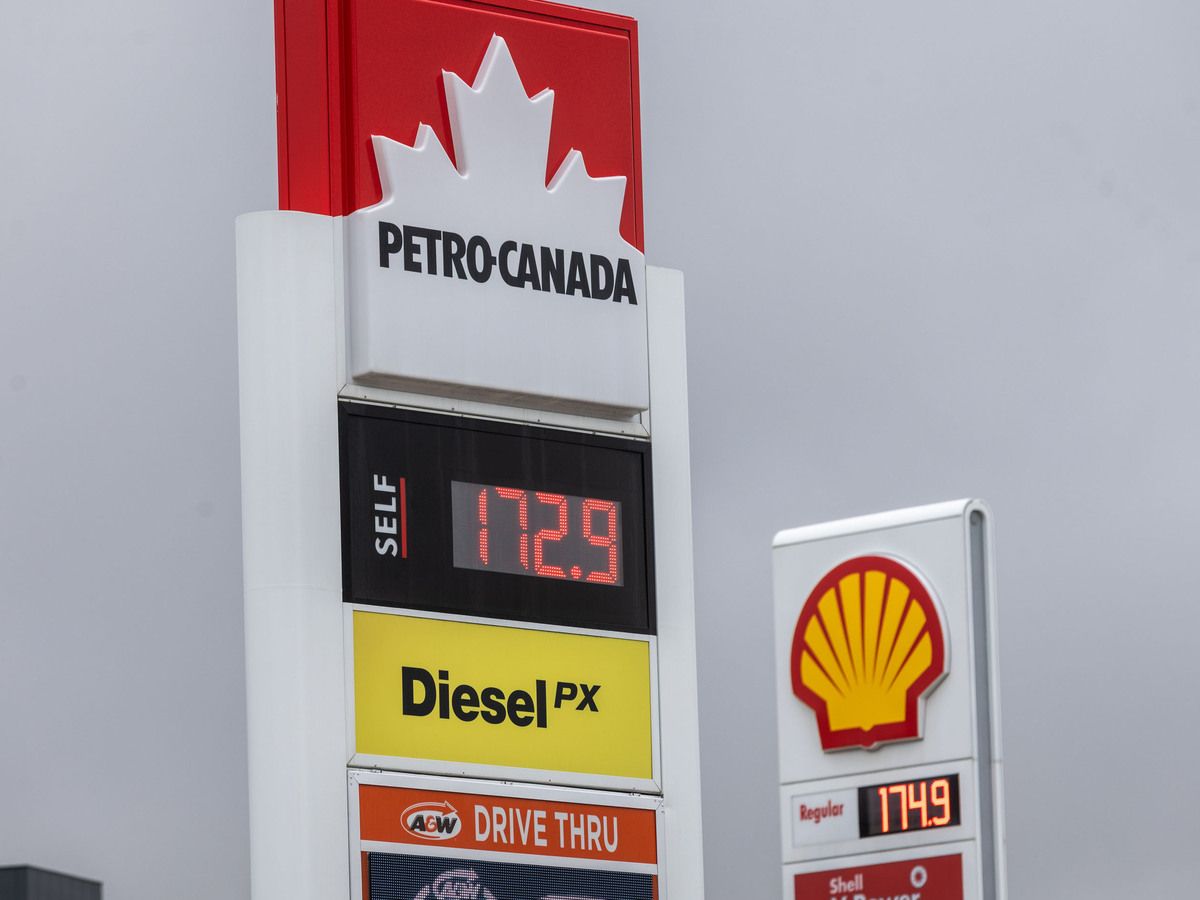
Most of Mark Carney’s tax break on gas cancelled out by higher cost of summer blend, experts say
Canadians won’t have to pay the federal excise tax on gasoline starting Monday, but it turns out most or all of the savings will get eaten up by the annual increase in summer fuel costs.
“Canadians are in desperate need of relief at the moment,” said Dan McTeague, the executive director of the advocacy group Canadians for Affordable Energy, in a
. “But this is a drop in the bucket.”
Prime Minister Mark Carney announced this week that the federal excise tax on gasoline and diesel will be suspended for five months starting on April 20. That should lower the cost of gas by 10 cents per litre and diesel by four cents.
However, Canadian gas stations are required to switch to summer blends starting April 15, and these are typically 10 cents more per litre, McTeague said.
“It won’t make much of an impact on prices resuming their upward trek based on the fact that this war is going to continue. Even if there is end in sight, the reality is that we have a massive draw down of supplies,” McTeague said.
The winter blend, which is used from Sept. 15, includes different components that help cars start efficiently. In the summer, the formula includes additives that cost more and prevent sparking in warm conditions.
American Gasbuddy analyst Patrick De Haan agrees with McTeague.
“Motorists will still get a 10 cent drop (when the tax is suspended), but instead of it pushing prices down, it may simply prevent them from going up further,” said De Haan. “Motorists may not see a visible 10 cent decline, and they may not see a decline really at all.”
McTeague believes there are two key factors driving up the cost of gas: The Iran war and the weak Canadian dollar.
“The fact that it takes 137 to 138 pennies to buy a U.S. dollar means it’s adding an extra 34 to 35 cents a litre,” said McTeague.
On Friday, Iran announced that it had reopened the Strait of Hormuz, which caused oil prices to fall US$13 to US$83 a barrel, still much higher than the price before the war. However, late Friday, Iran was already threatening to close the strait again, making the situation uncertain.
McTeague said he would rather see the government suspend all federal taxes on fuel and permanently eliminate the Clean Fuel Standard.
“Clean Fuel Standard is already seven cents a litre, going to 20 cents a year by 2030,” said McTeague. “That’s where refiners are required to buy carbon credits to drop their emissions 30 per cent. But since it’s impossible — no such technology exists — they have to buy carbon credits from the carbon market, which they’re passing on to consumers.”
“We content ourselves with believing we have lots of oil, but we do, except we spent a lot of time restricting it,” he said.
For both McTeague and De Haan, an end is not in sight for Canadian gas prices.
“The tax decrease will be passed along, but you may not necessarily see it,” said De Haan. “Because the volatility in oil prices may push oil prices up at the exact time that taxes may be going down.”
Even if the U.S.-Iran war ends soon, an end to high gas prices would still take months according to McTeague.
Our website is the place for the latest breaking news, exclusive scoops, longreads and provocative commentary. Please bookmark nationalpost.com and sign up for our daily newsletter, Posted, here.
