How Starship’s First Orbital Flight Deployed 26 Starlink V3 Satellites
SpaceX's Starship reached orbit for the first time on Sept. 28, deploying 26 Starlink V3 satellites.
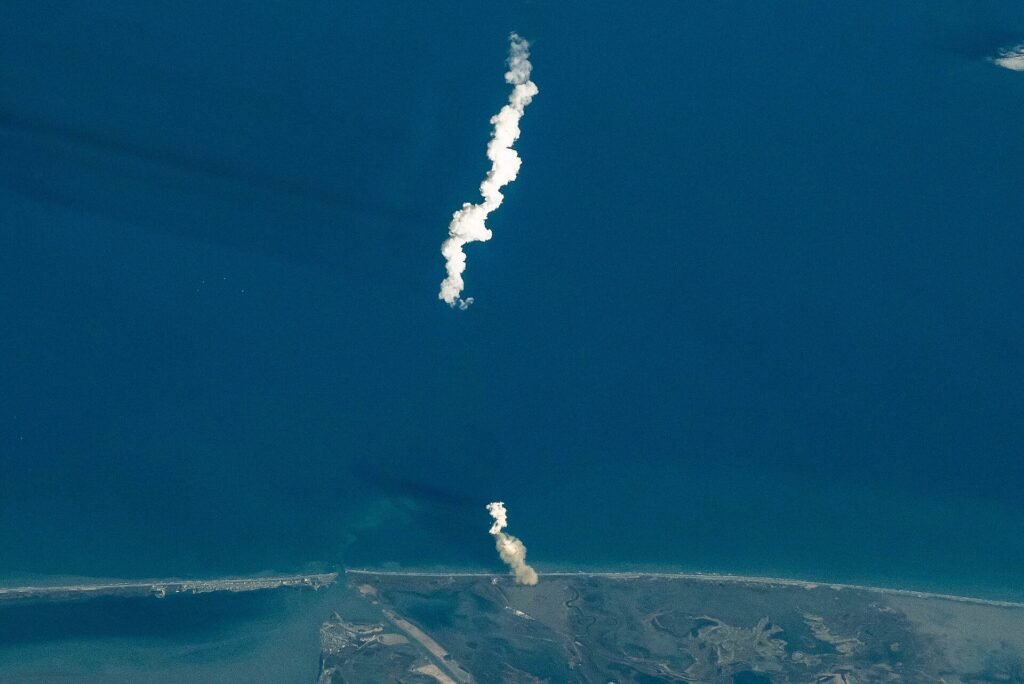
SpaceX placed Starship into orbit for the first time on September 28, 2026, deploying 26 Starlink V3 satellites before an early splashdown. The spacecraft reached orbital velocity and successfully released a revenue-generating payload. Though the flight was cut short after three hours in orbit rather than the planned six orbits over nearly ten hours, and neither the booster nor the spacecraft were recovered, SpaceX confirmed contact with all 26 satellites. The company called the test a success.
The achievement carries implications beyond vehicle engineering. Starlink has grown to 12 million subscribers as of mid-2026, with Connectivity segment revenue of $11.4 billion in 2025, but revenue per user has fallen 18 percent as the company expands into price-sensitive markets. Starship’s ability to deploy satellites bearing 10 times the downlink capacity of earlier generations at a scale Falcon 9 cannot match reshapes the economics of that growth. For US space industry competitiveness, the milestone arrives as China has applied for 203,000 satellite orbits to the International Telecommunication Union and commercial rivals at home face delays and disruptions.
The V3 Advancement
Each Starlink V3 satellite supports approximately 1 terabit per second of downlink capacity and 160 gigabits per second of uplink capacity—a tenfold improvement in downlink and a 22-fold improvement in uplink compared to Starlink V2 satellites launched by Falcon 9. The satellites deploy 2,048 downlink and uplink beams each, versus 192 downlink and 144 uplink beams on V2 models. Six 400-gigabit space lasers per satellite form a petabit-scale mesh network, and quad-band backhaul antennas provide 1.2 terabits per second of capacity—eight times the V2 capacity.
The satellites’ solar arrays generate roughly twice as much power as V2 arrays, necessary to power the expanded capabilities. Their size and weight meant they were designed for Starship rather than Falcon 9, which carries 27 V2 satellites. This constraint shaped SpaceX’s satellite design for years. Starship removes that limitation. A fully loaded Starship can carry up to 60 V3 satellites into orbit. That single mission would add roughly 20 times the network capacity of a Falcon 9 launch carrying V2s. Flight 14’s 26-satellite deployment alone added about 26 terabits per second of capacity, roughly 10 times that of a single Falcon 9 V2 launch.
Flight 14 by the Numbers
Starship deployed 26 Starlink V3 satellites on September 28, 2026, at an altitude of approximately 275 kilometers. Each satellite carries 1 terabit per second of downlink capacity and 160 gigabits per second of uplink capacity. Starship can carry up to 60 V3 satellites, delivering approximately 60 terabits of capacity—roughly 20 times the network capacity that Falcon 9 launches carrying 27 V2 satellites provide.
Starlink’s Growth Trajectory
Starlink had grown to 12 million subscribers as of mid-2026, with Connectivity segment revenue of $11.4 billion in 2025, up 49.8 percent year over year. That growth masks a structural shift in the business. Average revenue per user declined to approximately $66 per month in Q1 2026, down from $81 in 2025 and from $99 in 2023. Revenue per user fell 18 percent as the subscriber base quadrupled, a signature of expansion into price-sensitive international markets.
Maritime and aviation service remain high-ARPU segments that help offset the ARPU compression from residential markets, according to SpaceX’s regulatory filings. But residential broadband—Starlink’s core business—shows the tension between scale and pricing. Starship deployment of V3 satellites allows SpaceX to expand constellation capacity at speeds Falcon 9 could not achieve, supporting subscriber growth in markets where pricing must remain competitive.
Launch Economics and Supply Constraints
The launch sector is experiencing unprecedented demand. The industry has announced plans for a million-satellite data-center constellation and monthly flights to the Moon, straining limited launch capacity. Florida’s space coast completed 109 orbital launches in 2025, far exceeding launch rate targets from prior years. Customers report difficulties securing SpaceX capacity, often requiring launch integrators as intermediaries. Firefly CEO Jason Kim said ‘there are a lot of critical missions that have to go up, and they have to go up yesterday’—a scarcity that Rocket Lab launch VP Brian Rogers says favors companies that control their own access to space.
SpaceX launched 165 Falcon 9 missions in 2025, with approximately 74 percent dedicated to Starlink constellation deployment. Starship’s capacity to deploy larger satellites more efficiently expands SpaceX’s own deployment flexibility. United Launch Alliance is currently led by interim CEO John Elbon, while Rocket Lab’s Neutron rocket was recently added to the Space Force’s roster of eligible national security launch vehicles alongside Stoke Space’s Nova rocket.
US Dominance Under Pressure
The United States holds a commanding position in commercial space launch. China’s share of global launches fell to 28 percent in 2025, and it accounted for just 8 percent of the satellites launched worldwide that year. Five companies—Rocket Lab, Stoke Space, Blue Origin, SpaceX, and ULA—compete for US national security missions, with Blue Origin, SpaceX, and ULA holding lanes worth approximately $14 billion.
China, however, is positioned as the largest growth hub. The country completed 92 total space launches in 2025, with commercial launches accounting for 50 missions or 54 percent of the total. China sent 311 commercial satellites into orbit in 2025, 84 percent of the satellites it launched that year. The Chinese government’s 2025-2027 action plan redefined commercial enterprises from a ‘supplementary force’ to an ‘important part’ of the national space system. Chinese companies like LandSpace are advancing reusable rocket technology through the Zhuque series, aimed at rivaling Falcon 9. China submitted applications for 203,000 satellite orbits to the International Telecommunication Union, intensifying competition for limited low-Earth orbit resources allocated on a first-come, first-served basis.
A single Starship mission carrying V3 satellites can add approximately 20 times more network capacity than a Falcon 9 launch with V2 satellites.
Innovation and Risk Factors
China’s space sector demonstrates significant innovative capacity in specific domains. China’s BeiDou positioning and navigation system operates 50 active satellites in a multi-orbit constellation with superior accuracy features compared to GPS’s 37 satellites. China has deployed comprehensive Earth observation capabilities through military and commercial satellite systems. The country developed its Tiangong space station at what analysts describe as remarkable speed. However, China remains behind in low-Earth orbit broadband and lacks fully operational reusable rockets—critical gaps that represent areas of US advantage.
The competitive threat remains substantial but not yet decisive. China surpassed the US in annual publication citations on aerospace engineering in 2022, and patent filings increased dramatically, though most lack international scope. American spending intensity on space exceeds China’s as a percentage of GDP, and the US maintains advantages in reusable rocket technology and LEO broadband. But analysts warn that without regulatory reform and sustained innovation investment, American dominance faces genuine erosion. Starship’s orbital achievement reinforces US technological leadership precisely when that position faces mounting pressure.
What Remains Unproven
Flight 14 achieved its primary technical objectives but faced challenges. One of Starship’s second-stage engines cut off early during the flight. Though SpaceX proceeded with the orbital insertion burn, the company elected to cut the flight short rather than complete all six planned orbits. Neither the booster nor Starship itself were recovered; the spacecraft ended its flight in a fiery splashdown in a pre-cleared zone of the Pacific Ocean. These details matter because Starship’s economic case depends on rapid reusability.
The company has indicated it may attempt to catch the Starship upper stage during the program’s next flight test. Until SpaceX demonstrates routine booster and spacecraft recovery with rapid turnaround between flights, the promise of Starship’s cost advantage remains theoretical. Current Falcon 9 reusability has set the industry standard. Starship must clear that bar to justify the capital investment the vehicle requires and the competitive claims SpaceX has made.