
‘The film humanised Russians at a time when Rambo was killing them’: how we made Letter to Brezhnev
Frank Clarke, writer
I started banging out the script for this on a typewriter in my scruffy flat in Toxteth, Liverpool, in 1981. Four years later, the film had its British premiere. My idea was for a working-class romance between a couple of girls from my native Kirkby and two Russian sailors on leave around the port of Liverpool, with a subtle political message at a time when the Thatcher premiership and the cold war were at their heights. There was a lot of anti-Russian propaganda in the press, but I was not prepared to hate a whole nation just because they had been demonised by the likes of press baron Robert Maxwell.
I sent my script to every TV company in the land. They all said they loved it, but wouldn’t do it. I suppose that’s how censorship works. They don’t reject you outright, just say there’s no money. But I was part of the gay scene and there were always people dossing on my couch. One night, an heiress, Fiona Castleton, slept over after she missed the ferry back to the Isle of Man. She left me a note saying: “If you’re ever in the area, come and say hello.” I was on the next ferry over, the script under my arm. Her brother Charles loved the story, and it was his money that enabled us to go into production.
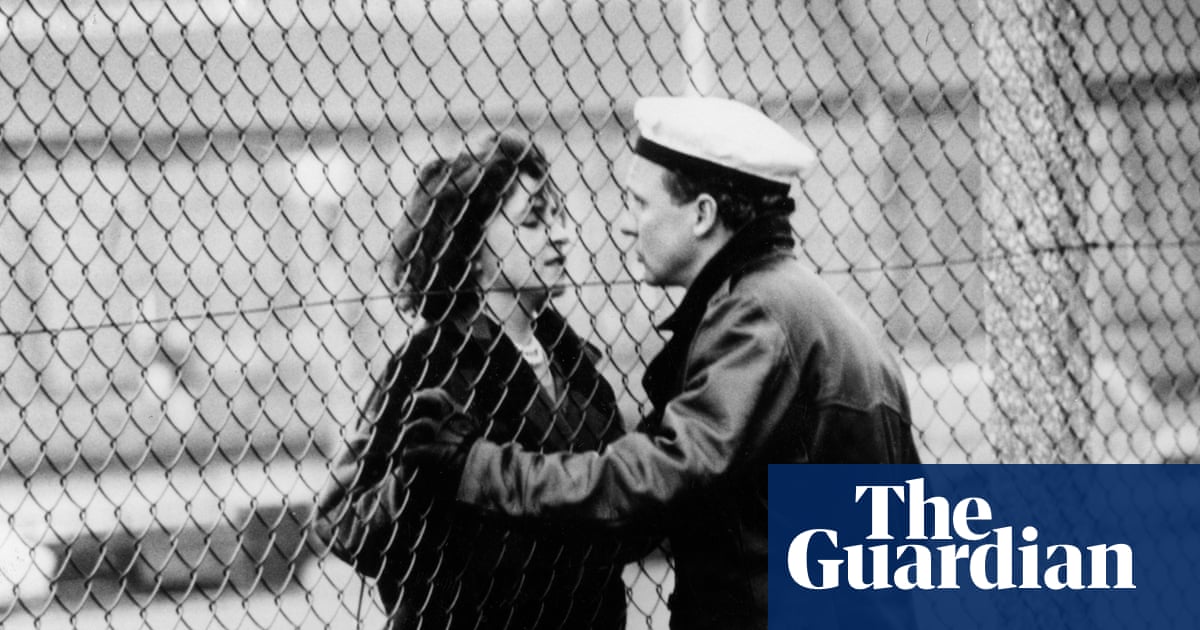
The film’s big romance is between Elaine (Alexandra Pigg) and the Russian sailor Peter (Peter Firth), but it is the relationship between Elaine and her friend Teresa, played by my sister Margi, that is the biggest journey for me. Elaine has the courage to follow her dream and go to Russia to find Peter, whereas Teresa – who had paired up with Sergei (Alfred Molina) – stays put, working in the Kirkby chicken factory.
I was brought up with seven sisters, with a front row seat on their fights and capacity for forgiveness. They were quick-witted, especially if someone needed a tongue-lashing. So all that tight dialogue in the film, the looks and laughs, flowed through my pen, but it was my sisters that had provided the insight.
Now I’ve readapted the script for the theatre. It’s been like going round to your old mate’s house, finding all the characters you used to hang with are still there, and saying: “Shall we give it another whirl round the dancefloor?”
Margi Clarke, played Teresa
It still amazes me that Letter to Brezhnev was the first thing Frank had ever written – and that he was able to get Peter Firth and Alfred Molina to appear in it. I think they thought we’d be like a lot of students, running round with a Super 8 camera, but we weren’t exactly ingenues. I’d been in Brookside as Fran the CND woman, and had stage experience via my punk band Margox and as a TV presenter. Alexandra had also been in Brookside and several other productions.
It was the first film Chris Bernard had directed but his stage background meant he was great with actors, helping us find the important point of a scene and steadying our nerves – when they call “action!” on set, an actor’s heart rate is the same as in a car crash. But my first scene was still nerve-racking. Teresa, just off her shift in the chicken factory, is still in her stained white uniform when she goes into the pub to meet her friends. Chris wanted me to do it without makeup, which I hated the idea of. I sneaked over to an extra and dabbed on some of her lipstick, but Chris saw me and made me scrape it off.
Thankfully, I also had this transformation scene, set in famous old Liverpool dancehall The State. I suddenly emerge from the ladies as a stunning peroxide blonde in a red dress. All of us were steeped in old Hollywood movies, and that scene drew on Now Voyager, where Bette Davis goes on a ship looking like a fuddy duddy and undergoes a glamorous makeover.
I’m proud of how Letter humanised the Russians, at a time when Rambo was killing them. I love the scene where Sergei throws me over his shoulder. But the film was also a thank you to Kirkby and its people. When they told us the premiere was to be in London, Frank said: “We’re having it in Kirkby or we’re not going.” The entire population – many of them had been extras – turned out. More than 500 crammed into my mum’s council house for a party, overflowing into the garden. It’s still talked about. In fact, years later, a bar opened in the area called The Premiere.
