

Where does U.S. get its steel and and aluminum?
Canada is just one of many sources of steel and aluminum used by American industry
Article content
American industry relies on both internal and foreign sources for steel and aluminum. Canada is the top importer of both into American industry. However a thriving domestic steel industry lessens the impact of imports from any of the list of countries who send steel to America. Aluminum is a different story.
Article content
Article content
How much steel does the U.S. use?
The U.S. is a huge steel producer. American mills have supplied between 70 to 90 per cent of the country’s steel consumption over the past decade, according to a U.S. Congressional research report published in 2022.
Advertisement 2

Article content
From 2012 to 2017, the U.S. economy used an average of 100 million tons of steel per year. In 2023, there was a 1.1 per cent increase in U.S. steel production, up from 2022, says the American Iron and Steel Institute (AISI).
However, only about 25 per cent of the steel used by industry in the U.S. is imported. A recent AISI report shows that total steel imports into the United States decreased by 8.7 per cent in 2023 compared to the previous year, while finished steel imports decreased by 14.1 percent over the same period.
Trump rolls out reciprocal tariffs: ‘Canada is going to have to start paying up’
Where does the imported steel come from?
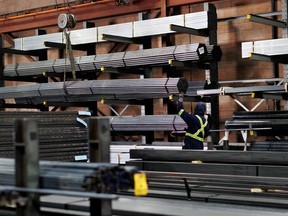
The top steel suppliers to America are Canada, Brazil, and Mexico, which collectively account for almost 50 per cent of U.S. steel imports, according to the U.S. International Trade Administration. Other notable suppliers, according to the American Iron and Steel Institute, include South Korea, Vietnam, Japan, Germany, Taiwan, the Netherlands, China, Romania, Turkey, the UAE, Italy and Spain.
What about imported aluminum?
Aluminum is a different story for the U.S. It relies heavily on imports, with about half of the aluminum used domestically coming from other countries.

NP Posted
Article content
Advertisement 3
Article content
Canada has an upper hand there. It is the largest supplier of aluminum to the U.S., providing almost 60 per cent of all imports. Other major suppliers include the United Arab Emirates, China, South Korea, and Bahrain.
What U.S. industries used imported steel and aluminum?
Automotive Industry: This sector is heavily dependent on both steel and aluminum for vehicle manufacturing, making it vulnerable to the impact of tariffs.Steel is used in body frames and chassis, while aluminum is used for lighter components to improve fuel efficiency.
Construction and Infrastructure: Steel is crucial for building frames, beams, and other structural elements in construction projects. Aluminum is also used in construction for roofing, siding, and other applications.
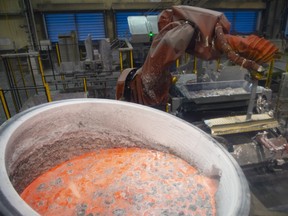
Aerospace: Both steel and aluminum are used in the aerospace sector, with aluminum being particularly important for its lightweight properties. While these sectors often use specialized metals, they can still be affected by broader price increases.
Appliance Manufacturing: Household appliances rely on steel and aluminum for their construction. Increased costs for these metals can lead to higher appliance prices.
Advertisement 4
Article content
Energy Sector: Steel is used in pipelines and other infrastructure for the energy industry. While not as reliant on aluminum, the sector can still be affected by changes in steel prices.
How could tariffs help the American industry?
The U.S. imports more steel and aluminum than it exports. But reliance on foreign steel and aluminum can make U.S. industries vulnerable to disruptions of global supply chains, especially during tariff clashes and trade disputes.

U.S. companies that rely on imported steel and aluminum may also face challenges competing with foreign firms that have access to cheaper materials — affecting their market share and profitability, according to a S&P Global Ratings report.
This is one of the driving forces behind the new Trump tariffs. The Trump administration is aiming to build up the American steel and aluminum industries to create new jobs, hopefully make them more competitive and result in less reliance on imports — rebalancing the trade deficits.
Our website is the place for the latest breaking news, exclusive scoops, longreads and provocative commentary. Please bookmark nationalpost.com and sign up for our daily newsletter, Posted, here.
Article content
