World Athletics Tells ASA to Remove James Moloi and Adopt a New Constitution in Six Months
World Athletics ordered Athletics South Africa to remove suspended president James Moloi and rewrite its constitution within six months, or face sanctions.
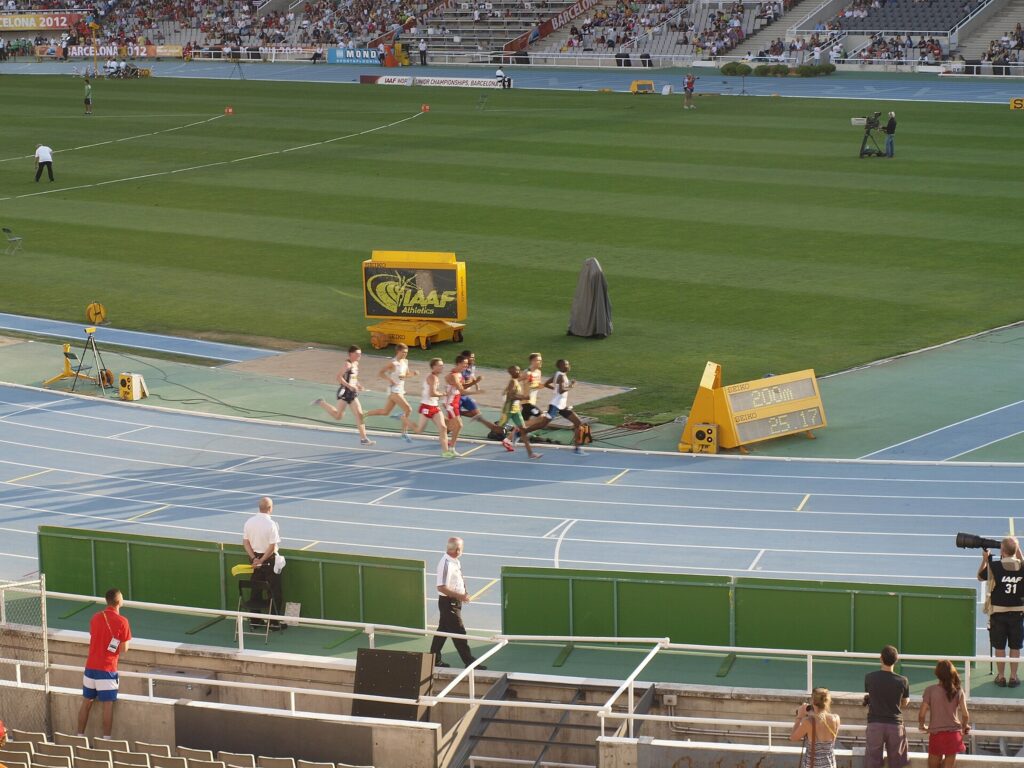
World Athletics has told Athletics South Africa (ASA) to remove its suspended president, James Moloi, and has given it six months to adopt a new constitution. IOL reports that a three-page letter sent from Monaco on 15 October tells ASA to remove Moloi “without delay.”
If ASA misses the deadline or deliberately obstructs the agreed roadmap, the matter is referred to the World Athletics Council for consideration of sanctions under Article 13. As IOL reports the letter, the sanction in view is a provisional suspension of ASA’s international membership. The letter follows a disciplinary panel ruling dated 6 October and a fact-finding mission in early September.
What the September Fact-Finding Mission Found
Zakhele Dlamini, president of the Southern African Confederation of Athletics and vice-president of the Confederation of African Athletics (CAA), led a fact-finding mission in South Africa on 2 and 3 September 2026. IOL reports that the CAA and World Athletics requested the mission.
According to Business Day, the mission found serious deficiencies in ASA’s governance. These included divisions on the executive board, difficulty making decisions collectively, unclear authority among elected officials, and conflicts of interest where officials hold overlapping national and provincial roles.
Dlamini has been nominated as an independent observer of the constitutional adoption process and the elections, and is to report back regularly, according to IOL and Business Day.
The Panel’s Findings
Daily Maverick reports that the disciplinary panel chaired by retired Judge President Basheer Waglay issued a unanimous 55-page report dated 6 October 2026, upholding two of four charges against James Moloi.
How a Credit Card Case Reached a Disciplinary Panel
The case against Moloi began at a parliamentary committee meeting, where concerns were raised about the president’s use of the corporate card. IOL reports that the ASA board suspended him in October 2025 after an investigation by Forvis Mazars. Daily Maverick reports that the South African Sports Confederation and Olympic Committee (SASCOC) commissioned the review, and that its report, sent to SASCOC on 11 September 2025, found 399 card transactions between May 2023 and April 2024. IOL puts the figure at nearly 400.
A disciplinary panel chaired by retired Judge President Basheer Waglay issued a unanimous 55-page report dated 6 October 2026. Its members were Nellie Tiyago, nominated by the CAA, and Valentine Bushelo, nominated by SASCOC. Moloi denied making a small cash withdrawal from an ATM using the company credit card.
The panel upheld two of the four charges. One covered personal, unauthorised or unsubstantiated card use and asset misuse. The charges put the total for that period at more than R300,000. The other covered a dual benefit from an R18,000 monthly presidential allowance and card spending in April 2024. The panel did not uphold a charge of failing to account for card expenditure, or one of exceeding the R15,000 monthly card limit in nine of 12 months.
The panel recommended Moloi’s removal as president and as a board member. Daily Maverick reports that the ASA board must still accept or reject that recommendation. The World Athletics letter, as Business Day describes it, expects ASA to enforce the removal. This article could not confirm whether the board has acted.
The Six-Month Timetable and Election Steps
The letter sets a sequence of steps. Within one month, ASA must give World Athletics and the CAA a detailed timetable for revising its constitution, Business Day reports.
The federation must then finalise and formally adopt a revised constitution within six months of the letter’s date. ASA must convene the council to consider and vote on the amendments, and must submit the revised provisions for review before adoption. Elections must follow within three months of adoption.
IOL reports the letter was sent from Monaco on 15 October. Counting six months from that date would put the end of the period in mid-April 2027. A later IOL analysis refers to a nine-month roadmap, while the letter as reported by IOL and Business Day sets six months.
Business Day also reports that the draft constitution prepared by ASA “introduces several improvements” but “does not yet adequately address certain fundamental governance principles.”
A suspension would bar South African athletes from competing internationally, IOL’s analysis says.
What the Revised Constitution Must Include
The letter lists the principles the revised text must cover. The council, acting as general assembly, must be the supreme decision-making body, with voting rights reserved for accredited constituent representatives. No individual may cast multiple votes or represent more than one constituency at the same meeting.
Other requirements include clearly defined powers for the council, executive board, president, commissions and administration. They also include independent electoral, disciplinary, vetting and financial oversight mechanisms, term limits, gender balance, athlete representation, transparency, financial accountability, and alignment with South Africa’s administrative and territorial structure.
The letter cites Articles 9 and 17, which require member federations to comply with their constitutional obligations and applicable rules. Article 12 allows World Athletics to address governance difficulties inside a member federation, including through the relevant area association. Article 13 governs the sanctions that may follow non-compliance.
What a Suspension Would Mean for South African Athletes
IOL’s analysis of a suspension is a projection, not a World Athletics statement. It says athletes would be barred from competing internationally, would earn no world ranking points, and would see their records go unrecognised. It also says they would lose national selection and flag representation.
The same analysis says South Africa’s top athletes would be excluded from the 2027 World Championships in Beijing, and that entry pathways for the 2028 Los Angeles Olympics would be frozen. Exact dates for either event have not been confirmed in this reporting.
World Athletics has used a provisional suspension before. In November 2015, the IAAF Council suspended the All-Russia Athletics Federation with immediate effect for breaching the organisation’s objects. The decision cited articles 6.11(b) and 14.7 of the old constitution. The statement said athletes and support personnel from Russia could not compete in international competitions, including World Athletics Series events and the Olympic Games, while domestic competition was not prevented.
That case rested on doping and integrity grounds. The ASA matter concerns governance and finances. Under the scenario IOL describes, a suspension would bar South African athletes from competing internationally.