Why a 7.14% Mortgage Rate Is Squeezing New York’s Fall Housing Market
The 30-year mortgage rate climbing to a new one-year high is cutting buyer purchasing power and reshaping who can afford homes in the region.

The average 30-year mortgage rate climbed to 7.14% on September 25, marking a new one-year high. The rate jump has squeezed buyer purchasing power.
A monthly payment increase of $226 for a $400,000 loan compared to a year ago translates to thousands in lost purchasing capacity for individual buyers. The climb also comes as New York’s fall market confronts persistently tight inventory and shifting dynamics between buyers and sellers, with mortgage applications nationally falling 19% from the same week a year earlier, according to the Mortgage Bankers Association.
How rates climbed and what drives them
By September 2025, rates had declined to an average of 6.30%, giving buyers a temporary reprieve. The latest climb reversed that trend: the rate reached 6.95% for the week ending September 17, the highest level since January 2025 according to Freddie Mac, then climbed to 7.03% on September 24 and 7.14% by September 25, a new one-year high, with the single-day jump marking the largest move since May 15.
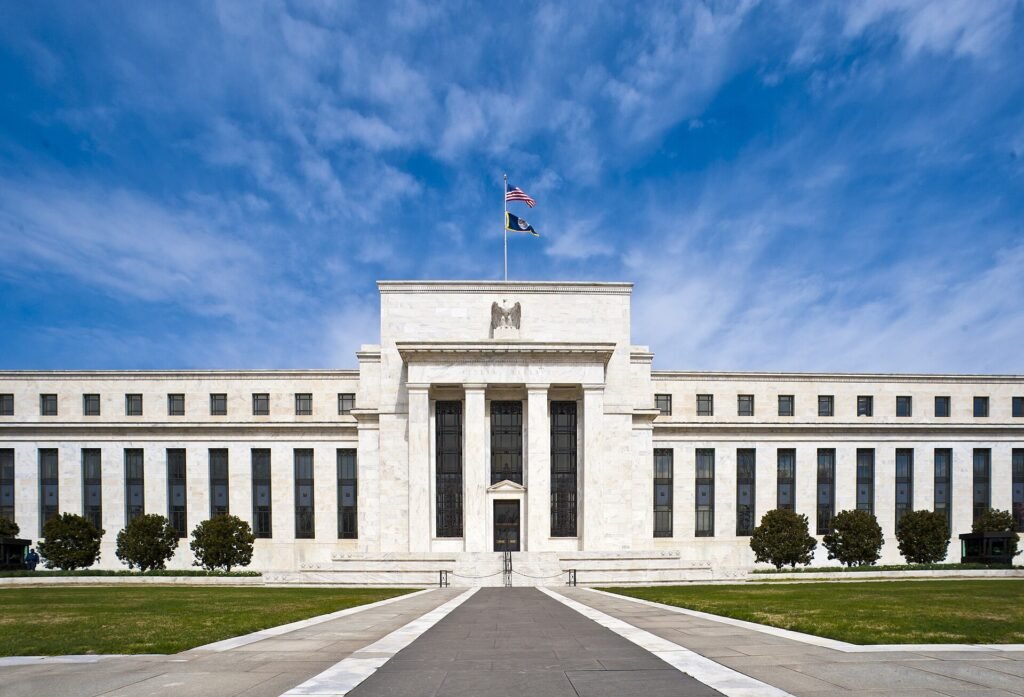
Mortgage rates don’t track decisions by the Federal Reserve directly, despite common misconception. Instead, 30-year fixed rates follow the 10-year Treasury yield, which closed at 5.18% on September 24, up from 5.11% the day before. Banks typically add a risk premium of 1.5 to 2 percentage points above the Treasury yield to account for the chance borrowers default, though that spread has widened to as much as 3 percentage points during past periods of market stress. Currently, the spread between the 10-year Treasury and the 30-year mortgage rate stands at roughly 2.03 percentage points, just above its one-year average of 2.00 percentage points.
The cascade begins when investors in mortgage-backed securities—the financial instruments that pool thousands of individual mortgages together—demand higher compensation for holding those securities as perceived risk rises. When the Fed signals inflation will remain sticky or rate cuts won’t arrive soon, bond investors demand higher yields, pushing Treasury rates up and, with them, mortgage rates. Treasury yields respond to inflation expectations, Fed policy signals, and global demand for safe U.S. debt.
Rate movement in twelve months
A year ago, the 30-year fixed mortgage averaged 6.30% in September 2025. By September 25, 2026, the rate had reached 7.14%, an increase of 84 basis points.
The math of lost purchasing power
At rates around 6.30% a year ago, a buyer with a $2,500 monthly payment budget could secure a $404,000 loan. Today at 7.14%, that same $2,500 monthly budget supports only a $371,000 loan, a loss of $33,000 in purchasing capacity. For a $400,000 purchase, the monthly payment obligation has jumped from $2,473 to $2,699, a $226 increase each month.
The cumulative cost compounds over time. A one-percentage-point rise on a $300,000 loan adds $197 to the monthly payment. Over 30 years, that difference totals $71,009 in additional interest paid. For middle-income families stretching to enter the market, even half a percentage point shifts the difference between affording a home and being priced out entirely.
The National Association of Realtors’ Housing Affordability Index measures whether a typical household earns enough income to qualify for a mortgage on a median-priced home, with a reading of 100 meaning a typical household can just afford it. Elevated home prices combined with higher mortgage rates continue to weigh on that measure for buyers across the country.
New York’s market dynamics: tight inventory meets retreating buyers
Nationally, the 30-year fixed mortgage rate reached 6.71% in early September, the highest level since July 2025, according to Freddie Mac, before climbing further later in the month. The rate increase arrives as New York’s market shows contradictory signals. Statewide, the median home price reached $600,300 in January 2026, up 4.1% year-over-year. In New York City, the median price climbed higher to $870,000.
Inventory remains tight across New York State, a constraint that continues to support elevated prices even as buyer purchasing power erodes. New construction adds only modest supply, with approximately 3,464 units authorized by building permits in October 2025—activity that points to continued but limited construction pipelines, not a dramatic surge that would rapidly close the region’s housing shortage. In New York City specifically, the median time on market is 66 days, significantly higher than the national average, suggesting an imbalance between supply and demand.
As rates climbed, mortgage applications to purchase fell 19% from the same week a year earlier, according to the Mortgage Bankers Association, even as they slipped just 1% week-over-week—a sign that rate-sensitive buyers are increasingly priced out of the market, while middle-market and first-time buyers face the tightest affordability constraints.
What higher rates mean for different market participants
Higher rates remove rate-sensitive buyers from the market even as inventory remains tight. When affordability tightens, fewer people qualify for loans, reducing bidding pressure on listings and slowing sale velocities. Lisa Sturtevant, chief economist at Bright MLS, said mortgage rates remaining stuck at or above the 7% threshold could create a psychological and financial barrier for buyers.
Sellers who held onto below-3% pandemic-era mortgages face a difficult calculus: refinancing into today’s 7% rates makes selling less attractive, since they’d lose their favorable loan and face a more expensive mortgage if they relocate. The “rate lock effect”—homeowners reluctant to abandon low rates—constrains inventory and helps maintain seller advantages, but limits overall market vitality.
Buyers are adapting to the higher rate environment in ways that increase their risk. Some borrowers are turning to adjustable-rate mortgages, or ARMs, traditionally considered riskier loan products. ARMs typically offer lower initial rates but reset after a fixed period, potentially rising sharply and increasing payment burden. Rising mortgage rates push marginal borrowers toward products that may leave them exposed to future payment shocks.
For a $400,000 purchase, the monthly payment obligation has jumped from $2,473 to $2,699, a $226 increase each month.
Rental pressure and broader housing constraints
New York’s rental sector faces similar supply pressures, with median asking rents climbing 6.6% year-over-year. Asking rents hover around $3,585 per month for typical units. Low vacancy rates and robust demand continue driving rents upward, creating a compressed affordability scenario where both purchase and rental paths have become more expensive. For renters considering purchase, the combination of rising rents and higher mortgage rates creates a dual squeeze.
The statewide housing market is expected to settle into what analysts call “slower, more stable price growth.” Most areas maintain seller’s market conditions, but the character of that advantage is shifting. Strong sellers moved inventory quickly at peak momentum; today’s sellers must price competitively and recognize that fewer financed buyers can qualify at higher rates. New construction remains insufficient to rapidly close the housing shortage, with only modestly increasing permits authorizing new units.
Fall market outlook and rate trajectory
Higher rates will likely dampen momentum compared to prior years when rates edged lower or remained stable. The combination of persistently tight inventory and constrained buyer purchasing power suggests a more balanced market, though less frenetic than springs and falls when rates were lower.
Interest rate movements remain volatile, tied to Treasury yields and Federal Reserve policy signals. The Fed has held its benchmark rate steady through 2026 and has not signaled a clear timeline for rate cuts, with some market participants now seeing a rate hike as possible. Lawrence Yun, chief economist at the National Association of Realtors, said to “expect 7% as the new normal” for mortgage rates, meaning buyers and sellers should expect this affordability environment to persist rather than treat it as temporary.
Whether rates stabilize near 7% or retreat will determine whether this fall season sees the moderate activity typical of rate-dampened periods or a sharper pullback in transaction volume across the region. For now, the 7% threshold represents both a financial milestone—indicating actual payment shock—and a psychological barrier that economists say is reshaping buyer behavior and market participation.
Photo: Ken Lund from Reno, Nevada, USA · CC BY-SA 2.0 · via Wikimedia Commons