Why Wall Street Now Expects a Fed Rate Hike, Not a Hold
Futures markets that recently priced in the Fed holding rates steady now price in a hike, reshaping borrowing costs for New York businesses and Wall Street trading desks.
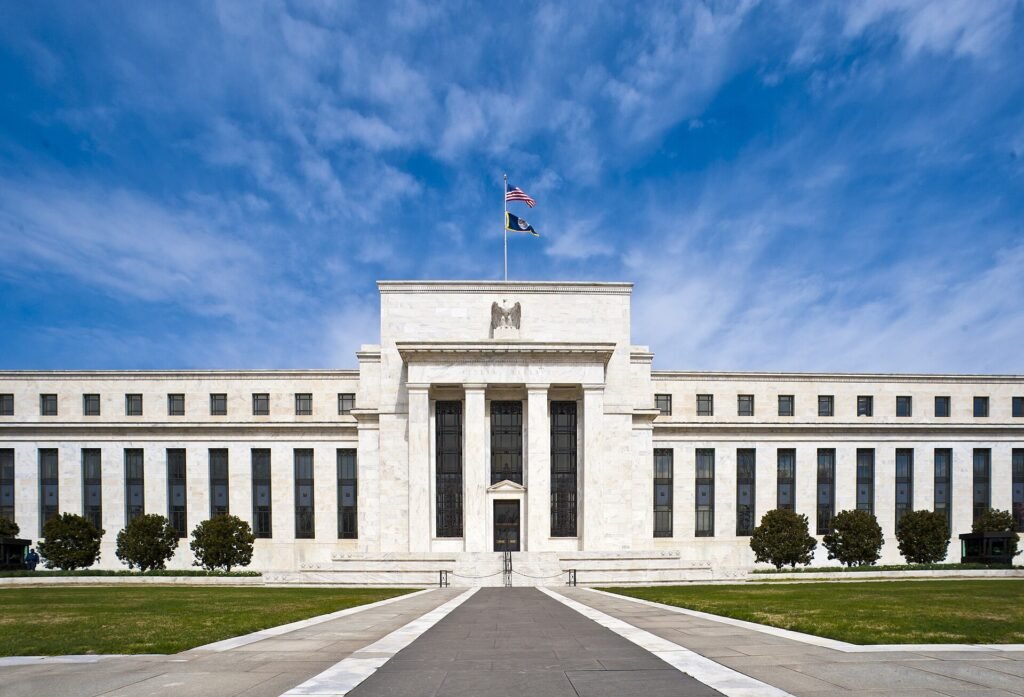
Wall Street had largely expected the Federal Reserve to hold interest rates steady this year. Heading into the Fed’s Sept. 15-16 meeting, that expectation has reversed. Futures markets now assign a high probability to a quarter-point increase, the first rate hike since 2023, after months of inflation data came in hotter than forecasters expected.
The reversal reaches beyond financial markets. It touches the prime rate that shapes small-business loans in New York, the bond yields Wall Street trading desks price against, and a public disagreement between the Trump administration and the Fed chair the president chose six months ago.
How Inflation Changed the Fed’s Calculus
The Federal Reserve has held its benchmark rate in a target range of 3.50% to 3.75% since December 2025. At its July 28-29 meeting, the Federal Open Market Committee voted 9-3 to hold rates steady, according to the meeting minutes. Three regional bank presidents, Cleveland’s Beth Hammack, Minneapolis’s Neel Kashkari and Dallas’s Lorie Logan, dissented because they preferred to raise the target range immediately.
Minutes from that meeting show most participants still expected inflation to moderate, with the staff projecting a decline over the second half of the year and a return to roughly 2% by 2028. But officials also cautioned that repeated supply shocks had delayed that path before, and that risks to the forecast remained “skewed to the upside.”
Data released since then has hardened that concern. The Bureau of Labor Statistics reported that the Consumer Price Index rose 3.4% over the 12 months through August, with core inflation, which excludes food and energy, at 2.4%. Energy prices were up 16.3% for the year, and gasoline alone climbed 27.4%. Gasoline’s 3.9% increase in August alone was “accounting for over one third of the monthly all items increase,” the agency said.
August’s Inflation Numbers
The Consumer Price Index rose 3.4% over the 12 months through August 2026, with core inflation at 2.4% and gasoline prices up 27.4% for the year, according to the Bureau of Labor Statistics.
What Fed Chair Warsh Has Signaled
Kevin Warsh, who took the oath of office as Fed chair on May 22, sharpened his warnings about inflation in an Aug. 28 speech at the Kansas City Fed’s Jackson Hole symposium, according to the Federal Reserve’s own transcript. He said the Fed’s preferred inflation gauge, the personal consumption expenditures price index, was running at 3.7% over 12 months and 4.1% over six months, and that 54% of items in that index had posted price increases above 3% over the past year, compared with a pre-pandemic norm of 32%.
Warsh described the wider economy as strong, citing investment in equipment and intangibles growing near 9% over four quarters and consumer spending up more than 2%. On the rate decision itself he was noncommittal, saying he was “committed to a discipline, not to a decision,” and that without clear, sufficiently fast progress toward the Fed’s 2% inflation target, more tightening could be necessary.
A Rate Debate That Splits the Chair From the President
Warsh’s hawkish tone puts him at odds with the president who nominated him. Trump had criticized predecessor Jerome Powell for years for not cutting rates fast enough and had expected Warsh, confirmed by the Senate in May, to bring borrowing costs down. Instead, speaking on Aug. 31, Trump said of Warsh, “I have a lot of respect for him and he’ll do what he has to do,” while adding that he still believes rates are too high, according to PBS NewsHour.
The Fed’s two-day meeting begins Tuesday and concludes Wednesday with a policy statement and Chair Warsh’s press conference, set for 2:30 p.m., according to the Fed’s public calendar.
Markets that recently expected the Federal Reserve to hold rates steady are now pricing in a hike.
The Cost of Borrowing for New York Businesses
Commercial banks set the prime rate at a fixed margin above the federal funds rate. The Fed’s H.15 report put the effective federal funds rate at 3.63% and the bank prime loan rate at 6.75% for the week ending Sept. 11. A quarter-point increase in the Fed’s target range would be expected to push the prime rate, which underpins many small-business and variable-rate loans, higher as well.
That prime rate feeds directly into federally backed lending. The Small Business Administration caps interest rates on its 7(a) Working Capital Pilot loans at the base rate plus a spread that shrinks as loan size grows: base rate plus 6.5% on loans of $50,000 or less, down to base rate plus 3.0% on loans above $350,000, according to the SBA. At a 6.75% prime rate, that puts ceilings around 13.25% for the smallest loans and 9.75% for the largest.
Credit conditions for small businesses in New York were already tight before this week’s meeting. In May, New York City Comptroller Mark Levine and the Hebrew Free Loan Society launched a zero-interest loan program offering up to $60,000 to entrepreneurs who lack significant collateral or long banking relationships, funded by $8 million from the nonprofit rather than city government. Rabbi David Rosenn of the Hebrew Free Loan Society said the program was built for a lending landscape where “credit tight and interest rates high” made financing difficult for small operators to secure.
Not every regional indicator points to strain. The New York Fed’s Empire State Manufacturing Survey, which polls about 200 manufacturing executives across the state, showed its headline index rising to 20.6 in August from 15.6 in July, its highest reading in more than four years.
How Wall Street Trading Desks Are Positioning
Futures markets tied to the Fed’s decision moved quickly as new data arrived. CBS News reported markets were pricing a 70% likelihood of a hike ahead of the August CPI release. Once the report came out, Reuters cited LSEG data showing fed funds futures implying more than an 80% chance of a quarter-point increase. By this week, market-tracking outlet InvestingLive put the odds near 87%, with Goldman Sachs, JPMorgan and HSBC each revising their forecasts to expect a September increase after previously predicting no change; HSBC and JPMorgan projected a further hike in December, and Deutsche Bank penciled in another for March 2027.
Goldman Sachs economist David Mericle said the committee “will be reluctant to surprise” markets that have already priced in a move. Treasury yields reflected the shift: Reuters reported the 10-year yield touched 4.99%, a nearly three-year high, before settling at 4.97%. The dollar index rose 0.36% over the same stretch, and oil traded above $100 a barrel amid tension between the U.S. and Iran, a factor several economists linked to the inflation readings driving the rate debate.
Stock traders adjusted too. The S&P 500, up nearly 12% for the year, had pulled back about 2% from its mid-August peak, and the CBOE Volatility Index rose to 17.10, up nearly 8% on the day, implying daily S&P 500 swings of roughly 1.1%, according to Reuters. Whether a September increase turns out to be a single inflation-fighting move or the start of a longer tightening cycle remained an open question among analysts heading into Wednesday’s decision.
Photo: Federalreserve · Public domain · via Wikimedia Commons