
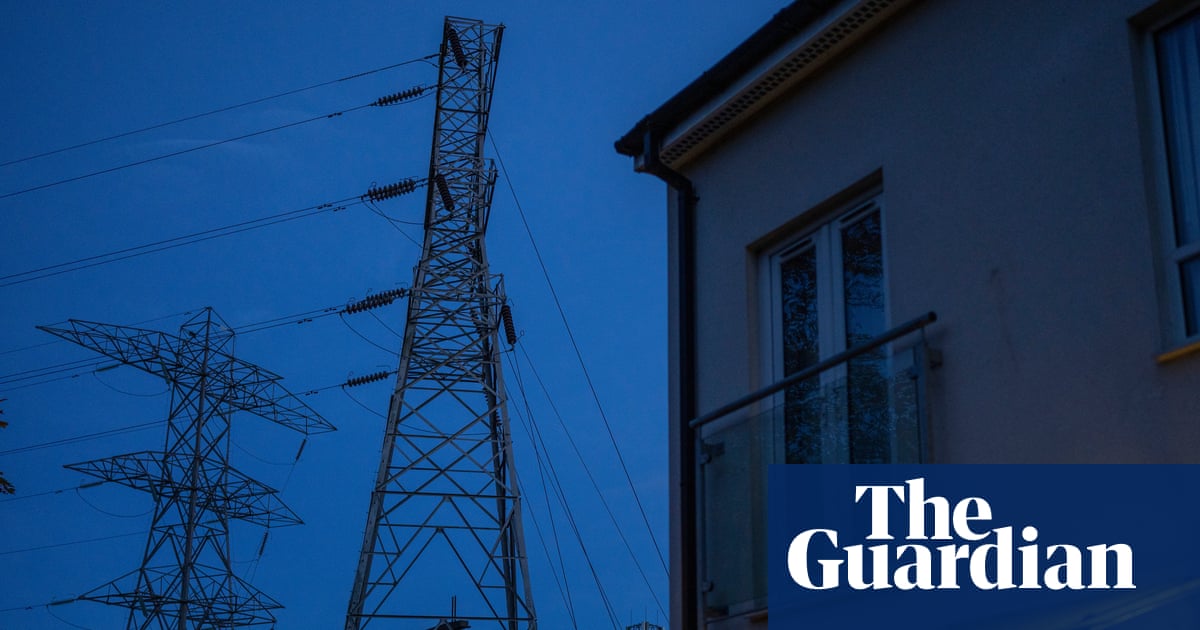
Millions in Great Britain can now face emergency power cuts at short notice
[ad_1]
Millions of households could face power cuts at short notice under new rules to help the electricity system operator avoid widespread blackouts when energy supplies run low.
The changes, which come into effect this week, will make it easier for the national electricity system operator to call for rotating blackouts at short notice if power supplies are running short.
It is also marks the first time the system operator can use large-scale power cuts to stabilise the grid without the need for emergency government powers.
The system operator could call for enough homes and businesses within a designated area to be disconnected to cut each block’s electricity use by more than a fifth with only eight hours’ notice, bringing rolling three-hour blackouts across the country to prevent the risk of total power system collapse.
The changes to the grid codes – the technical rules covering the country’s transmission system – were quietly approved by the industry regulator late last month. They come just weeks after control room whistleblowers at the National Energy System Operator (Neso) accused senior leaders of trying to cover up the risk of blackouts during the heatwave.
A spokesperson for Neso said the “last-resort contingency measure” would be used only in “the most extreme and unlikely circumstances” and “after all other available options have been exhausted, helping protect the wider electricity system”.
The power cuts would form the last line of defence against more severe and uncontrolled consequences of an electricity system collapse, such as those in Spain and Portugal last summer. In a worst case scenario this could require between five and seven days for electricity to be completely restored.
The new rules bridge the gap between the system operator’s existing powers to call for short-term power cuts affecting up to a fifth of electricity demand in each area, not used since the miners’ strikes in the 1970s, and the government’s more wide-reaching emergency powers designed for prolonged electricity disruptions.
In a proposal submitted to the regulator, Neso said the new measures could “be used more flexibly, be initiated quicker” than the government’s emergency code, and it would be designed for “a shorter duration”.
This could mean blackouts of up to three hours which would rotate across the country, to limit the impact on homes and businesses while the system operator’s control room manages a short-term supply squeeze. Meanwhile, a list of “protected sites” including hospitals, water treatment works and sites of national security interests would be exempt from any planned power cuts.
The government’s electricity supply emergency code, which has never been invoked, can only be enacted by the energy secretary. It would initiate rolling blackouts affecting 90% of electricity users to manage a prolonged disruption – such as a large outage at a high-voltage power import cable.
after newsletter promotion
These powers are “not suited for short-notice use”, according to Ofgem, but the new protocol could provide the energy system operator with a tool that is similar in scope but which can be initiated “as quickly as possible” to respond to even short-lived supply squeezes – such as a particularly cold winter evening.
The code change underlines the growing risk to the electricity system from short-term power system imbalances which can more difficult to predict in advance, rather than large-scale, longer-term outages or disruptions.
The last resort measure joins a string of other measures that can be used to help the system cope with a shortfall of electricity, including disconnecting large industrial users and lowering the voltage of regional power grids.
Lowering electricity voltage helps to reduce the amount of power used – just as tightening the sluice gate on a canal means water keeps flowing but at a lower volume and force. For households it can mean kettles take significantly longer to boil and phones take longer to charge, but there is little impact on data servers and industrial equipment.
[ad_2]
Source link
