Why Manchester City’s Guilty Verdict Could Squeeze New York City FC’s Finances
A Premier League commission found the English club guilty of 114 of 115 financial charges. Since both teams share the same Abu Dhabi-backed owner, MLS investment could shrink.
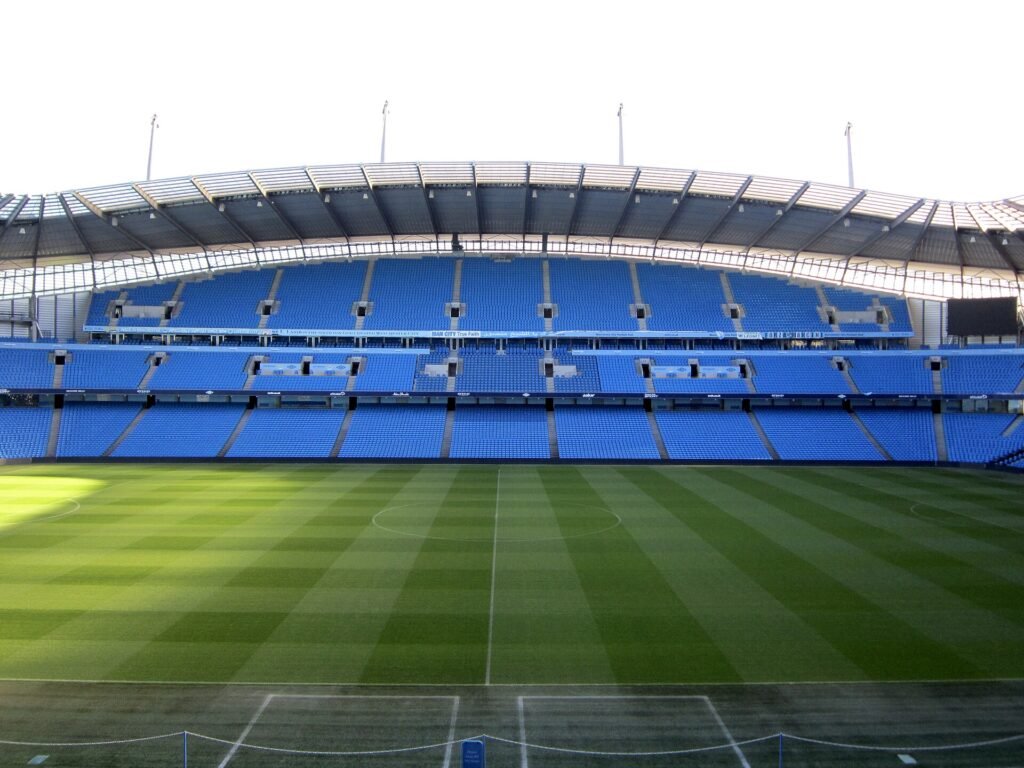
An independent Premier League commission announced on September 29, 2026, that Manchester City broke financial rules across nearly a decade under Abu Dhabi ownership. The club was found guilty of 114 of 115 charges, using fraudulent sponsorship deals to conceal over £900 million in secret funding from auditors and regulators. Premier League Chief Executive Richard Masters called it “the most significant in Premier League history.” Though the verdict matters most to English soccer, it carries consequences for American sports fans: Manchester City and New York City FC are owned by the same holding company, City Football Group. If the parent organization faces heavy financial sanctions, investment in the MLS team could shrink.
NYCFC’s ownership has promised deep pockets and a global network advantage. The verdict exposes a vulnerability in that ownership model. City Football Group’s wealth depends on Manchester City’s ability to generate revenue through Premier League play, European competitions, and global commercial deals. Severe penalties—including points deductions, relegation, or expulsion—could cut hundreds of millions of dollars from those revenues annually, forcing the group to recalibrate spending across its 13-club portfolio. The consequences for American professional soccer may not arrive immediately, but they are now unavoidable.
The rules Manchester City broke
The Premier League’s Profit and Sustainability Rules, established in 2012, set financial guardrails for all clubs in the top division. Under the current framework, clubs are allowed to sustain losses of up to £5 million per season, averaged over three seasons. That threshold increases to £35 million annually only when supported by owner investment, also averaged across three years.
Manchester City’s violations occurred from 2009 to 2018, over a nine-season period under Abu Dhabi ownership. The club systematically circumvented these rules through fraudulent sponsorship arrangements. An independent commission found that Manchester City arranged “sham” commercial deals with sponsors in which those companies were required to pay only a portion of sponsorship fees, with the remainder funded by Abu Dhabi United Group Investment & Development Ltd, the club’s owner. This scheme artificially inflated club revenues and reduced costs by over £900 million—equivalent to roughly $1.19 billion—creating the false appearance of compliance with financial rules.
Manchester City also failed to provide accurate financial information to regulators, submitted inflated sponsorship figures, and concealed payments that supplemented the salaries of managers and players. The club breached both Premier League and UEFA financial regulations and failed to cooperate with investigations from 2018 to 2023. Of 115 charges, the commission found the club guilty of 114.
The sham sponsorship scheme
Manchester City arranged “sham” sponsorship contracts from 2009 to 2018 in which Abu Dhabi owners secretly funded portions of commercial deals that were publicly reported as standard sponsorships. The scheme artificially inflated revenues and reduced costs by over £900 million ($1.19 billion), allowing the club to circumvent Premier League financial rules that otherwise would have forced spending cuts.
A long investigation reaches its conclusion
The case originated in November 2018, when Der Spiegel published allegations that Manchester City breached financial fair play rules based on leaked documents. UEFA launched a formal investigation in March 2019, later banning City from European competition for two years and imposing a €30 million fine. That European ban was overturned on appeal in July 2020.
The Premier League formally charged Manchester City with 115 financial breaches in February 2023. The investigation had spanned over four years before the formal charges were filed. In September 2024, a ten-week hearing began before an independent commission. The hearing ran from September 16 through December 6, 2024, during which the Premier League presented evidence of systematic rule-breaking and Manchester City defended its positions.
Manchester City maintained throughout the process that it possessed “a comprehensive body of irrefutable evidence” supporting its innocence. The club argued it had done nothing wrong and committed to pursuing all available appeals. Nevertheless, on September 29, 2026, nearly eight years after the initial allegations emerged, the independent commission concluded that Manchester City had systematically violated Premier League financial rules for almost a decade.
How NYCFC is connected through City Football Group
New York City FC is owned by City Football Group, a holding company controlled by Sheikh Mansour, the Abu Dhabi investor who also owns Manchester City. City Football Group oversees a network of 13 clubs worldwide, making it one of the most geographically dispersed ownership portfolios in professional sports. The portfolio includes Girona in Spain’s La Liga, Melbourne City FC in Australia’s A-League, Yokohama F. Marinos in Japan’s J-League, Mumbai City FC in India’s Indian Super League, and others.
Ferran Soriano serves as chief executive of both Manchester City and City Football Group, overseeing all affiliated clubs. This structure allows the parent company to pool resources, coordinate player transfers, and apply consistent financial and sporting strategies across the entire network. While Manchester City does not directly own NYCFC, both teams operate under the same corporate parent and share resources through a unified scouting network and player transfer system. Players and coaches move between affiliated clubs based on strategic needs.
Former Manchester City manager Pep Guardiola publicly showed investment in NYCFC’s success, watching the club’s 2021 MLS Cup win from a restaurant and praising its players. This demonstrates the practical connections between clubs in the City Football Group portfolio. The shared resources, coaching expertise, and financial backing flow primarily from Manchester City’s revenue, which generated approximately £694 million annually before the verdict. If Manchester City’s revenue shrinks due to sanctions, those resources become unavailable for distribution across the wider network.
Penalties have not yet been set, but they could be severe
An independent commission must still decide on sanctions. Manchester City has until October 2, 2026, to appeal the verdict. Once the appeal process concludes, a separate hearing will determine penalties. The entire process could extend well into 2027, based on precedent from recent financial cases in the Premier League.
The commission can impose several penalties, including unlimited fines, points deductions, player registration cancellations, suspension from league matches, compensation orders, and conditional or suspended sanctions. In extreme cases, the commission can recommend expulsion from the Premier League, though such a step would require approval from three-quarters of the league’s clubs. Each sanction would have different financial consequences for the club and its parent company.
Manchester City maintains its innocence and committed to pursuing “all appropriate regulatory and legal forums” to challenge the ruling. The club has substantial resources available for legal defense, suggesting a lengthy and expensive appeals process lies ahead. No sanction has been set yet, so Manchester City can operate and compete normally for now. But once a sanction is decided, it would take effect immediately, even while an appeal is underway, following precedent from Everton, Nottingham Forest and Leicester City’s points deductions.
If Manchester City loses broadcasting revenue, championship access, or faces forced player sales following its appeal, City Football Group’s resources would contract, potentially affecting investment in New York.
How revenue losses would cascade to NYCFC
The financial impact on NYCFC depends on what sanctions Manchester City faces. A large fine or modest points deduction would be manageable given City’s cash reserves of £173.7 million. But more severe penalties would shrink the revenues that feed City Football Group’s global operations and ultimately the investment available for NYCFC.
A relegation from the Premier League to the Championship could cut Manchester City’s annual revenue from £694 million to roughly £265 million—a 62 percent reduction, according to PSR Watch’s illustrative modeling. This would eliminate most Premier League and European broadcasting income, reduce matchday revenue at Etihad Stadium, and roughly halve global commercial income tied to Premier League status. The Championship also imposes stricter wage-cap rules, limiting team salaries to 85 percent of revenue plus limited owner funding. Such a scenario would force Manchester City to dramatically reduce its squad, sell valuable players, or accept chronic underinvestment.
Loss of Champions League access would cost Manchester City roughly £70 million annually. While the club could remain competitive in domestic competitions, losing European football for multiple seasons would compound revenue losses and reduce the club’s global commercial appeal. A 30 or 40-point deduction could prevent the club from qualifying for European competitions for multiple seasons, with similar cascading effects on revenues and sponsorship deals.
The club is valued at over $1 billion, according to Forbes. However, valuation and cash flow are distinct. A squeezed parent company would not directly prevent funding to NYCFC, but reduced annual cash generation at Manchester City could limit the group’s ability to invest in expensive roster additions, stadium improvements, or competitive spending.
The new financial framework arrives in 2026-27
Manchester City’s violations occurred under the Profit and Sustainability Rules that have governed the Premier League since 2012. These rules remained in effect through the 2025-26 season. Beginning in 2026-27, the league is implementing a new framework that tightens financial constraints further, making violations of the type Manchester City committed increasingly difficult to execute.
The new system introduces a Squad Cost Ratio rule that limits on-field spending to 85 percent of a club’s football revenue plus net player sale profits. UEFA has implemented even stricter constraints, where squad spending caps have progressively tightened: 90 percent of income in 2023-24, dropping to 80 percent in 2024-25, then 70 percent from 2025-26 onward. These regulations aim to promote financial sustainability while preventing the accumulation of unsustainable losses across European football.
The stricter framework means that if Manchester City survives its current crisis and returns to compliance, the new rules would make it harder for any club to repeat City’s scheme. However, the new rules do not erase the consequences of past violations. Manchester City faces judgment under the old rules, and the punishment for decade-old misconduct will be decided in 2026 and beyond, years after the regulatory landscape has shifted.
Uncertainty continues for American soccer
Manchester City’s appeal process will determine the ultimate severity of penalties. The club has until October 2, 2026, to formally lodge its appeal, with the full process potentially extending into 2027. Based on precedent from Everton FC’s recent financial case, a final decision could arrive within about three months of an appeal being filed, but lengthy legal arguments could extend that timeline considerably.
No sanction has been set while Manchester City’s appeal proceeds, so the club continues to operate and compete normally for now. But once a sanction is decided, it would take effect immediately, even if City appeals it. If City Football Group is forced to restructure finances as a result of heavy sanctions, NYCFC would feel the effects months later as budgets are recalibrated across the global portfolio.
For American NYCFC fans, Manchester City’s verdict is a distant regulatory matter in a foreign league. For City Football Group’s shareholders and the teams it owns worldwide, it is an existential question: whether the empire of interconnected clubs survives intact, or whether financial penalties force a fundamental reckoning with the ownership model that built it. The answer will shape NYCFC’s competitive capacity for years to come.
Photo: Ank kumar · CC BY-SA 4.0 · via Wikimedia Commons