Why a 1990 Ruling Lets Co-op Boards Reject Pre-Approved Buyers
Even buyers with mortgage pre-approval can be rejected by co-op boards, which operate under a legal doctrine that gives them broad power to accept or reject applicants without explanation.
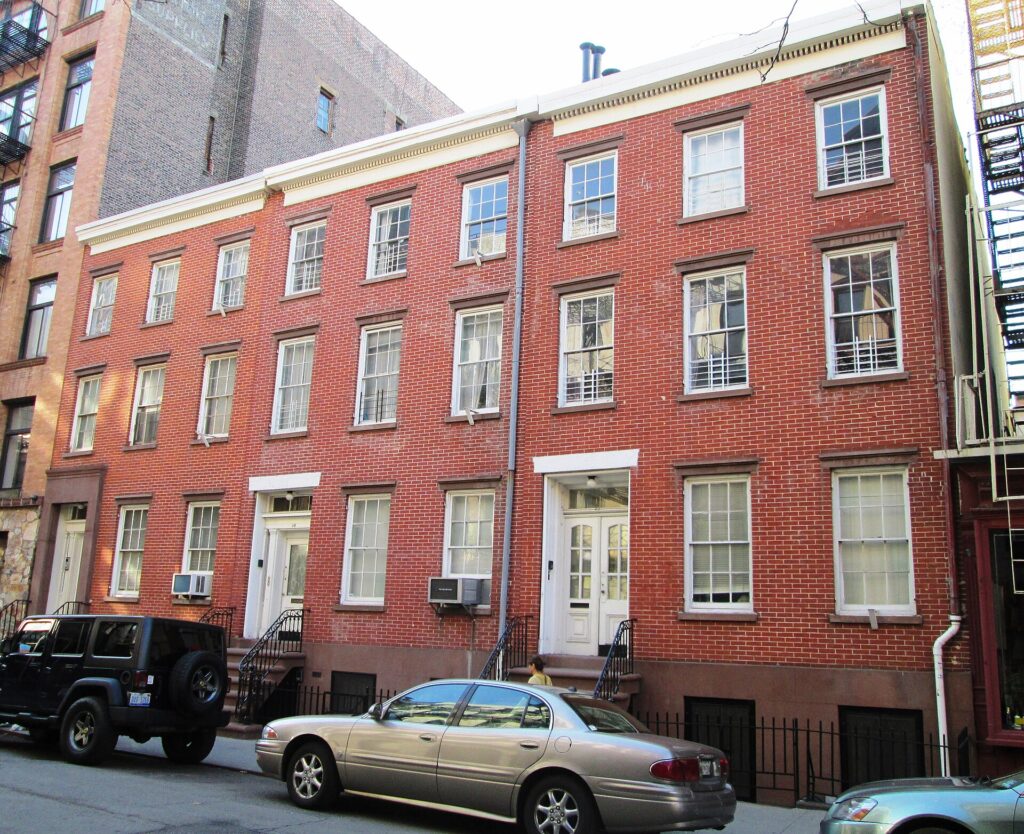
A mortgage lender approves a buyer for a New York City co-op purchase, but the co-op board rejects the application without explanation. This scenario can play out in the city’s housing market, one of the few places where a board of residents controls property transfers, though outright rejection is rare. The board’s broad power comes from state law and a 1990 court ruling that established what is known as the business judgment rule—a legal doctrine that shields boards from lawsuits when they reject buyers.
For readers navigating a co-op purchase, understanding what boards require, how they evaluate applicants, and why pre-approval from a lender does not guarantee building approval can mean the difference between a completed sale and a dead deal.
The Financial Package and Board Standards
A co-op board application begins with comprehensive financial disclosure. Buyers provide two years of federal, state, and local tax returns, recent bank statements, documentation of all lines of credit, retirement account statements, and details from credit cards and car loans. The completed application includes employment verification, a personal cover letter, and references from personal and professional contacts.
Boards evaluate this material using debt-to-income ratio as the primary metric. Most buildings require that total monthly debt obligations—including the projected maintenance payment and projected mortgage—remain below 25 percent of gross monthly income. Many also expect applicants to have six months to two years of maintenance and liquidity in readily accessible funds after closing.
Completeness and accuracy are essential. Boards view omissions or misstatements as red flags, sometimes treating them as grounds for rejection. Buyers who fail to disclose financial details risk having deals fall through entirely.
Timeline Under the 2026 Law
Boards must acknowledge receipt of an application within 15 days, identify missing documents within that window, and approve or deny within 45 days of completion. Failure to comply carries penalties up to $2,000.
How Boards Evaluate and Interview Applicants
Co-op boards have discretion that extends beyond financial metrics. They examine credit history, employment stability, and apparent likelihood of paying maintenance reliably. Some boards permit financing from 50 to 80 percent of purchase price; others require all-cash purchases.
Many boards conduct in-person interviews with applicants. These conversations allow board members to assess the buyer’s character and compatibility with the building. The board’s subjective impressions can carry weight in the approval decision.
A critical distinction separates bank lending from board review. A mortgage lender focuses on creditworthiness to assess repayment risk. A co-op board assesses whether an applicant fits the building’s financial profile and will be a stable, compatible resident. These are different evaluations with different standards, and a lender’s approval does not constrain the board’s judgment.
The Business Judgment Rule and Legal Protection
New York courts have granted co-op boards substantial legal protection through the business judgment rule. In Levandusky v. One Fifth Avenue Apartment Corporation, a 1990 New York Court of Appeals decision, the court held that the business judgment rule protects board decisions so long as the board acts within the scope of its authority, in good faith, and in furtherance of legitimate corporate purposes.
This protection means boards can reject applications without providing reasons, and courts will generally not intervene. A buyer cannot sue for rejection simply because they believe the decision was unfair or wrong. To challenge a board decision, a buyer must prove the board acted in bad faith, violated fair housing law, or disregarded its own governing documents.
Fair housing protections remain in place. Boards cannot discriminate based on characteristics protected under federal, state, and city fair housing laws.
A co-op board can reject an applicant without providing an explanation, and courts will generally not intervene unless the buyer can prove bad faith, violation of fair housing law, or disregard of the board’s governing documents.
Why Boards Reject Pre-Approved Buyers
Boards have rejected buyers for reasons that fall outside lending standards. Documented reasons include being too wealthy, being overqualified, school district concerns, and not fitting the building’s demographic. Boards have also rejected celebrities when members worried about paparazzi, security risk, or other disruptions their presence might bring to the building.
None of these reasons must be disclosed. A buyer rejected for any of these reasons has no automatic right to know why the board voted no. The business judgment rule permits the silence.
This gap between bank approval and board approval arises because the two entities ask different questions. A lender asks: Can this person repay the loan? A board asks: Is this person the kind of shareholder we want in this building? The latter question is subjective and rests on the board’s judgment about building stability, character fit, and long-term viability.
The New Timeline Law and What It Changed
Effective July 28, 2026, New York City’s Cooperative Application Timeline Law introduced the first-ever mandatory timelines for co-op board reviews. Boards must acknowledge receipt of an application within 15 days and identify missing documents in that same period. If a board fails to respond within 15 days, the application is considered complete by law.
Once deemed complete, boards have 45 days to approve or deny the transfer. Boards that document July or August recesses may receive extensions. The law requires boards to maintain standardized application procedures and written lists of required documents.
The law established enforcement: $1,000 for a first violation, $1,500 for a second violation, and $2,000 for each subsequent violation, with the New York City Department of Housing Preservation and Development overseeing compliance.
However, the law left board authority largely intact. It does not require boards to reveal their financial thresholds, justify rejection decisions, or change their substantive approval standards. It sets deadlines for the process but does not alter who decides or on what grounds. For buyers, the law guarantees that approval decisions will arrive within a defined window rather than languishing indefinitely. For sellers, it means a co-op deal will not be killed by board silence.