What South Korea Disputes in Trump’s $200 Billion Energy Investment Claim
Seoul said the president overstated commitments to energy projects, raising questions about a $350 billion trade deal meant to ease tensions over tariffs.
President Trump announced on September 30 that South Korea had committed to a $200 billion investment in U.S. energy projects, including a $54 billion Alaska liquefied natural gas pipeline. South Korea’s government said in the days that followed that Trump had overstated the commitment, saying his announcement went “far beyond what was agreed” and that the Alaska project remained under review with no final commitment made.
The dispute raises questions about what Seoul actually pledged under a broader trade agreement signed in late 2025. South Korea’s parliament passed legislation in March authorizing $350 billion in U.S. investments in exchange for a reduction in American tariffs on Korean goods from 25% to 15%—a deal meant to prevent a trade war. How much of that $350 billion has been formally committed to specific projects, and whether the rift over the energy package threatens the wider arrangement, remains unclear as of October 4.
What Trump claimed versus what Seoul agreed to
Trump’s announcement centered on three energy initiatives: the Texas power plant, a nuclear program, and the Alaska LNG pipeline. He said South Korea would invest more than $50 billion in the Alaska project alone, totaling $200 billion across all three.
South Korea’s Industry Minister Kim Jung-kwan said that Trump’s announcement went “far beyond what was agreed.” He clarified that Seoul had agreed only to “commence working on the Alaska LNG project, subject to meeting commercial reasonableness”—language indicating it was a memorandum of understanding, not a binding commitment.
South Korean President Lee Jae Myung wrote on social media that the Alaska LNG project would proceed only if it met “preconditions” confirming its “commercial viability” and complied with South Korea’s “legal procedures.” The Korea Herald reported that Korea’s participation in the Alaska project “has yet to be finalized.”
The investment framework
Under a trade deal signed in late 2025, South Korea committed to $350 billion in U.S. investment in exchange for lower tariffs on Korean exports (reduced from 25% to 15%). The investment includes $200 billion in direct cash and $150 billion in loans.
What South Korea has actually committed to
The only project where Korea and the U.S. have reached clarity is the Texas power plant, called Project Star. Seoul confirmed a $22.3 billion commitment to a 6-gigawatt combined-cycle natural gas facility in Encinal, Texas, designed to supply electricity to artificial intelligence data centers. The facility is expected to enter commercial operation in 2029 and reach full capacity by 2032.
The nuclear investment, called Project Power, involves eight large-scale nuclear plants totaling $120 billion—$100 billion for construction and $20 billion for contingencies. The Korea Herald reported that Korea and the U.S. “largely agreed” on this project. Commerce Secretary Howard Lutnick named Ohio, Tennessee, South Carolina and Kentucky as sites for the plants, though South Korean officials said afterward that sites remained undecided, with only Ohio and Tennessee identified as possible locations. The design combines Korean APR1400 units with U.S. AP1000 units.
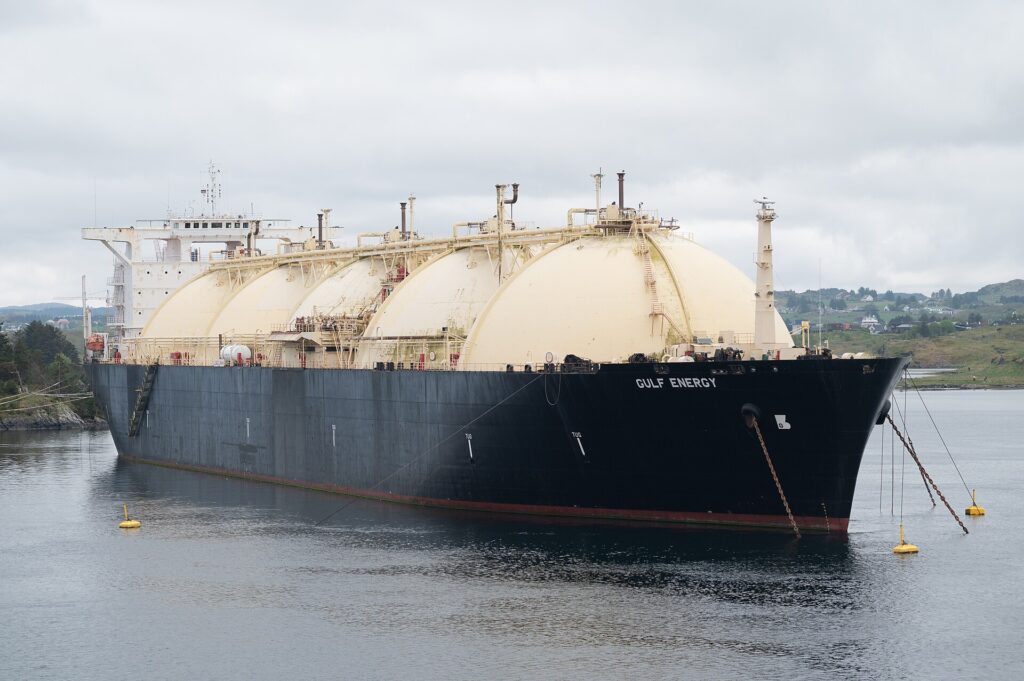
The Alaska LNG pipeline, called Project North, is where disagreement is sharpest. Trump cited a commitment to invest over $50 billion in a roughly 800-mile pipeline from Alaska’s North Slope to southern Alaska, capable of delivering nearly 4 billion cubic feet of LNG per day. South Korea’s position is that this project requires a separate, formal review and approval process before any investment decision can be made.
South Korea’s Industry Minister Kim Jung-kwan said Trump’s announcement went “far beyond what was agreed.”
The broader trade deal at stake
The investment dispute plays out against the $350 billion trade and investment agreement struck in late 2025. Under that deal, South Korea agreed to invest $200 billion in direct cash investment and $150 billion in loans and shipbuilding support over time. In return, the U.S. reduced tariffs on Korean goods from 25% to 15%. South Korea’s parliament authorized the deal in March.
The framework specified an annual investment cap of $20 billion. When Trump announced the energy commitments in late September, they appeared to be the first major projects officially selected under that broader pact. The dispute over which projects are confirmed and which remain conditional could signal whether the trade deal itself is holding.
Trump suggested he would double tariffs on South Korea if it did not “sign shortly” on additional commitments, according to the Anchorage Daily News. That comment hints the two sides may be negotiating over which projects Seoul must formally commit to in order to keep the tariff reduction in place.