NASA Image Captures Lunar Eclipse From Airplane Window
NASA's Astronomy Picture of the Day features a lunar eclipse photographed from an airplane over Portugal, highlighting the event's wide visibility.
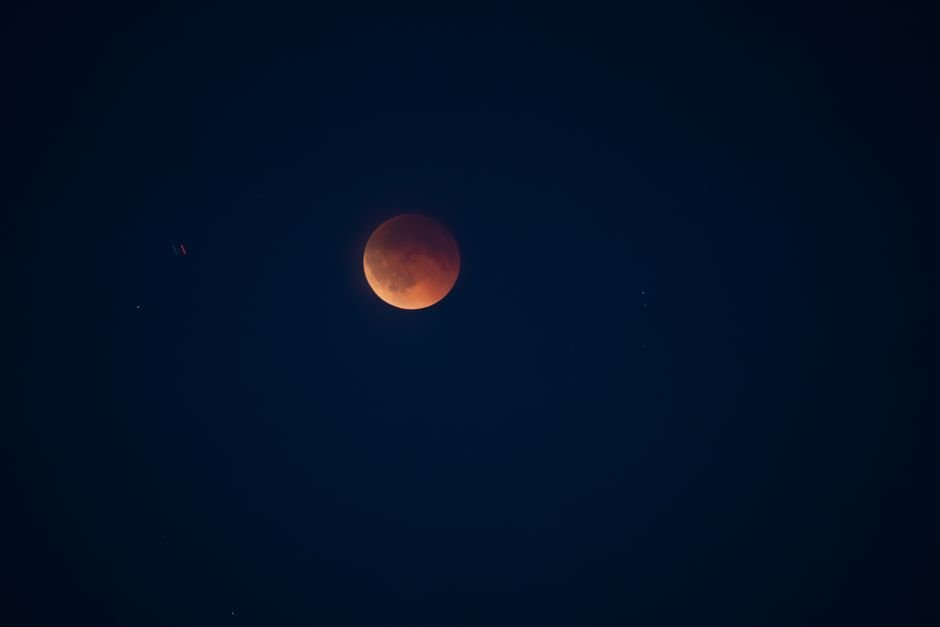
NASA’s long-running Astronomy Picture of the Day, known widely by its acronym APOD, has published a striking image of a lunar eclipse photographed from the window of an airplane. The picture, credited to photographer Paulo Ferreira, was taken last week over Portugal and captures the Moon dimming in Earth’s shadow as seen from thousands of feet in the air.
According to the explanation accompanying the image, lunar eclipses are among the most widely observable astronomical events because anyone on the nighttime half of Earth facing the Moon during the eclipse can see it without special equipment. Unlike solar eclipses, which require protective filters or indirect viewing methods to avoid damaging the eyes, lunar eclipses can be viewed safely with the naked eye, making them popular subjects for both casual observers and photographers.
The write-up accompanying the image playfully notes that a passenger seated on the wrong side of the aircraft during takeoff might have initially missed the view. However, because lunar eclipses typically unfold over several hours, there would have been ample opportunity to move to a better vantage point once the plane leveled off. The image is part of a broader gallery documenting the August 2026 lunar eclipse, which APOD has compiled from contributions submitted by photographers around the world.
The posting also includes an administrative note: NASA’s Astronomy Picture of the Day, which has operated from the domain apod.nasa.gov for decades, is in the process of migrating to a new address under science.nasa.gov/apod. The site is maintained by the Astrophysics Science Division at NASA’s Goddard Space Flight Center, in partnership with NASA’s Science Activation program and Michigan Technological University. Editors listed for the September 1, 2026 post include Robert Nemiroff, Jerry Bonnell, Cecilia Chirenti and Keighley Rockcliffe, continuing a tradition that has anchored the daily feature since the mid-1990s.
APOD has served as one of the internet’s most consistent windows into astronomy and space science, publishing a new image and accompanying explanation every day without interruption for close to three decades. The initiative predates most modern social media platforms and has built a loyal following among amateur astronomers, educators and casual space enthusiasts who check the page for fresh visuals ranging from deep-space telescope captures to earthbound phenomena like eclipses, auroras and meteor showers.
The feature’s endurance reflects a broader public appetite for accessible astronomy content at a time when space agencies and private companies alike are competing for attention with high-profile missions, telescope discoveries and commercial spaceflight milestones. Platforms like APOD fill a niche distinct from breaking-news coverage of rocket launches or planetary probes, instead offering a daily habit of reflection on ordinary but visually compelling celestial events, often captured by amateur photographers rather than professional observatories.
The migration of APOD to the science.nasa.gov domain also fits into a larger pattern of NASA consolidating its public-facing digital properties. As the agency modernizes its web presence, longstanding independent tools and archives are increasingly being folded into centralized platforms, a shift that mirrors efforts across other government science agencies to streamline how research and educational material reach the public online.
The September 1 lunar eclipse image joins an archive stretching back to 1995, with the page noting that the following day’s feature would focus on cultural interpretations of eclipses across history, continuing APOD’s pattern of pairing scientific explanation with broader human context.
This article draws on details from a NASA announcement, available via the source press release.