Why Mamdani Enlisted Unions to Fix New York City’s Civil Service Hiring
Mayor partners with DC37 and other unions to modernize the civil service system. Unions previously opposed similar reforms but now see modernization as necessary to address vacancies.
Mayor Zohran Mamdani announced on October 5, 2026, a partnership with organized labor unions to modernize New York City’s civil service hiring system, marking a significant shift after unions had previously blocked similar reform efforts. The Civil Service Modernization Advisory Committee, chaired by DCAS Commissioner Yume Kitasei with District Council 37 Executive Director Henry Garrido as vice chair, will identify ways to accelerate hiring and modernize decades-old systems that have left thousands of city jobs unfilled.
The hiring bottleneck
New York City’s civil service process takes roughly 15 to 18 months from exam to start date. Candidates must apply to one of more than 100 different civil service exams, sometimes waiting years for their agency to schedule the test. After taking the exam, they wait months to about a year for the city to release eligible lists, and then agencies can only consider the top three scoring applicants per position before moving down the list—a restriction known as the “one in three” rule. The Department of Citywide Administrative Services, which administers the exams, operates at a 16 percent vacancy rate, creating a bottleneck where the system responsible for processing hires lacks staff to do so efficiently.
These delays come as the city’s vacancy rate has hovered around 4.5 percent since 2024. Some agencies report much higher vacancy rates: the Department of Housing Preservation and Development operates at 12 percent vacancy, slowing affordable housing reviews, while DCAS itself operates at 16 percent vacancy. The prolonged hiring timeline exacerbates staffing shortages in critical agencies providing social services, health inspections, and other essential functions.
The numbers
New York City has approximately 14,400 vacant full-time positions. The Department of Housing Preservation and Development operates at 13 percent vacancy, while the Department of Citywide Administrative Services, which administers civil service exams, operates at 16 percent vacancy.
Labor’s changing position
Labor unions, particularly DC37, had previously blocked civil service reform attempts. In 2024, when Mayor Eric Adams’ administration tried to join NY HELPS, a state program that temporarily waives civil service exams to speed hiring, unions sued to stop it. DC37 Executive Director Henry Garrido has said that bypassing the exam process would unfairly disadvantage thousands of workers already on civil service eligible lists who had paid application fees and completed the examination process.
Now, Garrido and other union leaders have joined Mamdani’s modernization effort as partners rather than opponents. The shift reflects unions’ recognition that the current system’s dysfunction harms their members. Staffing shortages have forced mandatory overtime at some understaffed agencies, such as the Department of Social Services. By participating in the redesign, unions can ensure that career protections and merit-based advancement remain intact while the system becomes faster and more transparent. The advisory committee includes representatives from CWA Local 1180, SEIU Local 246, SSEU Local 371, and COBA, alongside city agency commissioners and the deputy mayor.
By participating in the redesign, unions can ensure that career protections and merit-based advancement remain intact while the system becomes faster and more transparent.
Timeline and next steps
The committee will make initial recommendations in December 2026, with the goal of passing legislative changes during New York State’s 2027 session. A second set of proposals will be released in December 2027. As of October 7, the group is already at work identifying both immediate improvements the city can implement without legislative approval and longer-term changes that require state action.
Potential changes could include modernizing outdated job titles and updating technology systems. For New Yorkers seeking city jobs, faster hiring timelines could make positions more accessible, particularly for those who cannot afford to wait 15 to 18 months between applying and starting work. The announcement represents a reversal of labor’s typical resistance to civil service reform, with unions securing a seat at the redesign table to shape how the system changes while addressing the staffing crisis that harms both city services and worker wellbeing.
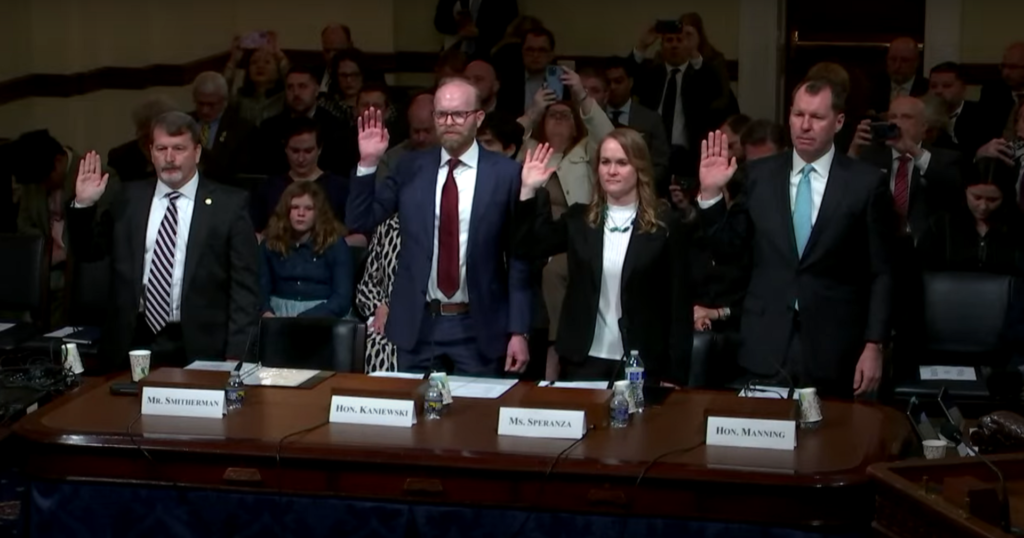
Photo: United States House Homeland Security Subcommittee on Emergency Management and T · Public domain · via Wikimedia Commons